


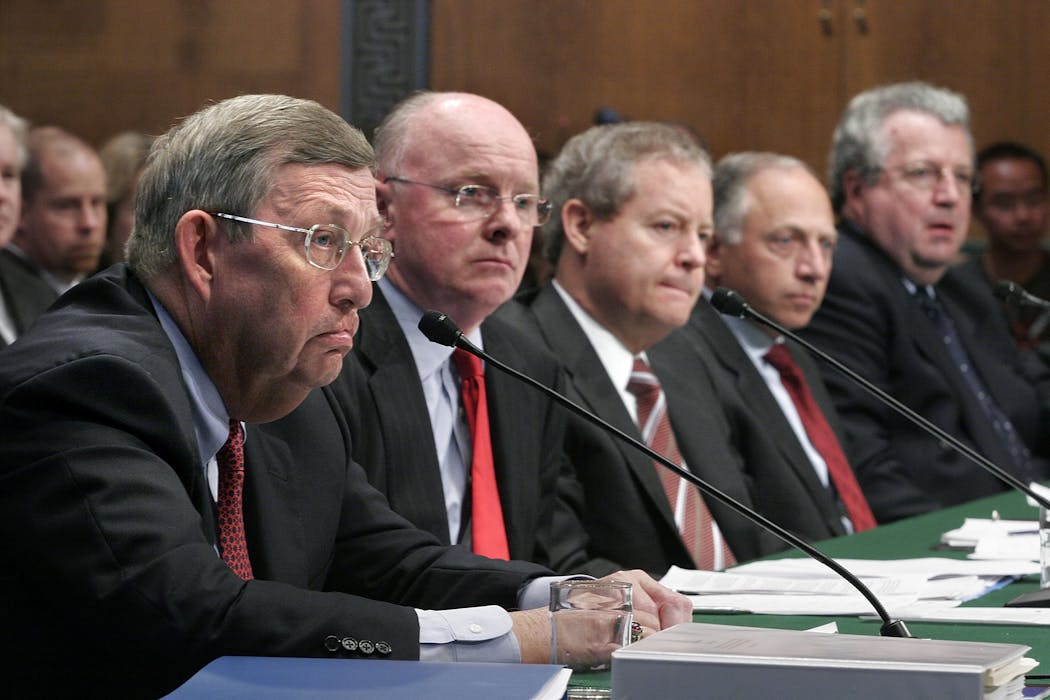
The death of former Exxon CEO Lee Raymond on June 9, 2026, at age 87, marks the end of a career defined by both industrial power and a legacy of environmental controversy. Raymond, who led Exxon through the 1989 Exxon Valdez oil spill and the 1999 merger with Mobil, oversaw a aggressive corporate strategy that prioritized short-term profits over long-term accountability. During his tenure, he famously fought a decade-long legal battle to significantly reduce punitive damages from the Alaskan disaster, while concurrently dismissing environmentalists as “ideologues” who were responsible for industrial mishaps, despite overwhelming evidence pointing to crew error.
Beyond his management of the Exxon Valdez aftermath, Raymond’s most significant impact on the global landscape was his instrumental role in fomenting doubt regarding climate change. Leveraging his Ph.D. in chemical engineering, Raymond persistently challenged the scientific consensus that human-led fossil fuel consumption was the primary driver of global warming. Even as Exxon’s own internal researchers produced accurate climate models linking emissions to rising temperatures, Raymond publicly attributed climate shifts to natural phenomena like sunspots and Earth’s orbital “wobble,” positioning himself as a scientific authority to cast skepticism on settled facts.
Under Raymond’s leadership, Exxon transformed into a key architect of a vast climate misinformation network, funneling millions of dollars into organizations dedicated to framing climate science as “unsettled.” This deliberate strategy utilized sophisticated psychological manipulation, aiming to preserve the fossil fuel industry’s market share by seeding public doubt. These tactics often exploited cognitive biases, utilizing messengers with academic credentials to parrot industry talking points and framing the transition to renewable energy as an existential threat to the economy and employment.
The efficacy of this misinformation hinges on exploiting social and psychological vulnerabilities, such as a reliance on emotionally charged stories over objective data and the repeated exposure to false claims on digital platforms. However, researchers suggest that these tactics can be countered through “pre-bunking”—a psychological “vaccine” that helps citizens identify the manipulation tactics used by industry advocates. By exposing the methodology behind these lies, advocates believe the public can become more resilient to propaganda that aims to discredit climate science.
Ultimately, combating climate misinformation requires more than just scientific literacy; it demands rigorous critical thinking and the courage to challenge one’s own ingrained beliefs. This process involves evaluating sources with healthy skepticism and acknowledging the expertise of specialists when personal knowledge falls short. While the public bears a responsibility to think critically, the burden is not purely individual. Experts argue that the greatest accountability lies with corporate leaders, whose obligation to shareholders and the planet should have superseded the short-term financial gains realized through obfuscation.
Raymond’s tenure stands as a cautionary tale of corporate malfeasance, where an executive knowingly ignored material risks to protect his company’s bottom line. By peddling falsehoods to shareholders and the public, leaders like Raymond failed to fulfill their duties, trading long-term viability for immediate gains. As the world continues to grapple with the increasingly severe consequences of climate change, Raymond’s legacy remains a reminder that the failure to act honestly is not merely a moral lapse, but a systemic threat that continues to stall the necessary global response to an escalating crisis.