









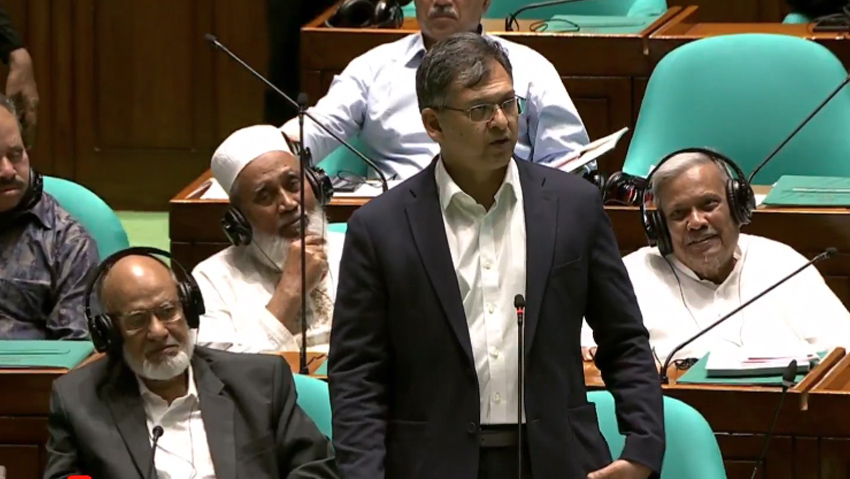
The Bangladeshi government has officially announced plans to overhaul the nation’s digital legal framework, with Home Minister Salahuddin Ahmed declaring that the ongoing proliferation of AI-generated misinformation and online defamation warrants immediate legislative action. Addressing the National Parliament on Monday, the Minister revealed that the government is actively drafting the “Cyber Security Act, 2026.” This initiative follows urgent concerns raised by Member of Parliament Helen Jerin Khan, who highlighted the growing threats posed by organized bot networks, deepfakes, and the targeted harassment of women, children, and political figures on platforms like Facebook.
Minister Ahmed emphasized that the proposed reforms are intended to address whether content currently disguised as “freedom of expression” actually constitutes a violation of public order and individual dignity. The Minister pointed specifically to the rise of sophisticated propaganda targeting the head of government and other high-ranking officials. By redefining the scope of cyberspace within the new legislation, the government aims to establish clearer legal boundaries that distinguish protected speech from defamatory or malicious content, ensuring that digital platforms are held accountable for the material they host.
A cornerstone of the forthcoming legislation is the establishment of a mandatory compliance mechanism for international technology giants, most notably Meta. Currently, the Bangladesh Telecommunication Regulatory Commission (BTRC) lacks the executive authority to force the rapid removal of harmful content, often relying on the voluntary cooperation of platforms that frequently cite a lack of local legal prerequisites as a reason for inaction. The Minister noted that neighboring countries have successfully mandated 24-hour removal windows for inflammatory content, a standard that Bangladesh is now moving to adopt to exert greater influence over foreign-owned social platforms.
Under the provisions of the Cyber Security Act, 2026, the government plans to grant enhanced legal powers to agencies such as the BTRC and the Cyber Security Agency. These bodies will be empowered to independently block, remove, or relocate digital content that is deemed harmful, defamatory, or misinformation-based. By introducing fresh punitive measures specifically tailored to address AI-driven fabrications and rumors, the government intends to create a robust deterrent environment that forces platforms to adopt more rigorous content moderation policies or face significant legal repercussions within the country.
Legislative activity is not limited to the digital sphere, as the Home Minister also confirmed that the administration is modernizing laws governing offline and online vices. With the nation currently relying on the antiquated Gambling Act of 1867, the government is finalizing a new “Gambling Prevention Act” set to be introduced during the current parliamentary session. This will reconcile legacy statutes with the realities of modern digital gambling, further tightening the net on illicit activities that exploit the internet to bypass traditional enforcement methods.
Finally, the government is looking to overhaul the enforcement capacities of the Department of Narcotics Control as part of a wider security and regulatory reform package. Minister Ahmed acknowledged a significant disparity in resources, noting that drug traffickers possess modern weaponry while the officers tasked with fighting them lack sufficient equipment, specialized training, and modern laboratory support. By providing the department with the necessary structural and resource-based autonomy, the government hopes to create a self-sufficient security apparatus capable of countering both the digital facilitation of crime and the physical realities of the drug trade.


