









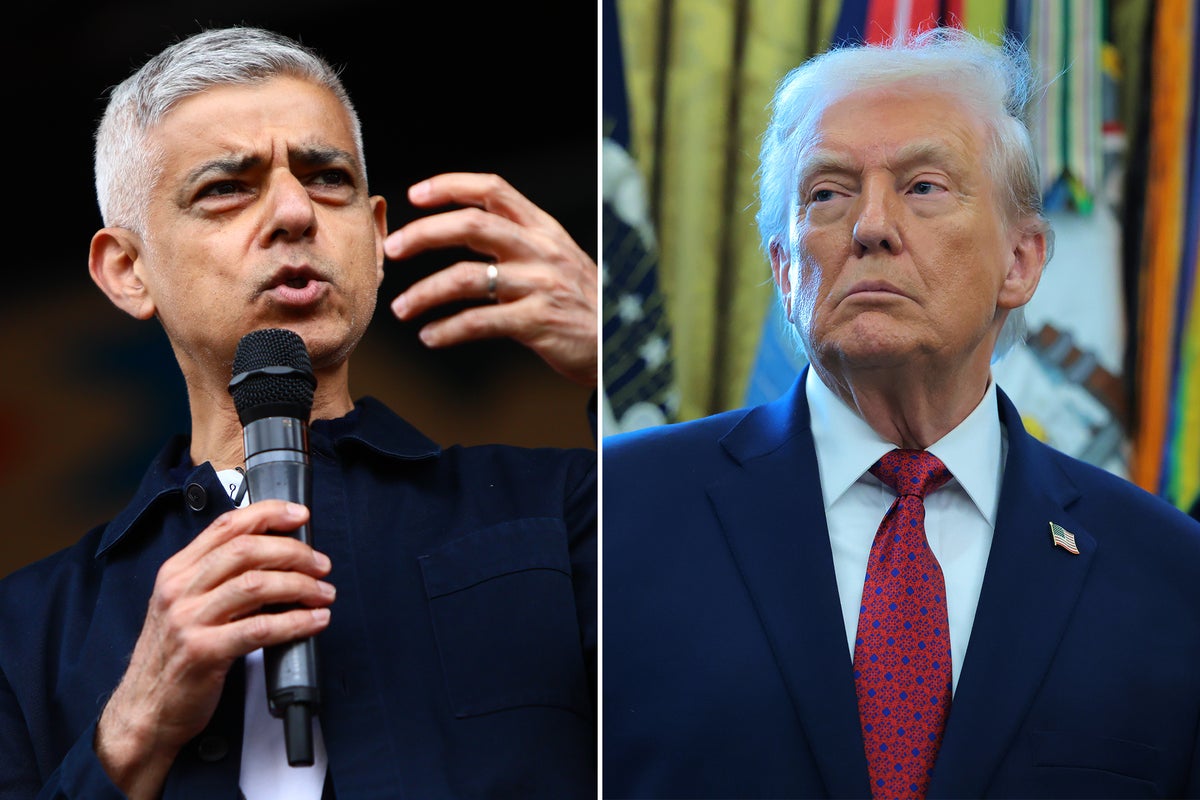
London Mayor Sadiq Khan has launched an ambitious £7 million global marketing campaign aimed at combating what he describes as a “relentless and unprecedented” wave of online disinformation targeting the capital. The initiative, which will roll out across Europe, the United States, and Asia starting in September, seeks to counteract a surge in social media narratives that portray London as a lawless city in terminal decline. Mr. Khan framed the effort as a necessary defense against a “global scourge” of fabricated content, warning that false claims are being used to damage London’s international reputation and its vital tourism industry.
The campaign comes in the wake of a Greater London Authority (GLA) report revealing a nearly 200 per cent increase in negative social media posts concerning London over the last two years. Fact-checking organizations have repeatedly debunked outlandish claims regarding the city, including debunked narratives suggesting the capital is succumbing to Sharia law. These false depictions have notably been fueled by high-profile US figures; Donald Trump has frequently attacked the Mayor’s performance, while JD Vance drew criticism for cheering on activists following a rally led by far-right figure Tommy Robinson.
The scale of the misinformation is both systemic and technological, with the GLA report highlighting how the city is being targeted by sophisticated digital tactics. In Asia, particularly within Japanese-language networks on X, researchers identified months where over 15,000 posts claimed London was lawless and under Islamic governance. Furthermore, the report pointed to the use of artificial intelligence to generate fraudulent imagery, such as fake visuals claiming that millions of people attended recent far-right demonstrations. Mr. Khan argues that this is now a “money-making industry” that deliberately preys on global anxieties.
While the Mayor defends the city’s standing, he faces a complex reality regarding local crime statistics. Supporters of his campaign point to Metropolitan Police data from earlier this year showing that London’s homicide rate has dropped to its lowest level in over a decade. However, the capital continues to struggle with high rates of street crime, specifically personal robbery and mobile phone theft. Freedom of information data suggests that recovery rates for stolen devices remain extremely low, with nearly 575,000 phones stolen between 2017 and early 2024, of which only a tiny fraction were ever returned to their owners.
The Mayor’s plan has met with sharp political resistance from opposition figures who argue that the £7 million expenditure is a misallocation of resources. Susan Hall, leader of the City Hall Conservatives, criticized Mr. Khan’s approach as a form of denial, suggesting he should prioritize substantive action on crime rather than focusing on public relations narratives. Similarly, Reform UK’s candidate for Mayor, Laila Cunningham, argued that the campaign risks alienating the public by implying that victims of crime are merely spreading misinformation, urging the Mayor to confront the city’s actual security challenges instead.
Ultimately, the clash highlights the growing intersection of local governance and the global information war. While City Hall insists that the capital’s heritage, culture, and innovation make it one of the world’s premier destinations, critics maintain that the government’s focus should remain on the tangible difficulties faced by Londoners daily. As the campaign prepares to launch internationally this September, it remains to be seen whether a rebranding effort can silence the chorus of digital criticism or if the underlying concerns about urban safety will continue to dominate the discourse.


