


The Evolution of Hybrid Threats in the Information Domain
The concept of “hybrid threats” has evolved from a Cold War-era blend of military tactics into a sophisticated, non-kinetic strategy designed to exploit the vulnerabilities of open, democratic societies. Initially defined as a mix of conventional and irregular warfare, modern hybrid threats now heavily leverage the informational domain—a contested space where propaganda, misinformation, and disinformation are weaponized to undermine social cohesion and state legitimacy. This evolution marks a shift from physical conflict to “hybrid interference,” a grey-zone strategy that treats liberal values like freedom of speech and transparency as structural weaknesses. Consequently, international institutions, including the EU and NATO, have broadened their terminology to address these systemic forms of subversion, where the goal is not merely to win a battle, but to erode the informational foundations of democratic governance.
Disinformation as a Strategic Behavioral Vector
Disinformation is not merely the spread of falsehoods; it is a calculated “behavioral vector” characterized by intent and coordination. Unlike misinformation (unintentional) or malinformation (misused facts), disinformation is designed to manipulate outcomes by overwhelming the public’s capacity for discernment. The European Union has adopted the framework of “Foreign Information Manipulation and Interference” (FIMI) to describe this phenomenon, emphasizing that such tactics thrive by blurring the lines between foreign actors and domestic supporters. By saturating digital ecosystems with polarising narratives, these campaigns foster a climate of “epistemic instability,” where citizens, overwhelmed and cynical, struggle to differentiate between democratic discourse and manipulative influence.
The Amplification Power of Digital Ecosystems
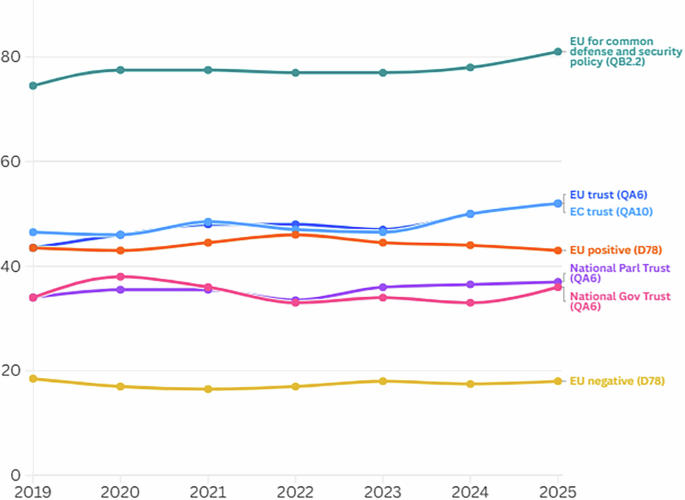
Digital platforms have fundamentally transformed the diffusion of disinformation, moving from passive consumption to algorithmic amplification. Modern social media architectures are explicitly designed to maximize engagement through virality and emotional intensity, creating “filter bubbles” and “echo chambers” that reinforce pre-existing biases. The anonymity and speed inherent in platforms like TikTok, X, and Instagram allow for the rapid circulation of inflammatory content that traditional fact-checking mechanisms cannot keep pace with. Data from the 2025 EP Youth Survey underscores this urgency, revealing that social media has overtaken television as the primary source of political information for young Europeans, leaving them disproportionately exposed to manipulative content and contributing to a documented decline in trust toward traditional institutions.
Polarization and the Rise of Euroscepticism
Disinformation does not operate in a vacuum; it targets societal fault lines—specifically immigration, national sovereignty, and security—to drive affective polarization. This environment has provided a fertile breeding ground for radical and Eurosceptic parties. By amplifying narratives that frame the EU as a distant, adversarial, or illegitimate elite, these parties do not just benefit from hybrid interference; they often act as domestic producers of such content. The rise of these movements, which now hold significant electoral power across Europe, suggests that disinformation is a key mechanism for normalizing populist agendas that characterize the EU as an existential threat to national identity. This process turns democratic debate into a “culture war,” deepening social divisions and weakening the overall integration project.
Addressing the Legitimacy Crisis
European democracies currently face a profound legitimacy crisis, where alienation from liberal institutions is exacerbated by economic shocks and the erosion of a shared factual reality. Legalistic, top-down remedies, while necessary, are largely insufficient because the effectiveness of law depends on a supportive cultural context. To counter the threat, the EU must pursue institutional reforms that address democratic deficits without compromising its own identity. Critically, building resilience requires a multi-pronged approach: strengthening civil society, enhancing media literacy, and fostering genuine public participation. As the influence of radical parties grows, the focus must shift from simply “policing” disinformation to cultivating a political environment where democratic norms are viewed as inherently valuable rather than burdensome.
Empirical Challenges and Future Directions
While policy reports frequently posit a direct, causal link between social media use, disinformation, and the collapse of democratic trust, empirical research remains properly cautious. This study acknowledges the “inferential constraints” involved in researching these complex phenomena, as internet use captures a broad range of human behavior that cannot be solely attributed to disinformation. By operationalizing digital consumption as a structural proxy for exposure, this article aims to bridge the gap between abstract threat frameworks and observable political attitudes. Ultimately, the research seeks to move beyond the alarmist assumption of a sudden “collapse” of democracy, instead testing whether digital media serves as a catalyst for the gradual normalization and electoral consolidation of Eurosceptic narratives within a persistently divided, yet evolving, European public sphere.