









The Complex Digital Echo of LGBTQ+ Legislative Change
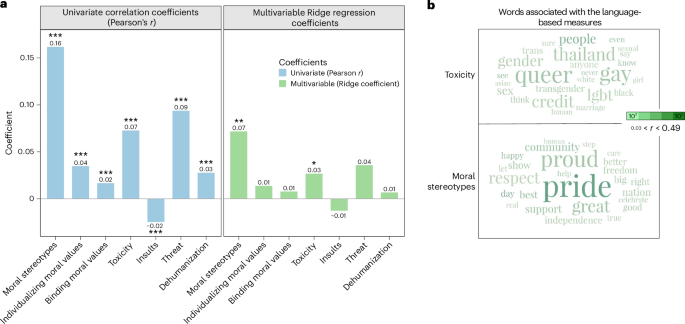
A recent multi-faceted study investigating the impact of LGBTQ+ legislative reforms on social media discourse in India, Singapore, Thailand, and Taiwan has revealed that policy shifts rarely produce uniform behavioral responses. By analyzing large-scale data from Instagram and Facebook alongside Gallup public opinion surveys, researchers sought to understand how legal progress correlates with linguistic patterns, online toxicity, and public sentiment. The study utilized advanced computational linguistics, including Pearson correlation and ridge regression, to track variables such as moral stereotypes and “toxicity”—a measure that requires careful interpretation given that hate speech models may mistakenly conflate sexual identity terms with disparaging content.
The research highlights the volatility of online engagement following legislative intervention. Across the platforms, attention metrics—such as post volume, likes, and comments—showed little consistency. For instance, post volume on Facebook declined in India but remained unchanged in Singapore, Thailand, and Taiwan. Conversely, Instagram saw significant spikes in user engagement in several regions, suggesting that platforms cater to different communicative environments. These findings suggest that legislative milestones trigger diverse reactions that are heavily dependent on the specific culture and platform rather than a singular, predictable trend across the globe.
A critical dimension of the findings concerns “affective and moral valence,” specifically how the tone of discourse shifts in the wake of reform. While Facebook showed minimal substantive change in moral language or toxicity, Instagram displayed significant shifts. In India, for example, Instagram discourse saw an immediate increase in toxicity, which intensified over time. In contrast, Taiwan observed a notable decline in toxic sentiment. Moral language followed a similar pattern of regional divergence, with “binding moral discourse” decreasing in most countries while “individualizing moral language” experienced a mixed reaction, increasing in Thailand and Taiwan but declining in India and Singapore.
To explain this variation, the researchers analyzed institutional moderators, including media censorship, freedom of expression, and national gender equality metrics. The results suggest that the “average” effect of legislative change on hate speech is often null, masking the fact that progress triggers different reactions based on a country’s institutional environment. In more restrictive settings, the immediate aftermath of legal change was associated with more aggressive online discourse. As levels of institutional freedom and equality increased, this reactive toxicity was notably attenuated, confirming that the digital backlash to progress is strongly conditioned by the political and social openness of the state.
Triangulation with longitudinal Gallup survey data provided a sobering counterbalance to the online data. When examining neighborhood safety perceptions for same-sex couples, the data showed an overall decline in reported safety following legislative reform. However, this sentiment was distinctly divided by age; younger demographics in regions like India and Singapore reported feeling safer, whereas older populations remained concerned. This demographic split underscores a significant divide between the “digitally engaged” populations often captured on Instagram and the broader national population represented in traditional surveys, indicating that legal change acts as a catalyst for generational friction.
Ultimately, the study’s robustness checks, including the use of “placebo” datasets related to fashion and food, confirm that the observed shifts are specific to the LGBTQ+ debate rather than broader platform trends. Crucially, the researchers used mixed-effects modeling to determine if shifts were caused by existing users changing their tone or by new, polarized users entering the conversation. The findings suggest that while changes in moral framing represent genuine behavioral shifts among existing participants, changes in engagement and toxicity are highly sensitive to audience composition. This research emphasizes that while legislation initiates progress, its reception—particularly in the digital square—is a highly localized, heterogeneous process.


