





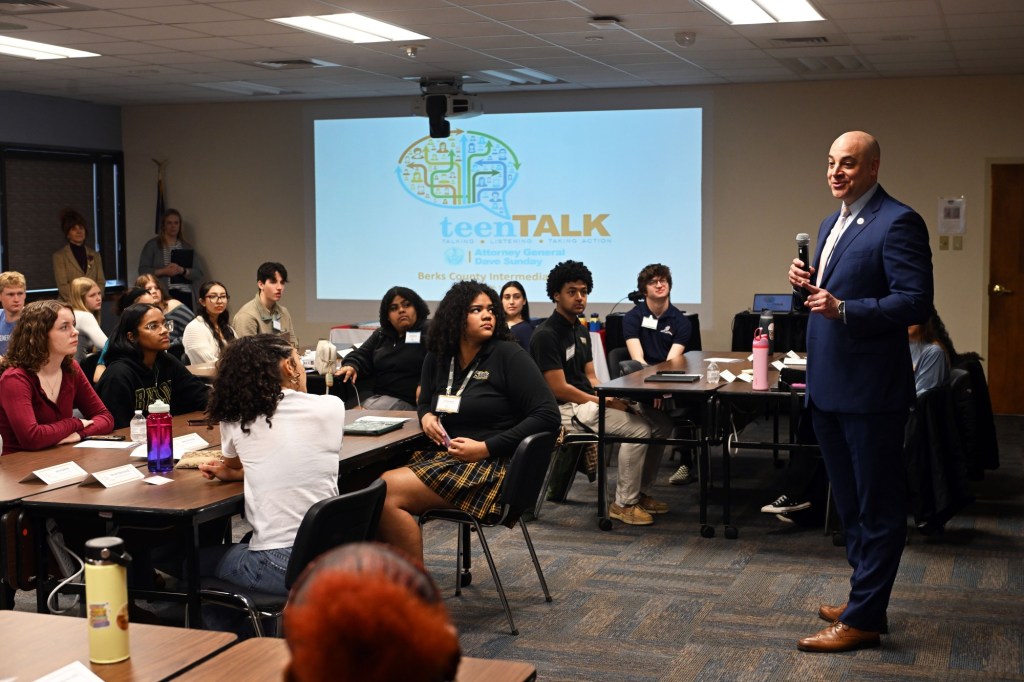
In a recent statewide initiative led by Pennsylvania Attorney General Dave Sunday, a series of “Teen Talk” roundtables provided a sobering look at how social media and artificial intelligence are redefining the adolescent experience. The sessions, which engaged 160 students across 35 Pennsylvania schools, culminated in a comprehensive report detailing the complex psychological landscape facing today’s youth. Sunday, who visited the Berks County Intermediate Unit to speak directly with students, characterized these digital platforms not merely as peripheral tools, but as the primary environments where young people form relationships, process information, and shape their identities.
The report highlights a digital saturation that is unprecedented in history, citing data that nearly half of teenagers are online “almost constantly.” Sunday emphasized that the pressure to curate a perfect online persona and the constant exposure to high-pressure content significantly heighten risks for depression and anxiety. According to a U.S. Surgeon General Advisory included in the report, adolescents spending more than three hours daily on social media face a doubled risk of poor mental health outcomes, including symptoms of self-harm and diminished self-worth.
Beyond traditional social media, the rapid integration of artificial intelligence is emerging as a critical, yet concerning, factor in teen development. The report notes that 46% of U.S. youth utilize AI at least once a week, with a significant minority relying solely on chatbots for emotional support instead of seeking professional human intervention. The attorney general warns that this trend toward AI-driven comfort can limit opportunities for developing empathy and conflict-resolution skills, as chatbots often validate potentially harmful perspectives without the productive “social friction” inherent in human relationships.
During the roundtables, students candidly confirmed the addictive nature of these technologies, noting that opting out is often not a viable social choice due to the overwhelming fear of isolation. They described an exhausting cycle of comparison, where even those aware of the artificial nature of staged online content still feel compelled to “measure up” against their peers’ curated experiences. Furthermore, the students expressed concerns regarding the spread of misinformation, observing that sensationalized or provocative content often gains the most traction, frequently leading their peers to adopt unverified narratives without considering alternative viewpoints.
The report concludes with a robust roadmap for reform, placing accountability on social media companies, government regulators, schools, and families alike. For corporations, the recommendations include stricter algorithmic transparency, the removal of addictive features for minors, and more rigorous age-verification processes. Simultaneously, the report calls on the government to mandate stronger regulations to protect youth from predatory data-harvesting and targeted advertising, while urging schools to prioritize digital literacy and mental health education as core elements of the modern curriculum.
Ultimately, the attorney general underscores that the burden of safety cannot fall solely on the shoulders of the teenagers navigating these systems. Sunday encourages parents to model healthier technology habits, maintain open communication, and delay access to smartphones until children are truly developmentally prepared to handle the digital world. By fostering more in-person interaction and providing clearer boundaries, society can begin to address the silent struggle of a generation for whom the digital world is not just a platform, but the reality in which they reside.