









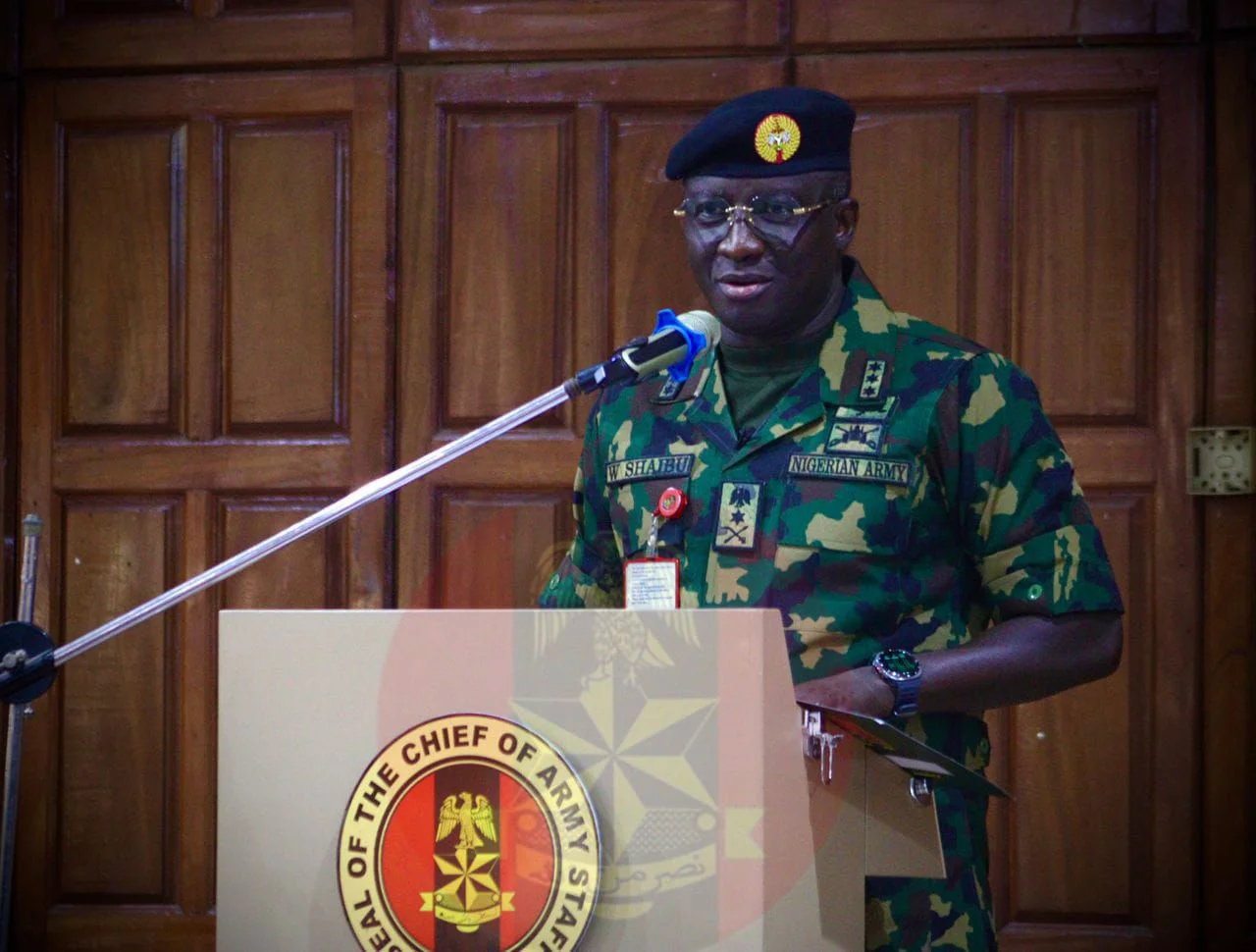
The Chief of Army Staff (COAS), Lt.-Gen. Waidi Shaibu, has issued a stern warning regarding the escalating threat of misinformation and hostile propaganda, characterizing them as significant challenges to Nigeria’s national security. During the opening of the Directorate of Army Public Relations (DAPR) Combined First and Second Quarters Media Workshop 2026 in Abuja, the COAS emphasized that modern adversaries are increasingly utilizing psychological operations and information manipulation to erode public trust in the state. Represented by the Chief of Civil-Military Affairs, Maj.-Gen. Musa Etsu-Ndagi, Shaibu asserted that when such disinformation is left unchecked, it possesses the potential to be as physically and strategically damaging as a kinetic security threat.
Central to the military’s renewed communication strategy is the concept of “media integration,” which the Army now views as a critical force multiplier in joint and multi-agency operations. The workshop, themed “Media Integration as a Force Multiplier for Joint and Multi-Agency Operational Success,” highlights the shift in the media’s role from merely reporting news to becoming a vital instrument for shaping national perceptions. According to the COAS, the Nigerian Army’s command philosophy is currently focused on transforming the force into a more professional, adaptable, and resilient entity, which necessitates a sophisticated partnership with the media to project credible narratives and counter adversarial rhetoric.
Lt.-Gen. Shaibu underscored the vital importance of public support as a strategic necessity for the success of operational missions. He argued that a well-informed citizenry is more likely to rally behind security efforts, thereby boosting both troop morale and overall national resilience. By fostering closer cooperation between security agencies and the public, the military aims to ensure that its operational gains—achieved through enhanced intelligence sharing and coordinated planning—are complemented by accurate information. He urged participants to use the platform to adopt best practices in conflict-sensitive reporting and to develop robust strategies to mitigate the impact of information warfare on the nation’s territorial integrity.
The Acting Director of Army Public Relations, Col. Appolonia Anele, reinforced this sentiment by detailing the workshop’s primary objective: to deepen the synergy between the military and media professionals. She noted that strategic communication is no longer a peripheral concern but a core component of modern military operations. Col. Anele called for responsible and balanced reporting, cautioning that misinformation provides a vacuum for hostile elements to exploit. Her remarks reaffirmed the Army’s commitment to transparency, innovation, and ongoing constructive engagement with the press, aligning local defense communication with global best practices.
The workshop, which brought together media executives, defense correspondents, and security experts from across the country, served as a forum for stakeholders to exchange ideas on navigating the complex information landscape. The discourse centered on how to effectively bridge the gap between institutional secrecy and the public’s right to know, ensuring that national security objectives are not compromised. The training modules were designed to equip military spokespersons and civilian journalists alike with the tools necessary to combat the rapid spread of fake news, an issue the Army considers a direct threat to the country’s stability and the safety of its personnel.
In his concluding remarks, Lt.-Gen. Shaibu expressed his gratitude to President Bola Tinubu for his continued strategic guidance and support, which he credited for the recent operational successes witnessed across various theatres of war. He concluded by charging media practitioners to dedicate more attention to the gallantry and sacrifices of troops operating in difficult conditions, framing the professionalization of the media-military relationship as a patriotic duty. As the event concluded, the consensus remained that the synergy between the two sectors is essential in protecting Nigeria’s sovereignty against both kinetic violence and the intangible but lethal threats of the digital age.


