









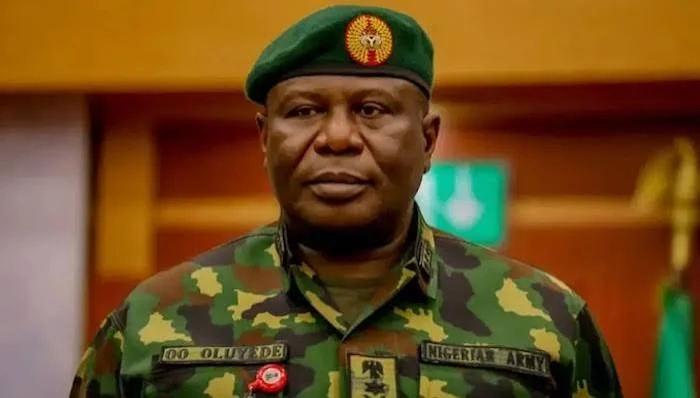
The Chief of Defence Staff, General Olufemi Oluyede, has officially reaffirmed the Nigerian Armed Forces’ strategic pivot toward psychological and influence operations as cornerstones for conflict prevention, national stabilization, and the attainment of sustainable peace. This announcement, issued through the Director of Defence Information, Major General Samaila Uba, highlights a sophisticated shift in the military’s engagement strategy, acknowledging that modern threats extend far beyond the kinetic battlefield. By prioritizing influence operations, the military aims to navigate the complexities of contemporary security challenges where perception, narrative, and public trust serve as critical operational fronts.
The commitment was formally articulated during the two-day Defence Headquarters Psychological Operations Workshop, held in Abuja from July 23 to 24, 2026. Representing General Oluyede, the Chief of Defence Training, Rear Admiral Abolade Ogunleye, underscored the necessity of this strategic evolution. The event served as a high-level summit, bringing together a diverse cross-section of the nation’s leadership, including representatives from security and intelligence agencies, government institutions, academia, civil society organizations, and prominent media outlets, all gathered to explore the workshop’s central theme: “Building National Resilience: The Role of Influence Operations in Conflict Prevention and Stabilization.”
In his address, General Oluyede emphasized that the task of fostering national resilience is far too vast a mandate for the military to shoulder in isolation. He advocated for a robust “whole-of-government and whole-of-society” framework that integrates the efforts of traditional and religious leaders, local communities, and media practitioners. By fostering this collaborative ecosystem, the military seeks to create a unified front capable of absorbing contemporary shocks and mitigating the drivers of instability. The General noted that such inclusivity is vital to ensuring that national security policies resonate with and receive the necessary buy-in from the citizenry.
The CDS further articulated the utility of influence operations as an indispensable tool for systemic health, particularly in an era plagued by the rapid spread of misinformation and disinformation. He argued that the strategic application of truth and credible narratives is essential to neutralizing hostile actors who aim to exploit societal fractures. By proactively shaping the public discourse, the Nigerian military intends to strengthen public confidence in state institutions, thereby insulating the nation against the divisive rhetoric that often precedes violent conflict and social fragmentation.
The workshop also benefited from the insights of key media stakeholders, including the leadership of the Nigerian Television Authority and the Voice of Nigeria. Leaders like Dr. Salihu Dembos and Mallam Jibrin Ndace emphasized that while the military may provide the framework for security, the engine of peace is sustained by transparent public engagement and credible communication. They asserted that influence operations are not merely tools of policy but are vital mechanisms for building the trust and social cohesion required for long-term national development, asserting that the battle for public perception is synonymous with the battle for national unity.
The event concluded with a set of decisive recommendations, reflecting a clear consensus among the diverse stakeholders in attendance. Participants pledged to prioritize inter-agency collaboration, bolster institutional capacity, and systematically integrate influence operations into the broader national strategy for stabilization. By committing to a unified communicative approach, the coalition aim to act as a definitive bulwark against violent extremism, ensuring that Nigeria’s path toward development is shielded by a resilient, informed, and cohesive public consciousness.


