








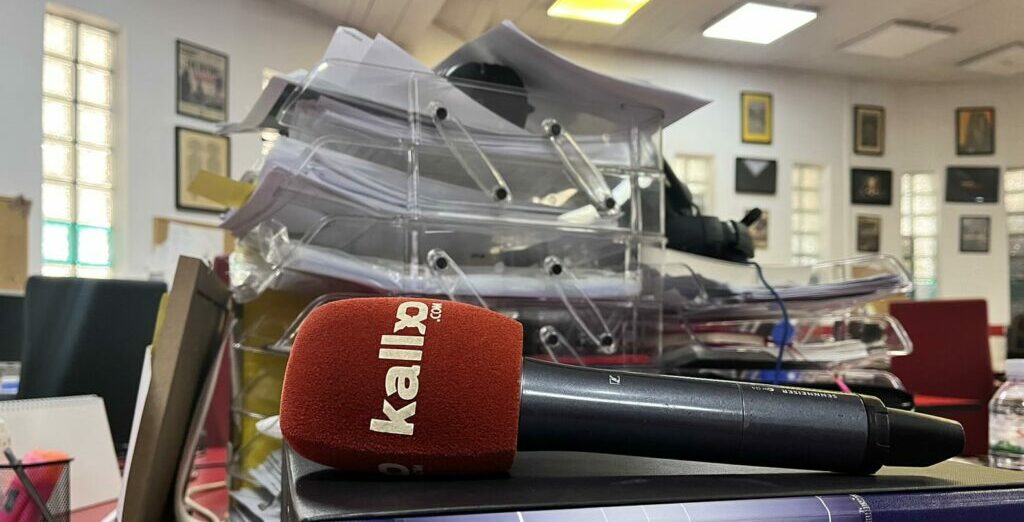
The editorial team at KALLXO.com has officially denounced a sustained and coordinated campaign of defamation directed against the platform by various political actors, business interests, and media entities. This latest wave of hostility centers on a report published on July 29, 2026, by the Facebook page “Vox Kosova”—a platform with a history of defamation lawsuits. Vox Kosova alleged that KALLXO.com had plagiarized claims from Russian media regarding the potential adoption of a “Shenzhen model” for Kosovo, a narrative intended to discredit the outlet’s professional integrity and mislead the public.
At the heart of the dispute is the historical context of the “Shenzhen” versus “Mini-Schengen” terminology, which emerged during negotiations led by U.S. diplomat Richard Grenell. Vox Kosova attempted to frame KALLXO.com’s past reporting as Russian-backed propaganda, citing a September 2020 clarification from Grenell that he intended to discuss “Mini-Schengen” rather than “Shenzhen.” However, KALLXO.com argues that this retrospective correction does not negate the reality that, at the time of their reporting in June 2020, the “Shenzhen” terminology was the standard reference used by credible international and local media outlets alike.
KALLXO.com emphasizes that their reporting was grounded in factual discourse occurring at the time, noting that the Shenzhen concept was explicitly mentioned by Richard Grenell himself during a June 2020 interview with Newsmax. Following those remarks, a wide spectrum of major Kosovar media, including Koha.net, Telegrafi, and Top Channel, reported on the Shenzhen economic zone proposal. KALLXO.com points out that even former President Hashim Thaçi publicly addressed the possibility of a “Mini-Shenzhen,” further legitimizing the topic as a subject of genuine public interest and journalistic scrutiny at that moment.
By failing to consult these well-documented archival sources, KALLXO.com contends that Vox Kosova engaged in a reckless lack of verification. The editorial team clarifies that their original article did not present the Shenzhen model as an agreed-upon outcome or an established fact; rather, it functioned as a critical analysis of the model, exploring its potential implications and inherent risks for Kosovo. KALLXO.com explicitly rejects the accusation of sourcing information from Russian outlets, describing the narrative as a baseless attempt to smear the platform’s reputation.
The conflict highlights the broader challenges facing independent journalism in the region, where media platforms are increasingly subjected to retaliatory campaigns for their investigative work. KALLXO.com maintains that their publication of the Shenzhen critique was a responsible exercise of media duty, aimed at informing the public about potential negotiation outcomes. The outlet asserts that the campaign against them is not merely a journalistic disagreement but a strategic effort to stifle professional reporting through disinformation and coordinated attacks.
In response to these developments, KALLXO.com has taken formal action, issuing a letter to the editorial board of Vox Kosova demanding an immediate correction of the false claims. Furthermore, the outlet has signaled its intent to utilize all available legal avenues to defend its reputation. By pursuing these measures, KALLXO.com aims to set a precedent against the normalization of hate speech and defamatory disinformation, reaffirming its commitment to delivering accurate, independent information despite ongoing external pressure.


