









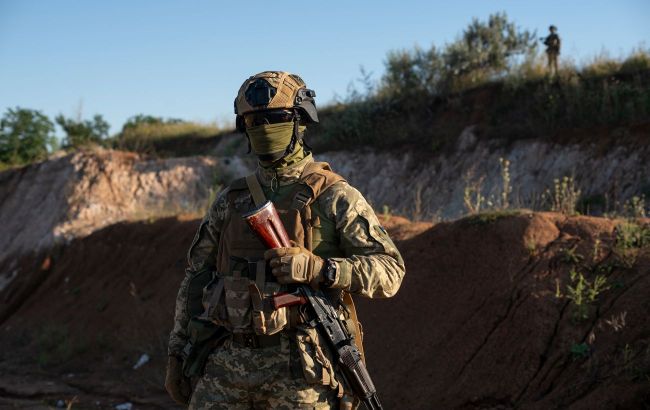
A sophisticated disinformation campaign targeting the morale of the Ukrainian public has been identified by the Center for Countering Disinformation, which warns of a growing reliance on advanced technology to manipulate public perception. Central to this operation is a viral video featuring an individual dressed in a Ukrainian military uniform, who claims to be a member of the 120th Separate Territorial Defense Brigade. In the footage, the speaker alleges a “complete defeat” of Ukrainian units and accuses high-ranking military commanders of fleeing the battlefield, effectively abandoning their forces in a moment of crisis.
Technical analysis performed by experts has confirmed that the video is a deliberate fabrication utilizing high-end manipulation tools. The footage features a face altered through deepfake technology, paired with a completely robotic, AI-generated voice that lacks the natural cadence of human speech. Investigators traced the video to a newly created social media account, which has recently been used to peddle other fraudulent claims, including fabricated stories regarding a logistics collapse within the 57th Separate Motorized Infantry Brigade. Once posted, the content was rapidly amplified by established Russian propaganda channels to ensure maximum reach.
The primary objective of this operation is to incite widespread panic among the Ukrainian population by creating the false, yet convincing, impression that the front line is collapsing. By masquerading as an earnest appeal from a distressed Ukrainian soldier, the creators hope to lend a sense of perceived authenticity to their claims. According to officials at the Center for Countering Disinformation, the systemic nature of these operations is designed specifically to demoralize Ukrainian society and erode public trust in the leadership of the national Defense Forces.
This incident is part of a broader, established pattern of Russian information warfare that relies on the fabrication of military realities. Throughout the conflict, Moscow has consistently manufactured narratives to suit its strategic goals. For instance, in May, Russian sources attempted to claim that Ukraine had lost control over segments of its border region, including a false report asserting the capture of the village of Riasne in the Sumy region. These claims were promptly refuted by Ukrainian military officials, who clarified the reality on the ground and dismissed the reports as pure fiction intended to obscure stagnant or failing Russian offensives.
Beyond battlefield falsehoods, the Kremlin has been accused of orchestrating large-scale international provocations to complicate the geopolitical landscape. The Ukrainian General Staff recently debunked claims that Ukrainian forces had targeted a bus carrying children in the Bryansk region of Russia. Ukrainian authorities identified these accusations as a cynical attempt to manipulate international sentiment and draw neighboring Belarus deeper into the Kremlin’s war effort. Meanwhile, in the territories currently under occupation, the Kremlin continues to apply intense pressure on local civilian populations as part of its ongoing consolidation of control.
As the information war continues to evolve, Ukraine’s Defense Forces are maintain a focus on robust defensive posturing alongside their proactive efforts to counter digital deception. In response to the multifaceted threats facing the region, the military has prioritized the development of strengthened infrastructure, including the construction of a comprehensive circular defensive line in southern regions such as Odesa. By combining these physical fortifications with vigilant monitoring of the digital space, the state aims to protect its territory and its people from both kinetic threats and the psychological onslaught of modern disinformation.


