



Paragraph 1: Introduction – A Charge of Reckless Endangerment
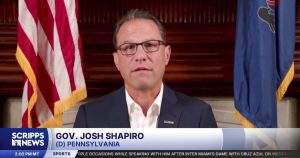
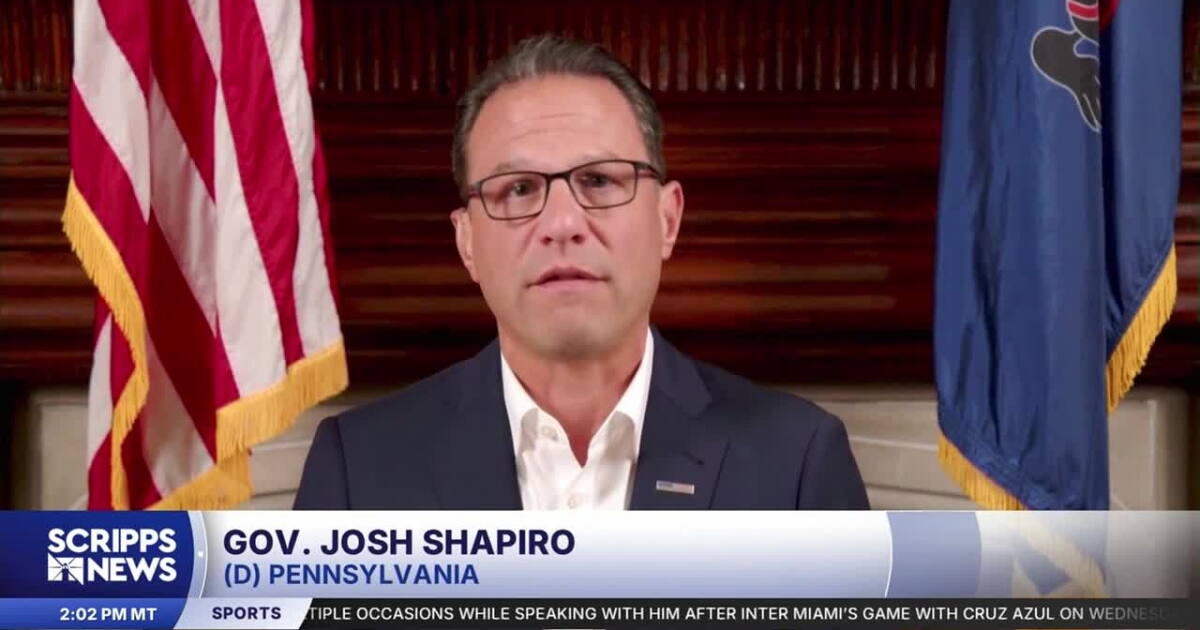
HARRISBURG, Pa. – In a stark escalation of the ongoing national battle over public health policy, Pennsylvania Governor Josh Shapiro has directly accused former presidential candidate Robert F. Kennedy Jr. of sowing the vaccine misinformation that has contributed to the commonwealth’s first measles-related deaths in nearly three decades. The governor’s forceful rebuke, delivered during a press conference in the state capitol, frames the current measles outbreak not merely as a failure of disease surveillance, but as a direct consequence of a well-organized anti-vaccine movement that has capitalized on fear and distrust. Shapiro’s comments come as the Pennsylvania Department of Health confirmed two fatalities linked to a measles outbreak that has so far infected dozens of residents, marking a tragic turning point in a resurgence of a disease that was declared eliminated in the United States in 2000. The governor, visibly frustrated, did not mince words, placing the blame squarely on the shoulders of prominent figures who continue to question the safety and efficacy of established vaccines, despite overwhelming scientific consensus to the contrary. This confrontation highlights the profound real-world consequences of what medical professionals call an “infodemic” of misinformation, which is now colliding with a public health response already strained by years of staffing shortages and pandemic-era fatigue.
Paragraph 2: The Tragic Human Cost – Inside Pennsylvania’s Outbreak
According to state health officials, the two individuals who succumbed to the virus had underlying health conditions that rendered them particularly vulnerable to severe complications. While officials have not released their exact ages due to privacy laws, reports suggest at least one of the victims was a child, a detail that has sent shockwaves through communities already anxious about the spread of the disease. The current outbreak, which began in a Pennsylvania county with a notably low vaccination rate, has since percolated into schools, daycare centers, and healthcare facilities. Measles, a paramyxovirus, is one of the most contagious pathogens known to humanity; it can linger in the air for up to two hours after an infected person leaves a room, and up to 90% of susceptible individuals exposed will become infected. The complications are severe, including pneumonia, encephalitis (brain swelling), and a delayed but fatal neurological complication called subacute sclerosing panencephalitis (SSPE). Dr. Suresh Patel, the chief medical officer at a major Philadelphia health network, described the scenes in local emergency rooms as “heartbreaking,” noting that the victims were entirely preventable statistics in a nation with the means to protect its citizens. “We have the tools, the science, and the vaccines to prevent this,” Dr. Patel told reporters, “but we cannot save people who listen to charlatans instead of their doctors.”
Paragraph 3: Shapiro’s Direct Challenge – Calling Out a “Purveyor of Lies”
Governor Shapiro’s remarks on the assassination of the two cases were deeply personal and direct. Without naming a specific campaign event, he pointedly referenced Robert F. Kennedy Jr.’s extensive history of making controversial and often debunked statements regarding vaccine safety, including a now-infamous claim that links vaccines to a wide range of chronic health conditions. “Mr. Kennedy has used his platform, his family name, and his public platform to sow fear and hesitation about vaccines that have saved millions, perhaps billions, of lives,” Shapiro asserted. “Today, there are two families in Pennsylvania who are grieving because of the consequences of that misinformation. They are not statistics; they are our neighbors. They are our children. And they are gone because a man who has never practiced medicine decided he knows better than the world’s epidemiologists, virologists, and immunologists.” The governor went further, accusing Kennedy of engaging in a form of “reckless endangerment” that is tantamount to a public nuisance, suggesting that those who spread falsehoods should be held legally and financially accountable for the damage they cause. This rhetoric signals a shift among Democratic governors, who had previously been cautious in confronting a fellow political figure whom some view as a potential future leader.
Paragraph 4: RFK Jr.’s Defense and the Playbook of Misinformation
In response to the governor’s accusations, a spokesperson for Kennedy’s organization, Children’s Health Defense, released a statement deflecting the criticism, arguing that Shapiro was “attacking the messenger” and deflecting attention away from the failures of the pharmaceutical industry. Kennedy, who has framed his anti-vaccine advocacy as a “David vs. Goliath” fight against “corrupt” federal agencies and big pharma, frequently cites anecdotal reports and flawed safety data. His message often masterfully wraps itself in the language of consumer protection and parental rights, tapping into a deep-seated distrust of government that has been amplified in the post-COVID-19 era. This playbook has proven incredibly effective in affluent suburbs and progressive urban enclaves alike, far beyond the usual stereotype of the far-right libertarian. Public health experts point out that the misinformation strategy relies on a simple psychological trick: shifting the burden of proof. Instead of asking vaccine skeptics to provide evidence of harm, the movement continuously demands absolute proof of zero risk, which is an impossible standard to meet. Once the seed of doubt is planted, a single online forum post or a viral TikTok video can undo years of public education, making it extraordinarily difficult for health officials to mount an effective counter-offensive against a digital ecosystem that algorithmically rewards anger and fear.
Paragraph 5: The Broader Landscape – A Nation Witnessing a Public Health Crisis
The Pennsylvania tragedy is not an isolated incident. Following the disruption of routine childhood immunizations during the COVID-19 pandemic, vaccination rates across the United States have slipped to concerning lows. The CDC reported that the percentage of kindergarteners entering school with the MMR (Measles, Mumps, Rubella) vaccine fell below the 95% threshold needed for “herd immunity” during the 2022-2023 school year, leaving pockets of unvaccinated children vulnerable across the country. The United States is already experiencing a surge in measles cases compared to the last decade, with major outbreaks reported in Ohio, New York, and Florida. In these hotspots, pediatricians are reporting an alarming phenomenon: the return of “measles parties” in which parents deliberately expose their unvaccinated children to an infected individual in a misguided attempt to build natural immunity, a practice that was common before the vaccine’s invention but is now seen as a dangerous relic of a bygone, pre-scientific era. The resurgence of measles is a stark reminder that infectious diseases are never truly gone; they simply wait for the opportunity to re-emerge when a critical mass of the population is left unprotected. The economic and social cost of these outbreaks is significant, as entire schools are closed for quarantine and contact tracing resources are stretched to their breaking point.
Paragraph 6: Path Forward – Restoring Trust and the Stakes of Public Health
As Pennsylvania buries its dead, Governor Shapiro faces the immediate challenge and the long-term battle for the soul of public health. In the short term, the state is launching an emergency vaccination drive, opening up evening and weekend clinics to ensure that those who are unvaccinated can quickly receive the MMR vaccine. State lawmakers are now debating whether to tighten the “philosophical” exemption that allows parents to opt out of school-mandated vaccinations, a move that has historically been a lightning rod for political controversy. However, Governor Shapiro acknowledged that education and legislation are only part of the solution. “We can mandate the shot, but we cannot mandate the arm,” he said, emphasizing the need to repair the fundamental trust between the medical establishment and the communities they serve. This means reaching out to trusted community leaders, faith-based organizations, and local physicians to counter the prevailing fear with empathy and scientific clarity. The governor’s office has also indicated it is exploring whether to file charges against individuals who knowingly expose others to the disease, potentially setting a legal precedent for managing public health crises in the age of misinformation. The tragedy in Pennsylvania serves as a grim audit of the post-truth era, underscoring that while a lie can take half a minute to be told, its consequences can last a lifetime. The nation now watches to see how this high-stakes confrontation between grassroots public health and entrenched misinformation will ultimately be resolved, with the outcome carrying implications far beyond the rolling hills of Pennsylvania.