


Trump Administration Halts Disinformation Research, Sparking Outcry Among Scientists
The Trump administration’s recent decision to cut federal funding for disinformation research has ignited a firestorm of controversy within the scientific community. Critics argue that the move, ostensibly aimed at protecting free speech, effectively censors vital research and hinders efforts to combat the spread of false information. The cuts, implemented through the National Science Foundation (NSF), affect over 50 grants totaling approximately $9 million, primarily targeting studies focused on disinformation and its impact.
The NSF’s new guidelines, released in April 2025, cite Trump’s Inauguration Day executive order, "Restoring Freedom of Speech and Ending Federal Censorship," as justification for defunding research aimed at combating "misinformation," "disinformation," and "malinformation." The NSF argues that such research could infringe upon the constitutionally protected free speech rights of American citizens. This has led to the cancellation of numerous grants, including one awarded to Lisa Fazio, an associate professor at Vanderbilt University, who was studying how false beliefs are formed and corrected.
Fazio, whose research explored the effectiveness of correcting misinformation through social media and texting, expressed disappointment over the decision. While she anticipated the cancellation, she described the news as a "gut punch." She argues that her work, and the work of other researchers in the field, is not censorship, but rather a contribution to public discourse, providing scientifically-backed information to counter false narratives. Moreover, she emphasizes that the NSF does not regulate speech; it simply funds research that advances knowledge.
Mary Feeney, a former NSF program officer who oversaw grants related to science communication and information quality, expressed confusion over the administration’s rationale. Feeney stated that none of the research she approved under the Biden administration could reasonably be interpreted as infringing upon free speech rights. She believes the move reflects a misunderstanding of the nature of the research, which aims to understand how information spreads and how trust is built, not to silence dissenting voices. She points out that research into misinformation is part of a broader effort to improve science communication and public understanding of scientific issues.
The funding cuts come amidst a broader political climate where the term "misinformation" itself has become politicized. Feeney reveals that during her final year at the NSF, she was asked by leadership to remove the word "misinformation" from grant titles, anticipating its likely targeting by the incoming administration. This preemptive action suggests an awareness of the growing political sensitivity surrounding the topic of misinformation and its research.
The impact of these funding cuts extends beyond individual researchers. The halted projects represent a significant loss of potential knowledge about the dynamics of information dissemination and trust formation. Fazio, whose next project was to examine the broader formation of false beliefs, now faces the possibility of its cancellation due to lack of funding. She voices concern about the chilling effect these cuts will have on future research, particularly as private funding sources become increasingly hesitant to support work related to misinformation.
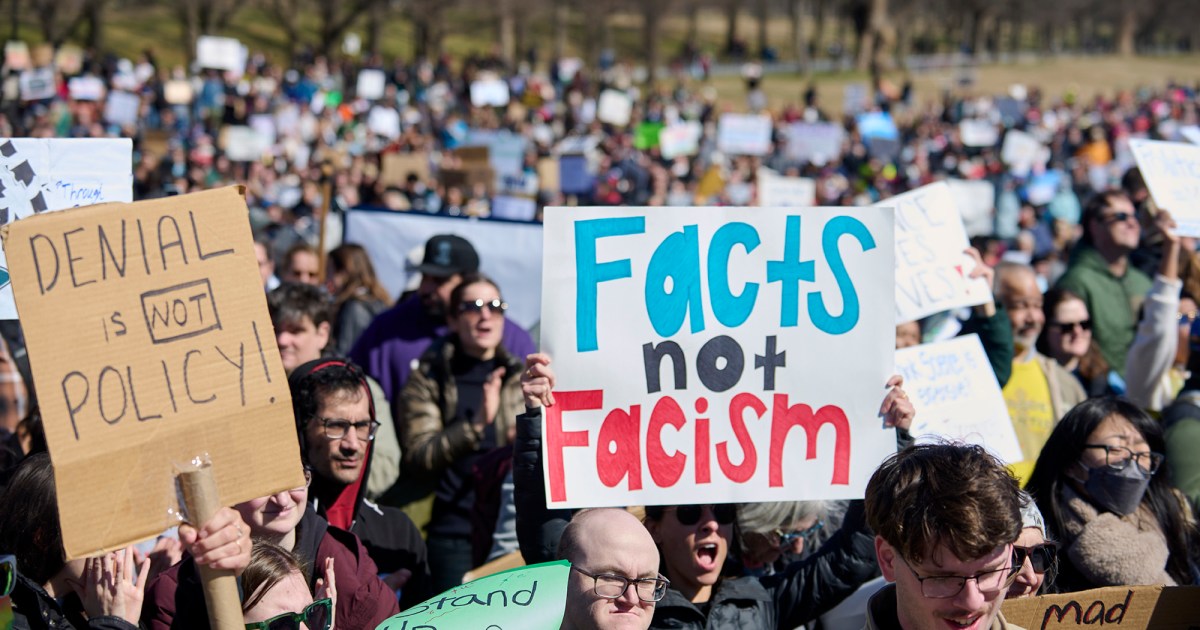
The scientific community has rallied against the NSF’s decision, arguing that it undermines the vital role of research in combating the spread of false information. Thousands protested the Trump administration’s broader federal funding cuts during the "Stand Up for Science" rally in Washington, D.C. Researchers like Fazio and Feeney emphasize the importance of understanding how false information spreads, particularly in the context of public health and democratic processes. They argue that the administration’s move, ironically framed as protecting free speech, effectively censors scientific inquiry and obstructs efforts to address the pervasive problem of misinformation.
The long-term consequences of these funding cuts remain uncertain. The loss of federal support for disinformation research could create a void in critical knowledge at a time when false information proliferates rapidly online. The chilling effect on researchers and the difficulty in securing alternative funding sources could hinder future investigations into this crucial area. As the debate over misinformation continues to intensify, the scientific community faces an uphill battle to secure the resources necessary to understand and address this complex phenomenon.
The controversy surrounding the NSF’s decision highlights the intersection of science, politics, and free speech. While the administration frames the cuts as a defense of free speech, critics argue that they represent a form of censorship, silencing research that challenges dominant narratives. The debate underscores the importance of protecting scientific inquiry and ensuring that research into critical issues like misinformation remains free from political interference.
The cancellation of these grants raises questions about the future of disinformation research and the ability of scientists to address the spread of false information. The loss of federal funding could have a cascading effect, limiting the scope of research, hindering the development of effective countermeasures, and ultimately leaving society more vulnerable to the harms of misinformation. As the fight against disinformation continues, the scientific community must find new ways to support vital research and ensure that the pursuit of knowledge remains unfettered by political pressures.
This incident also underscores the importance of transparent and consistent funding policies for scientific research. The shifting priorities of different administrations can disrupt long-term research projects and create uncertainty within the scientific community. A stable and predictable funding landscape is essential for fostering scientific progress and ensuring that research can address critical societal challenges.
Furthermore, the controversy surrounding the NSF’s decision brings into focus the need for a broader public conversation about the nature of misinformation, its impact, and the role of research in combating it. A more informed public discourse can help to depoliticize the issue and create a more conducive environment for supporting scientific inquiry. This includes promoting media literacy and critical thinking skills, empowering individuals to distinguish between credible information and misinformation.
In conclusion, the Trump administration’s decision to cut funding for disinformation research has sparked widespread condemnation within the scientific community. Critics argue that the move, while framed as protecting free speech, actually undermines scientific inquiry and hinders efforts to address the pervasive problem of misinformation. The loss of federal funding could have long-term consequences for research in this crucial area, limiting the ability of scientists to understand and counter the spread of false information. The controversy highlights the complex interplay between science, politics, and free speech and underscores the need for continued advocacy and support for scientific research.