






Paragraph 1: Introduction and Overview of the Program
For more than a decade, a dedicated group of volunteers operating under the South Korean government’s “Friends of Korea” initiative has been actively working to correct global misunderstandings about the country. Since its inception in 2013, this program has successfully flagged and rectified over 20,000 instances of misinformation spread through overseas media and online content. The initiative, which began as a small-scale effort, has grown into a structured and robust volunteer network, complete with a dedicated website and mobile application known as “Facts: Korea,” which was launched in 2016. This platform allows anyone, not just the official volunteers, to report errors about Korea found in international sources, including websites, publications, and video content. The service is accessible in 11 different languages, including Korean, English, Chinese, Japanese, and Indonesian, reflecting its global reach and aim to promote an accurate and authentic understanding of Korea to a worldwide audience.
Paragraph 2: Types of Errors and Notable Examples
The errors identified by the Friends of Korea volunteers span a wide spectrum, ranging from simple factual mistakes to more sensitive historical or territorial issues. These inaccuracies can include anything from a misspelled place name to a misrepresentation of the Korean national flag (Taegeukgi), or even fundamental errors regarding the country’s official name. One notable example highlighted in the article is a report by the French media outlet Sortir à Paris in August 2024, which used an incorrect image of the Korean flag. The image featured a reversed taegeuk symbol, incorrect trigram placements, and even had the words “South Korea” emblazoned in red across the background. Another instance occurred in a July 2021 report by India’s Hindustan Times, which incorrectly labeled the country as the “People’s Republic of Korea,” instead of its official name, the Republic of Korea. These examples demonstrate the program’s broad scope in tackling both visual and textual misinformation, ensuring that even seemingly trivial errors are addressed to prevent the perpetuation of false narratives.
Paragraph 3: Addressing Historical and Territorial Inaccuracies
A significant focus of the Friends of Korea program is correcting historical and territorial misconceptions, which often carry deep political and emotional weight. For example, a Russian news outlet in January 2018 incorrectly stated that the 1950-53 Korean War had ended in 1948. This is a critical error, as the two Koreas remain technically at war, with the conflict having only been paused by an armistice agreement in 1953, not a permanent peace treaty. The program also actively engages in the ongoing dispute over the naming of the body of water east of the Korean Peninsula, which Korea calls the East Sea and Japan calls the Sea of Japan. The Netflix series “The 8 Show” (2024) was criticized for using the “Sea of Japan” in its Spanish subtitles, prompting volunteers to cite historical documents to support the use of “East Sea.” The Korean government argues that the “East Sea” naming is a reminder of Japanese colonial rule and has been used for over 2,000 years, while the UN advises using both names where no agreement is reached.
Paragraph 4: The Fact-Checking Process and Ministry Action
The operational process of the Friends of Korea program involves a systematic approach to monitoring and correction. Volunteers are tasked with continuously scanning non-Korean content to identify factual inaccuracies, generalizations, or misconceptions about Korean culture, history, and traditions. Upon finding an error, they are required to file a detailed report explaining why the information is incorrect and providing credible sources to support their correction. These reports are then submitted to the Ministry of Culture, Sports and Tourism, which reviews each case. Following the review, the Ministry contacts the relevant party that published the erroneous content, often by sending a formal letter requesting a correction. This structured process ensures that corrections are not only proposed but also officially communicated to the offending media outlets or content creators, significantly increasing the likelihood of the misinformation being remedied.
Paragraph 5: Volunteer Demographics and Program Structure
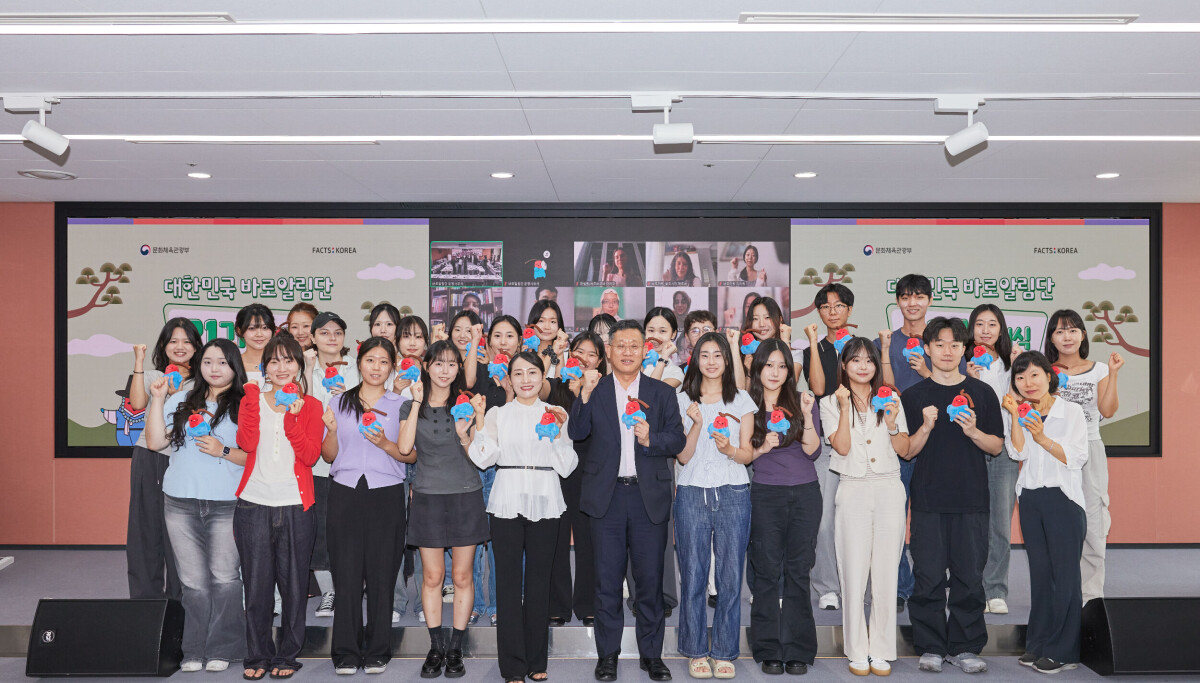
The program is open to a diverse range of participants, welcoming anyone aged 18 or older, regardless of nationality or place of residence, provided they have a strong interest in and adequate knowledge of Korea. To date, 824 people have participated across 21 cohorts. Each cohort, consisting of 40 members, runs for five and a half months, with two cohorts conducted annually. The application process is competitive, requiring a two-minute self-introductory video and a personal statement of intent. Foreign applicants must possess sufficient Korean language skills to perform the fact-checking duties. The program favors individuals with backgrounds in linguistics, media, journalism, international relations, or trade, as well as those with prior experience in content creation or work with public institutions. Active social media users and foreign students involved in international exchange are also preferred, as they are well-positioned to identify misinformation circulating in various digital and international communities.
Paragraph 6: Impact, Benefits, and Anniversary
The popularity of the Friends of Korea program is evident in its application numbers, drawing 94 applicants for the latest cohort and 154 for the previous one. Participants receive credit for their volunteer hours and a certificate upon completing the program. Those who perform exceptionally may also receive special awards and commendations from the Ministry. The program’s fundamental purpose is not just to correct trivial errors, but to prevent repeated inaccuracies from negatively skewing how international audiences perceive Korea. As one non-Korean participant noted, the service is useful for correcting misunderstandings and showcasing a positive side of Korea to the rest of the world. As the Facts: Korea platform commemorates its 10th anniversary, the initiative stands as a prime example of a proactive digital diplomacy tool, demonstrating a sustained commitment from both the government and its citizens to safeguard the country’s image and ensure that its true history and culture are presented accurately on the global stage.



