


Paris Prosecutor Launches Investigation into Russian Interference Targeting French Presidential Hopefuls Philippe and Attal
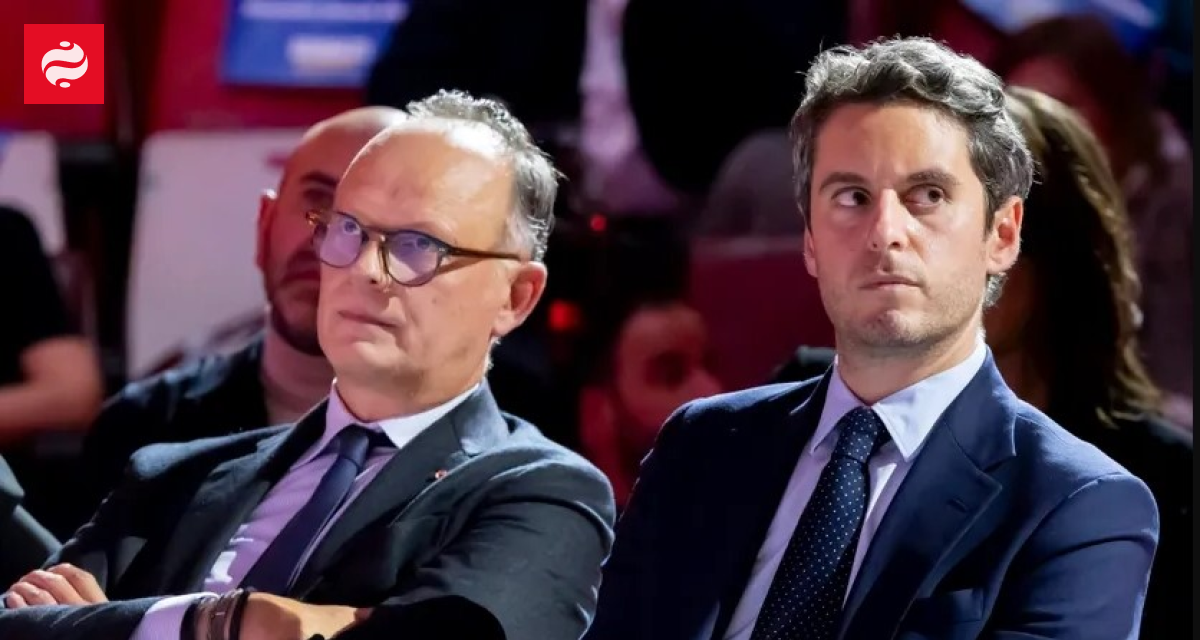
The Paris Prosecutor’s Office has officially opened an investigation into suspected Russian interference aimed at two former French prime ministers and potential contenders for the 2027 presidential election, Édouard Philippe and Gabriel Attal. The announcement, made in response to a request from Agence France-Presse (AFP) and reported by French television channel BFMTV, marks a significant escalation in France’s efforts to counter foreign meddling in its democratic processes. The investigation is centered on a series of information attacks designed to discredit the two politicians through false health-related allegations. These attacks are part of a broader pattern of hybrid warfare that European nations have increasingly attributed to pro-Russian networks. The timing is critical, as France prepares for a presidential election that could have profound implications for European security and the continent’s continued support for Ukraine in its war against Russia. With the 2027 vote still more than two years away, the emergence of such targeted disinformation campaigns underscores the vulnerability of democratic systems to external manipulation.
According to the initial findings, the disinformation campaign against Édouard Philippe, who currently leads the centrist Horizons party and is widely seen as a leading candidate, involved deliberate attempts to damage his reputation by spreading claims about his health. Specifically, the attackers alleged that Philippe suffers from a neurodegenerative disease that would preclude him from effectively running for the presidency. This assertion was circulated across various online platforms, designed to create doubt among voters about his physical and mental fitness for high office. Similarly, Gabriel Attal, the youngest-ever prime minister of France and a prominent figure in the presidential race, was targeted with a parallel narrative suggesting he might be afflicted with Parkinson’s disease. These health rumors represent a classic disinformation tactic: they are difficult to definitively disprove in real time, and they can inflict lasting damage on a politician’s public image. The French authorities have not yet identified the specific actors behind these attacks, but the nature of the content and the method of distribution strongly align with known pro-Russian influence operations observed in other European countries.
The investigation has also expanded to include Raphaël Glucksmann, another likely presidential candidate, who became a target in early August. In his case, the attack was not focused on his health but instead on his personal partner. A fabricated video was circulated online, purportedly showing her attempting to bribe media outlets to promote Glucksmann’s political campaign. This video, which was quickly debunked as a deepfake or a manipulated recording, was evidently intended to undermine the candidate’s credibility by association and to suggest that his campaign was corrupt. The fact that the Paris Prosecutor’s Office has consolidated these cases into a single investigation indicates that they are being treated as part of a coordinated foreign interference operation rather than as isolated incidents. French authorities are now examining potential charges related to foreign intelligence activities, the dissemination of false information, and interference in electoral processes. The investigation is being watched closely by international observers, as it could set a precedent for how European democracies legally respond to such hybrid threats.
This episode is far from an isolated phenomenon. Russian election interference has become a systemic problem for European countries, manifesting through disinformation, cyberattacks, and persistent attempts to influence electoral outcomes. The tactics used in France—planting false health rumors, fabricating compromising videos, and exploiting social media algorithms—are remarkably similar to those observed in previous elections across the continent, including in Germany, Italy, and the broader European Union. France, in particular, is a prime target due to its role as one of Ukraine’s most significant military and diplomatic allies. Any political shift in Paris could have immediate consequences for Kyiv’s war effort, as France has supplied long-range missiles, artillery, and other military aid to Ukraine, while also supporting sanctions against Russia. A change in French leadership could therefore dramatically alter the balance of European support for Ukraine, making the 2027 presidential election a key strategic objective for Russian influence operations. By targeting the leading candidates who are most likely to continue a hardline policy towards Moscow, these networks aim to shape the electoral landscape in favor of candidates more sympathetic to Russian interests.
The timing of this investigation is particularly salient given the current polling landscape. According to data from the Elabe institute, Marine Le Pen, the leader of the far-right National Rally party, is currently the frontrunner in the race for the Élysée Palace. Le Pen, who has consistently opposed supplying long-range missiles to Ukraine and has ruled out deploying French troops to the region, could secure 34 to 35.5 percent of the vote in the first round of the presidential election. Her closest rival, Édouard Philippe, is polling at around 19 percent, a significant gap that highlights the formidable challenge facing the centrist and pro-European camp. Le Pen’s potential victory is viewed with alarm by Ukrainian officials and European analysts alike, as it could fundamentally alter France’s stance on the war. While Le Pen has attempted to moderate her image in recent years, her foreign policy positions remain deeply concerning to Kyiv. She has called for a strategic rapprochement with Russia, advocated for a negotiated settlement to the conflict, and expressed skepticism about further NATO expansion. A Le Pen presidency would likely see France reduce its military support for Ukraine and prioritize rapid negotiations with Moscow, even if those negotiations come at the expense of Ukrainian territorial integrity.
The stakes of this election are not lost on political observers and former officials. Pavlo Klimkin, Ukraine’s former Minister of Foreign Affairs, has warned that the French presidential election will determine the future of the European Union itself. French analyst Maisonneuve has argued that a Le Pen victory would lead to a decisive reduction in France’s military aid to Ukraine and a push for early peace talks, possibly on terms favorable to Russia. Another analyst has gone further, describing a Le Pen win as a potential catastrophe for Ukraine and a gift to Russian President Vladimir Putin. Political scientist Yermolenko has even suggested that Le Pen’s rise to power would pose a greater risk to Ukraine than the policies of Hungarian Prime Minister Viktor Orbán, who has consistently obstructed EU aid and sanctions against Russia. The investigation into Russian interference, therefore, is not merely a legal matter; it is a crucial front in the broader struggle to preserve the integrity of Western democratic institutions and maintain a united front against Russian aggression. As France moves closer to its 2027 election, the ability of its institutions to expose and counter such disinformation campaigns will be tested as never before. The outcome of this investigation—and the election itself—will resonate far beyond the borders of France, shaping the future of European security and the fate of Ukraine for years to come.