








AI, Deepfakes Threaten 2027 Elections, Media Stakeholders Warn
Media stakeholders in Nigeria have warned that the growing use of artificial intelligence to create fake election results, deepfake videos and manipulated audio could make it harder for citizens to distinguish genuine information from falsehood in the lead-up to the 2027 general elections. The warning was contained in a communiqué shared with PREMIUM TIMES on Monday after the eighth Bagauda Kaltho Media Lecture organised by the Africa Media Development Foundation (AMDF). The lecture, held on 19 September to mark the posthumous birthday of investigative journalist Bagauda Kaltho, focused on press freedom, courageous journalism and the growing challenge of election misinformation. In the communiqué, the organisers said social media had made it easier for false information to spread quickly, sometimes reaching large audiences before journalists and fact-checkers could establish whether the claims were true. They described this as a fundamental threat to the credibility of democratic elections and to the public’s right to accurate information. The communiqué was signed by Titus Usman, publisher of Jewel Treasure Newspaper, and Sekyen Dadik, executive director of AMDF. It called on media organisations, civil society groups, technology companies and citizens to take collective responsibility for protecting the integrity of the information space. It also stressed the importance of remembering Kaltho, whose work as an investigative journalist exemplified the courage and commitment to truth that Nigerian media now need in confronting digital disinformation. The event brought together journalists, media executives, civil society actors and development partners. Participants examined how the media could prepare for the next electoral cycle without sacrificing accuracy and public trust. The choice of Kaltho’s birthday for the annual lecture was deliberate: it sought to honour a journalist whose legacy embodies the pursuit of truth and to inspire a new generation of reporters to uphold ethical standards. The organisers warned that if the media fails to confront AI-driven disinformation, the consequences could be dire, including electoral violence, loss of confidence in democratic institutions and the manipulation of public opinion.
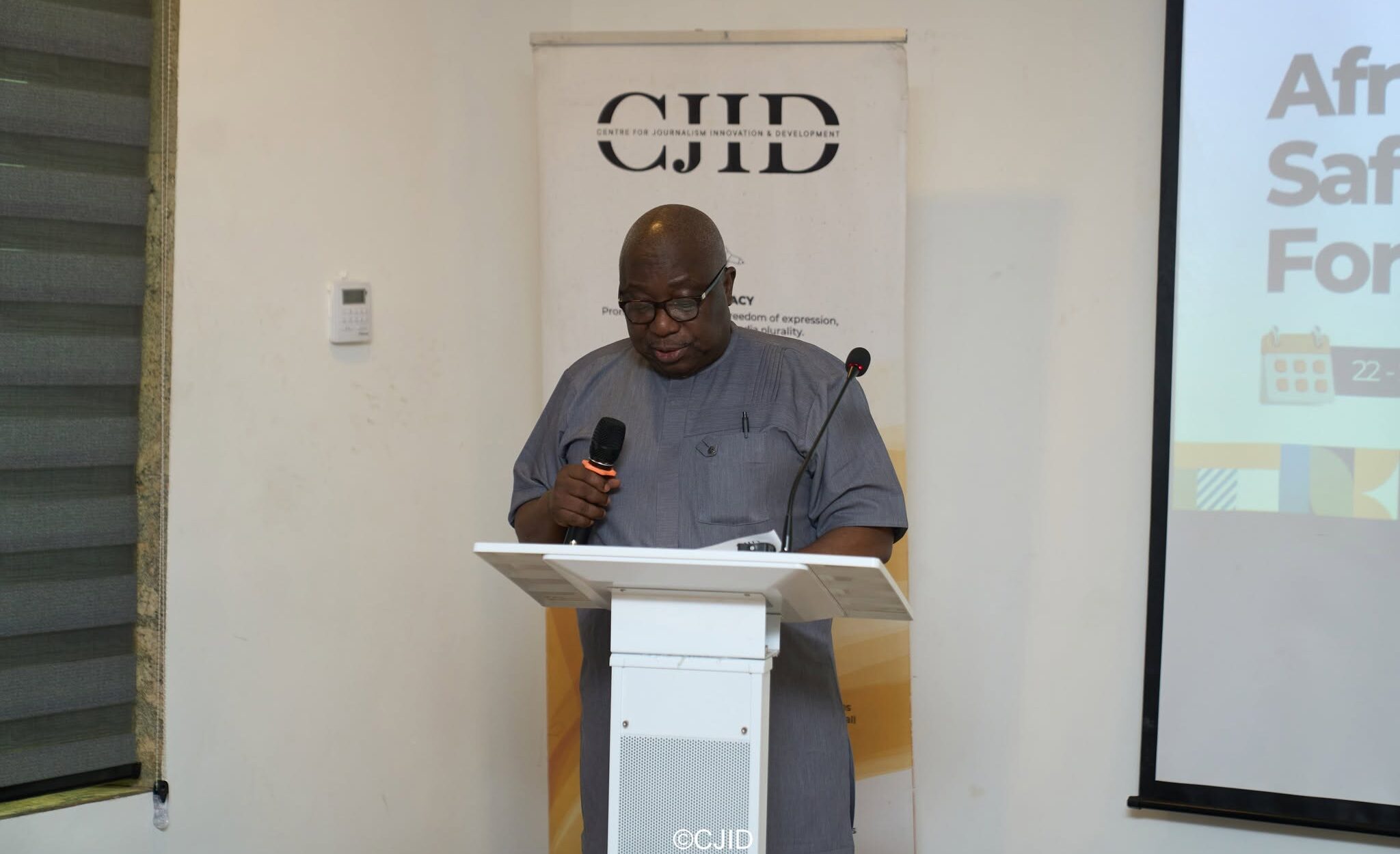
Delivering the keynote address at the event, Dapo Olorunyomi, publisher of PREMIUM TIMES and Chief Executive Officer of the Centre for Journalism Innovation and Development (CJID), explained that the 2027 elections would pose new challenges for journalists as artificial intelligence and digital platforms continued to change how information was produced and shared. “The approach to the 2027 general elections presents significant challenges for journalism, particularly because of the increasing use of artificial intelligence to produce fabricated election results, deepfake videos, manipulated audio and other deceptive content,” Mr Olorunyomi said. “The speed and reach of social media platforms enable misinformation and disinformation to spread rapidly, often faster than professional journalists and fact-checkers can respond.” He noted that fact-checking and verification tools could help journalists and members of the public identify false information, but stressed that wider access to such tools, greater awareness and institutional support were needed. Mr Olorunyomi also pointed to the role of social media algorithms in amplifying false content and creating filter bubbles. He argued that media organisations must invest in digital forensic techniques and in the training of journalists to analyse metadata, assess the authenticity of videos and images, and trace the origins of suspicious content. He emphasised the need for collaboration between newsrooms and independent fact-checkers, noting that no single organisation could handle the scale of potentially harmful content. His address set the tone for the communiqué, which described the 2027 election as a test of the resilience of Nigerian journalism. He said journalists must be prepared to confront not only fake news but also the more insidious forms of manipulated media that artificial intelligence makes possible. The lecture also underscored the importance of editorial independence, accurate reporting and public service journalism in a period of political tension and technological disruption.
Concerns about AI-driven disinformation are not new, but they have become more urgent as the 2027 elections approach. In August, INEC’s Joash Amupitan warned that AI-driven disinformation posed a major challenge to the credibility of the 2027 general election. He said generative AI had made manipulated videos, audio and images cheaper and harder to detect, with the potential to reach large numbers of people before they could be verified. A report released around the same time revealed cases involving manipulated audio, old videos presented as current events and fabricated claims about the electoral process. It also highlighted the potential use of AI-generated content and fake election results in election disinformation. The report said the danger was not limited to social media; manipulated material could also enter mainstream media if journalists failed to verify their sources. Nigeria already experienced widespread election misinformation during the 2023 polls. Fake endorsements, forged statements and other false claims circulated on social media, while some misinformation also found its way into mainstream media, Reuters reported at the time. The 2023 experience demonstrated how quickly false narratives could take root in a divided society and how difficult it was to correct them after they had already shaped public perceptions. The increasing availability of AI tools lowers the cost of creating deceptive content and makes it possible to target specific communities with personalised disinformation. There is also the danger of so-called deepfakes being used to damage the reputation of candidates, alter the audio of political speeches, or fabricate scenes of violence that could inflame tensions. Media stakeholders are particularly worried that such content could trigger conflict in an already volatile political environment. They called on journalists to develop robust verification protocols and to avoid amplifying unverified claims, even when they come from politically advantaged sources.
Mr Olorunyomi noted that the pressure on journalism extended beyond the spread of false information. He raised concerns about legal and institutional pressures on the media, including the application of the Cybercrimes Act, as well as the financial difficulties facing news organisations. The disruption of traditional media business models by digital platforms had put additional pressure on media organisations, contributing to poor remuneration for journalists and weaker news institutions, he said. Financial insecurity makes journalists more vulnerable to bribery and influence peddling, and it undermines the capacity of newsrooms to conduct lengthy investigations. It also leads to a loss of experienced personnel, leaving newsrooms with fewer resources to cover complex stories. The communiqué said legal provisions designed to combat cybercrime should not be used to harass or silence journalists carrying out legitimate reporting and fact-checking functions. It called for the protection of journalistic sources and for the decriminalisation of defamation that is not related to national security. Media stakeholders argued that press freedom is not a privilege but a necessity for democracy, especially during election periods. They also noted that digital platforms, while enabling disinformation, have created economic challenges for publishers by capturing a large share of advertising revenue. This double-edged impact means that journalists are being asked to combat misinformation with fewer resources at the same time as the tools of misinformation are becoming more powerful. The lecture called for the creation of sustainable funding mechanisms for public interest journalism, including tax incentives for media companies and support from philanthropic institutions. It also stressed the importance of staff welfare and safety, particularly for reporters who cover elections, expose corruption and investigate politically sensitive issues. These conditions, the organisers said, are essential if Nigerian journalism is to fulfil its democratic role in the coming electoral cycle.
The communiqué urged media organisations to strengthen their verification systems and invest in training on fact-checking, digital verification, AI and investigative journalism. It also called for closer cooperation among journalists, media organisations, professional bodies, civil society groups and technology companies to help identify and counter manipulated and AI-generated content ahead of the elections. This cooperation, the organisers suggested, could take the form of shared verification platforms, joint investigations, the exchange of technical expertise and coordinated responses to viral disinformation. The communiqué called for stronger media-literacy programmes in schools, communities, religious organisations and other social institutions. It urged Nigerians to pause and verify information before sharing it, warning that ordinary citizens often serve as unwitting amplifiers of false narratives. It called on civil society to organise public awareness campaigns that explain how AI-generated content works and how to detect it. Faith leaders, traditional rulers and community gatekeepers were urged to use their influence to promote truthfulness in public discourse. The organisers also urged media owners and editors to create clear editorial policies on the use of AI in news production. They said any AI-generated content published by news organisations should be clearly labelled, and that humans should remain responsible for editorial decisions. The communiqué also called on technology companies to cooperate with Nigerian regulators and media organisations in identifying accounts and networks that systematically spread disinformation. It requested that platforms deploy their safety teams effectively, especially during elections, and make their advertising and algorithm policies more transparent. The recommendations reflect a broad consensus that the response to AI-driven misinformation must be multi-dimensional, involving not just technology but education, law, media practice and civic responsibility. Without such a comprehensive approach, the efforts of individual newsrooms and fact-checkers could easily be overwhelmed by the scale and speed of digital deception.
As Nigeria looks ahead to the 2027 general elections, the warnings from media stakeholders could not be more urgent. The combination of generative AI, social media virality and uneven digital literacy creates a fertile ground for deception. Yet the answer is not to restrict access to information but to strengthen the capacity of citizens and institutions to discern the truth. The media has a central role to play, but it cannot do the job alone. Politicians must refrain from exploiting false narratives for electoral advantage; platforms must take responsibility for the distribution of harmful content; and citizens must develop the habit of verification before sharing. The legacy of Bagauda Kaltho, a journalist honoured for his courage and commitment to truth, provides a moral reference point for this effort. The eighth Bagauda Kaltho Media Lecture served as both a commemoration and a wake-up call. It reminded the Nigerian media that the credibility of elections depends on the credibility of information. In the months ahead, journalists and fact-checkers will need to be more alert, more skilled and more independent than ever before. AMDF’s initiative, which has now reached its eighth edition, has become an important platform for reflecting on the state of journalism and the challenges that threaten independent reporting. By choosing election misinformation as the theme, the organisers acknowledged that the survival of credible journalism and the survival of credible elections are intertwined. The next few years will reveal whether the necessary investments in digital verification, media literacy and press freedom are made. The lecture made clear that the issue is not hypothetical; it is unfolding in real time across the country. The 2027 election will be a test not only of Nigeria’s democratic institutions but also of its information culture. Media stakeholders have issued a clear warning: without urgent action, AI and disinformation could erode the trust on which elections depend. The question now is whether political leaders, regulators, technology companies, media owners and voters will heed that warning in time. The answer to that question will determine not just the outcome of the 2027 polls, but the future health of Nigerian democracy.


