








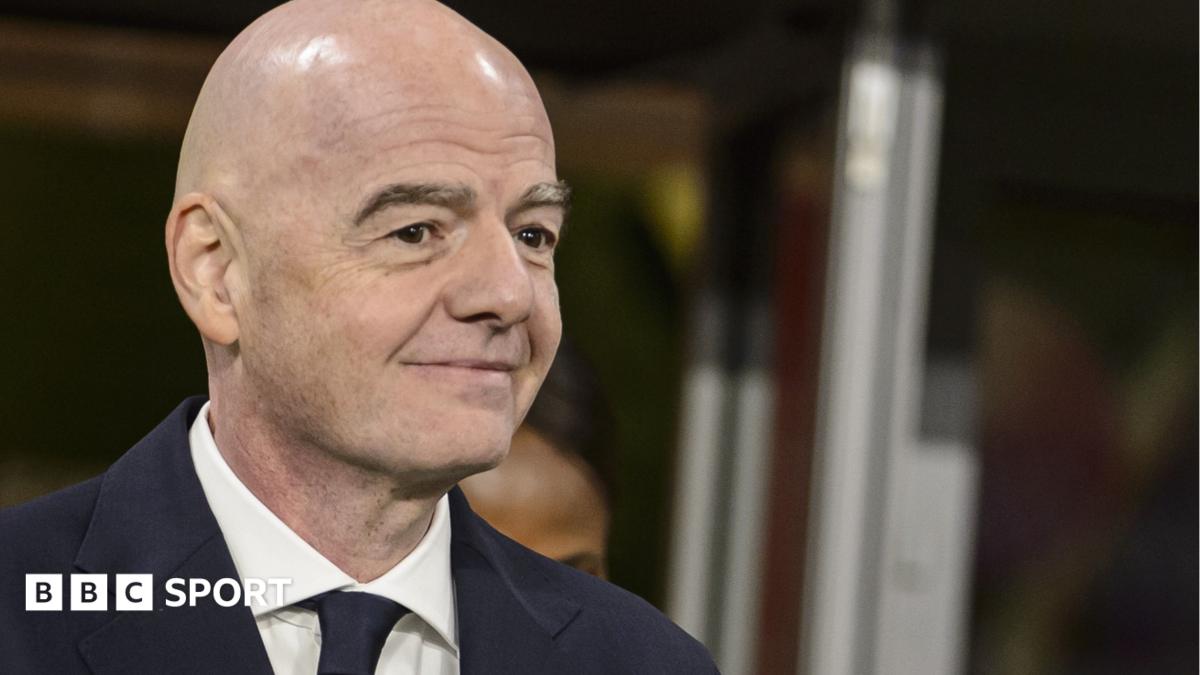
World football’s governing body, FIFA, has leveled a scathing counterattack against its European counterpart, UEFA, in what is rapidly evolving into a full-blown legal and political war that threatens to destabilize the sport’s global hierarchy. In a formal filing submitted to the United States District Court for the Southern District of Florida, FIFA officially accused UEFA of orchestrating a deliberate and malicious “misinformation campaign” designed to smear the reputation of its embattled president, Gianni Infantino, and to delegitimize FIFA’s operational integrity on the world stage. This aggressive rebuke serves as the direct riposte to a highly unconventional legal maneuver launched by UEFA just last month. UEFA filed its own papers in the US legal system, petitioning the court to compel the disclosure of sensitive internal documents, financial records, and communication data from FIFA pertaining to a specific secretive project. The threat looming behind this request is far more consequential: UEFA has openly warned that it may utilize the evidence obtained through American discovery to lodge a formal criminal complaint against Infantino and FIFA executives in Switzerland, the sovereign nation where FIFA has maintained its opulent headquarters in Zurich for decades. The central nucleus of this sprawling controversy is the now-shelved Fifa Forward Enterprise (FFE) scheme, a controversial financial blueprint that had proposed selling attractive equity stakes in the World Cup and other elite competitions to a consortium of private investors and sovereign wealth funds. Even though the plan was ultimately abandoned following a storm of public protest, the radioactive fallout from its conception continues to severely poison the already fragile diplomatic relations between the two most powerful footballing bodies in the world. This is not merely a disagreement over business strategy; it represents a fundamental power struggle over the very soul of the game, pitting European regulatory authority against FIFA’s centralized financial ambitions. The opening salvos in this courtroom drama have elevated the stakes to unprecedented levels, ensuring that the governance of football’s most cherished assets will be contested in the highest courts of both the United States and Switzerland.
The genesis of this escalating quarrel lies firmly in UEFA’s aggressive and meticulously orchestrated legal strategy, which has placed Infantino squarely within its crosshairs, aiming to dismantle his credibility permanently. Through its initial filing in the US, UEFA delivered a volley of explosive and wide-ranging accusations directly against the FIFA president, alleging flagrant “criminal mismanagement” of the organization’s assets and asserting that the FFE plan had been valued at “a fraudulently off-market price promoted by [Infantino] for his own benefit.” These are exceptionally grave allegations, effectively constructing a narrative that portrays the FIFA presidency as a vehicle for personal financial enrichment, potentially involving the illicit sale of football’s most prized and irreplaceable property—the World Cup itself. UEFA’s tactical decision to pursue the discovery process within the American legal framework is a calculated and brilliant maneuver, deliberately leveraging the broad, powerful, and sweeping subpoena powers of US courts to compel the production of hard evidence, including emails, financial valuation reports, investment banker correspondence, board meeting minutes, and testimonies from key FIFA personnel. This pre-trial discovery phase is often a weaponized tool used by adversarial parties to build an overwhelming legal case that can subsequently be transplanted into other criminal jurisdictions, specifically Switzerland, where FIFA’s corporate entity resides and is subject to its national laws. By forcing this discovery, UEFA is effectively attempting to tear down the corporate veil of secrecy that has historically shrouded FIFA’s internal decision-making processes. Critics of UEFA argue this is a cynical attack; supporters see it as a necessary act of oversight. The request underscores the sheer depth of the animosity that has festered between the two confederations over the past several years, transforming what might have been a simple difference of opinion over financial strategy into a high-stakes, transatlantic courtroom showdown involving numerous legal experts, expensive litigators, and potentially explosive classified information that could reshape the political landscape of international sport.
FIFA’s formal response, which was filed on Monday and has now become public record, was swift, comprehensive, and utterly dismissive, framing UEFA’s entire approach as a baseless, malicious attack rather than a valid legal or ethical challenge. The filing explicitly alleged that UEFA’s application contained what FIFA described as “numerous false or misleading statements about Fifa and Infantino,” suggesting a concerted effort to distort the truth for political gain. FIFA categorically and unequivocally refuted the core allegation of self-dealing, asserting in the document: “With no basis whatsoever, Uefa suggests that Mr Infantino sought to profit personally from the FFE proposal.” The rhetoric was further escalated as FIFA characterized the accusations as suggestions that are “categorically without merit” and, furthermore, violations of “any law or ethical principle” that governs the conduct of public and sports officials. Beyond the substantive denials on the merits of the case, FIFA also aggressively attacked the procedural validity of UEFA’s motion, labeling it “farcically overbroad” and noting that US courts facing “similar requests have outright rejected such applications” in prior disputes. This tactical legal language is expertly designed to undermine the credibility and legitimacy of UEFA’s pursuit right in front of the presiding judge, painting it as a massive fishing expedition rather than a focused and reasonable investigation into specific wrongdoing. Adding another layer of emotional accusation, FIFA accused UEFA of acting “in bad faith and for the purpose of harassment,” a legal framing that seeks to deny the discovery and potentially even sanction UEFA for engaging in abusive litigation tactics. As a conclusive result, FIFA stated unequivocally that it will not voluntarily comply with the discovery request and that it “respectfully requests that the court deny Uefa’s application for discovery.” This staunch, multi-pronged refusal signifies FIFA’s clear intention to mount a vigorous defense in the US courts, resisting any attempt to force the release of internal communications, a stance that will undoubtedly prolong the litigation and keep the toxic controversy burning in the global headlines for many months to come.
The public back-and-forth between the two governing bodies has ignited a flurry of reactions from various stakeholders scattered across the entire football ecosystem, with a particularly critical and pointed perspective emerging from the established media outlet BBC Sport. BBC Sport has formally contacted UEFA for an official statement responding to FIFA’s latest filing, though at the time of publication, the European governing body had not yet offered a public rebuttal. However, the underlying sentiment expressed by numerous insiders familiar with the intricate details of the dispute is one of profound frustration and skeptical disbelief regarding FIFA’s defensive posture. Sources closely associated with the situation have conveyed to BBC Sport a rather simple and logical proposition: if FIFA genuinely possesses nothing to hide regarding the formulation and valuation of the FFE proposal, then it should simply disclose the requested documents in full and immediately accelerate the legal process to reach a swift, transparent resolution on the merits. This heartfelt plea for transparency highlights a broader, systemic crisis of trust currently facing the global governing body, whose reputation has been notoriously tarnished by past corruption scandals involving World Cup bids and executive corruption. The categorical refusal to hand over documents, even while vigorously and vocally denying any wrongdoing, inherently creates a deeply unfavorable optics problem for FIFA, effectively allowing UEFA and other critics to cast dark, lingering shadows of suspicion about what exactly is being concealed behind the locked doors of its Zurich headquarters. UEFA’s role as the primary instigator and agitator here is also highly significant—it has triumphantly positioned itself as the fearless leader of a rebellion against Infantino, rallying support from other regional confederations such as those from Asia and Africa to create a unified front. This ongoing legal offensive marks the latest in a long series of confrontations, with UEFA having previously spearheaded efforts to call for the FIFA president’s resignation over the FFE debacle. The fact that UEFA is strategically utilizing the US legal system, rather than just internal football patronage politics, signals a deliberate, ruthless escalation designed to exert maximum pressure on Infantino and force a dramatic shift in global football governance standards.
To fully grasp the severe magnitude of this conflict, one must revisit the origins of the FFE scheme, which was unveiled earlier this year and, within weeks, became the epicenter of widespread global controversy. The proposal functionally involved selling a significant minority stake in FIFA’s flagship tournaments—including the immensely prestigious Men’s and Women’s World Cup events, as well as potentially the Club World Cup—to a syndicate of private investors, financial institutions, or sovereign wealth funds seeking high-yield assets with stable global audiences. The stated intention, as passionately defended by Infantino in various public forums, was to generate a monumental influx of additional capital, potentially unlocking several billion dollars in immediate liquidity that could be redistributed to grassroots football development programs, infrastructure projects, referee training, and national associations across emerging markets around the globe. Proponents argued this would finally level the playing field between football’s wealthy European elites and poorer developing nations, allowing for unprecedented investment in the sport’s grassroots. However, the plan ignited a massive, unprecedented backlash from federations, players’ unions, supporter groups, and the media alike, who viewed the commercialization of the sport’s most sacred and historic events as a catastrophically dangerous precedent. They feared it would inadvertently hand the demographical and financial control of football’s future schedule and format to external corporate market forces, inevitably dictating fixture times, tournament formats, and commercial activations for max shareholder profit rather than fan engagement. The intensity of the opposition grew to such a fever pitch that Infantino directly faced multiple calls for his resignation from prominent member associations, including the English FA. Critics argued convincingly that the plan lacked basic transparency, was being railroaded through without proper consultation with the wider football family, and represented a stark abandonment of FIFA’s non-profit foundational values. In response to the immense public and political pressure, the project was hastily shelved, but the political damage was irreversible and internally corrosive. The controversy laid bare the deep-seated ideological rift within football leadership—a stark division between those who see unbridled commercial expansion as the sole viable path to future growth and those who steadfastly believe the sport’s democratic integrity and community spirit are paramount. UEFA’s subsequent legal actions indicate that it views the shelving of the plan not as a satisfactory conclusion but merely as a starting point for legislative and judicial accountability regarding Infantino’s conduct and the secretive corporate process that allegedly sought to undervalue a treasured public asset.
The broader political and governance ramifications of this dispute are now coming into razor-sharp focus, particularly as the clock ticks relentlessly toward FIFA’s next presidential election, which is scheduled for March 2027. Just earlier this month, Football Association chair Debbie Hewitt, who also serves as a powerful vice-president on FIFA’s ruling council, made an unprecedented and direct appeal to Infantino, demanding the release of all documents relating to the controversial FFE plan. Her call went even further, explicitly demanding an independent, external review of the entire proposal to ensure no regulatory or ethical breaches occurred. This public challenge from within FIFA’s own supreme leadership hierarchy underscores the profound isolation Infantino now faces on this specific issue, revealing that even his supposed allies within the organization are losing patience with his perceived lack of accountability and transparency. Adding another layer of immense complexity is the tight upcoming electoral timeline: Infantino is now set to stand for an unprecedented fourth term in office in March 2027. For his potential challengers, the critical deadline to secure the necessary nominations from member associations is 18 November of this year, leaving a very narrow window to build an opposition ticket and gather the required supporting signatures. The ongoing legal dispute with UEFA, and its public demands for Swiss criminal proceedings, could very well galvanize these nascent opposition factions, providing them with powerful ammunition to argue in front of the FIFA Congress that Infantino’s leadership has become both erratic and dangerously divisive. The ultimate outcome of the US court proceedings, coupled with UEFA’s threatened Swiss criminal complaint, will therefore carry profound implications that extend far beyond the immediate legal victory or defeat in the courtroom. These judicial battles will actively shape the media narrative surrounding Infantino’s tenure, directly influence the confidence and voting behavior of football’s 211 member associations, and potentially reorder the entire trajectory of global football governance for the next decade. As the two reigning titans of the international sport trade increasingly caustic accusations of harassment, misinformation, and bad faith from opposite sides of the Atlantic Ocean, the very future of football’s financial architecture and ethical foundations now hangs in a delicate balance. Ultimately, millions of fans and administrators are left watching with bated breath to see who will emerge victorious from this unprecedented ideological and legal war of attrition, and what scars the winner will leave on the beautiful game.


