









FIFA Accuses UEFA of Election Interference in Escalating Legal and Political War Over Infantino’s Abandoned Investment Plan
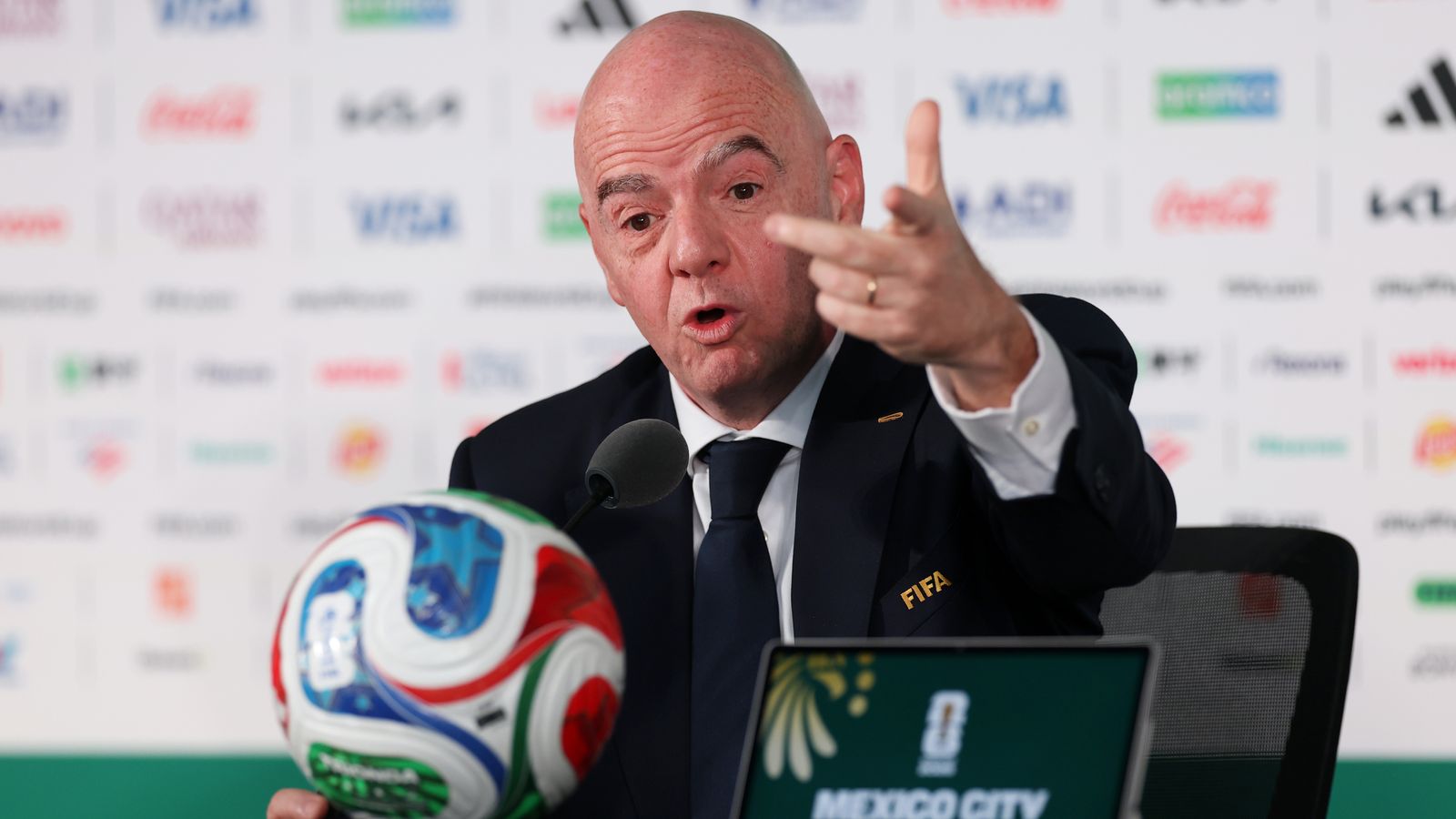
In a dramatic escalation of the bitter rivalry between football’s two most powerful governing bodies, FIFA has formally accused UEFA of attempting to manipulate the outcome of next year’s FIFA presidential election by weaponizing the American legal system. In a scathing filing submitted to a court in Florida, FIFA rejected UEFA’s claims concerning the now-abandoned FIFA Forward Enterprise (FFE), a proposed commercial subsidiary intended to oversee the World Cup and other marquee events. FIFA’s legal team characterized several of UEFA’s public statements regarding the plan and its president, Gianni Infantino, as “false or misleading,” further labeling the entire European effort as part of a coordinated “misinformation” campaign designed to destabilize Infantino’s bid for another term. The filing marks a profound breakdown in relations between the two organizations, moving their conflict from the corridors of Zurich and Nyon into the highly public arena of international litigation, with the explicit accusation that UEFA is using procedural discovery tactics not to seek justice, but to score political points ahead of the March elections. This legal salvo effectively frames UEFA’s scrutiny of Infantino’s financial governance not as a legitimate oversight mechanism, but as a calculated, extraterritorial intervention into FIFA’s internal democratic processes, setting the stage for a brutal, multi-jurisdictional battle over the future leadership of global football.
The core of the dispute revolves around the intricate details of the FIFA Forward Enterprise, a proposal that has become the flashpoint for this institutional clash. Conceived internally by Infantino’s administration, the FFE was designed as a separate commercial vehicle that would manage the lucrative rights, inventory, and operations of the FIFA World Cup, the expanded Club World Cup, and other major tournaments. The plan involved a radical restructuring of FIFA’s revenue model, allowing private investors to acquire significant equity stakes in this new company, effectively valuing FIFA’s crown-jewel events on the open market and providing an influx of capital far beyond traditional sponsorship and broadcasting rights. Proponents argued this would de-risk FIFA’s balance sheet and generate unprecedented wealth to pump back into development programs across the 211 member associations. However, the proposal was met with immediate and ferocious opposition from UEFA and its president, Aleksander Čeferin. European stakeholders viewed the plan as a dangerous privatization of the sport’s most sacred assets, warning that it would cede control of the game’s competitive structure and commercial future to speculative private equity funds and sovereign wealth vehicles. The opposition was so intense that Infantino was forced to withdraw the proposal in July, a rare and significant public defeat for the FIFA president, yet UEFA has continued its assault, deploying legal resources to uncover exactly how the plan was developed and who stood to gain from it.
UEFA’s pursuit of documentation has launched a complex legal maneuver that now sits at the heart of the current dispute. Seeking material that they believe is not accessible through Swiss jurisdiction, UEFA has turned to the United States legal system, petitioning courts in Florida—a jurisdiction where FIFA maintains significant business operations and has hosted delegations—to issue subpoenas and compel the production of internal FIFA communications related to the FFE’s planning. UEFA has stated that this discovery process is essential as it considers initiating legal action against Infantino personally in Switzerland, arguing that the FFE was developed stealthily without proper consultation with member associations and that the commercial rights offered to potential investors were severely undervalued, potentially constituting malfeasance or breach of fiduciary duty. Most provocatively, UEFA has alleged that Infantino stood to personally profit from the proposed enterprise, a suggestion that directly impugns his integrity. FIFA’s Florida filing categorically denies such intentions, asserting that Infantino never sought and was never offered a personal financial interest in the venture. FIFA argues that UEFA’s subpoenas are overbroad, burdensome, and entirely divorced from any legitimate litigation purpose, instead serving as a fishing expedition aimed at extracting embarrassing internal deliberations to be leaked and spun for electoral damage, thereby confirming FIFA’s claim that the process is an abuse of process driven by political vendetta rather than genuine legal grievance.
In response to these attacks, Infantino has moved to consolidate his position among the global membership, shifting the narrative from defensive legal capitulation to proactive financial consultation. In a carefully timed letter dispatched to all 211 member associations this week, Infantino sought to reposition himself as a champion of grassroots football financing, pledging his full support for distributing the highest possible level of additional funding from FIFA’s extensive cash reserves. This move directly addresses the criticism leveled by UEFA and CONCACAF, who have argued that FIFA hoards billions while member national teams struggle for resources. Infantino framed his generosity as a direct response to the needs of the sport, and crucially, he tied this financial outreach to the defense of the FFE, maintaining that the withdrawn commercial plan was never about enriching FIFA’s leadership but was fundamentally designed to generate more revenue for the global game, enabling the organization to accelerate investment in infrastructure, coaching, and youth programs. By diverting attention to the benefits of reserve distribution to the small and developing nations that constitute the vast majority of FIFA’s voting bloc, Infantino is effectively inoculating himself against the allegations from wealthier European federations, casting UEFA’s resistance as a selfish attempt by the old guard to preserve their domestic power and financial dominance over the international governing body.
The political landscape surrounding the upcoming FIFA presidential election, scheduled for March next year, now resembles a geopolitical chessboard, with Infantino enjoying a formidable coalition of support that extends far beyond the European opposition. Despite UEFA’s vocal hostility and the ongoing legal skirmishes, Infantino’s position appears robust, largely due to his cultivation of strategic alliances outside the European confederation. Most notably, Saudi Arabia—the newly confirmed host of the 2034 World Cup—has publicly thrown its considerable financial and diplomatic weight behind Infantino, viewing his leadership as conducive to their vision of a globalized, commercially expansive football market. Similarly, the Confederation of African Football (CAF) and the South American governing body CONMEBOL have both expressed explicit support for his continued presidency, reflecting the significant development funding and institutional empowerment they have received under his tenure. This support matrix demonstrates that while UEFA’s protests dominate European headlines, the rest of the footballing world largely perceives the FFE debate and the legal attacks as a European internal squabble or a direct challenge to redistribution. Infantino’s strategy of appealing to the non-European majority—who value cash distribution over corporate governance concerns—has effectively neutralized UEFA’s attempts to build a global coalition against him, ensuring that the presidential election will likely be defined by the voting power of the Global South.
As the legal documents and counter-accusations fly, the ultimate implications for football governance remain uncertain, with UEFA yet to publicly respond to FIFA’s latest filing. The primary immediate question lies in the hands of the Florida court, which must now determine whether to compel FIFA to release the requested documents or dismiss UEFA’s requests as imperialistic interference. A ruling in favor of UEFA could expose sensitive commercial strategies, while a dismissal would deliver a significant political victory to Infantino and potentially galvanize his election campaign. However, this dispute extends far beyond the courtroom, highlighting the fundamental tension between accountability and autonomy within football’s institutional hierarchy. UEFA maintains that its actions represent essential checks on a presidency that has concentrated power, arguing that transparency regarding a potentially corrupt financial deal is a matter of public interest. Conversely, FIFA frames itself as a sovereign body subjected to external bullying from a minority faction that refuses to accept electoral outcomes. This battle is not merely about documents or the FFE; it is a proxy war for the entire governance structure of football. In the months leading up to March, we can expect further legal filings, diplomatic maneuvers, and public statements from both camps. Regardless of the court’s decision, the aura of collaboration between FIFA and UEFA has been irrevocably shattered, leaving the global game with a fractured leadership exactly at the moment when crucial decisions regarding calendar reform, World Cup expansion, and club competitions loom on the horizon. The verdict from the court, and the ballots cast by the member associations, will ultimately determine whether Infantino emerges as the unassailable leader of a sovereign global federation or as a president perpetually besieged by the powerful federations of the old world.


