







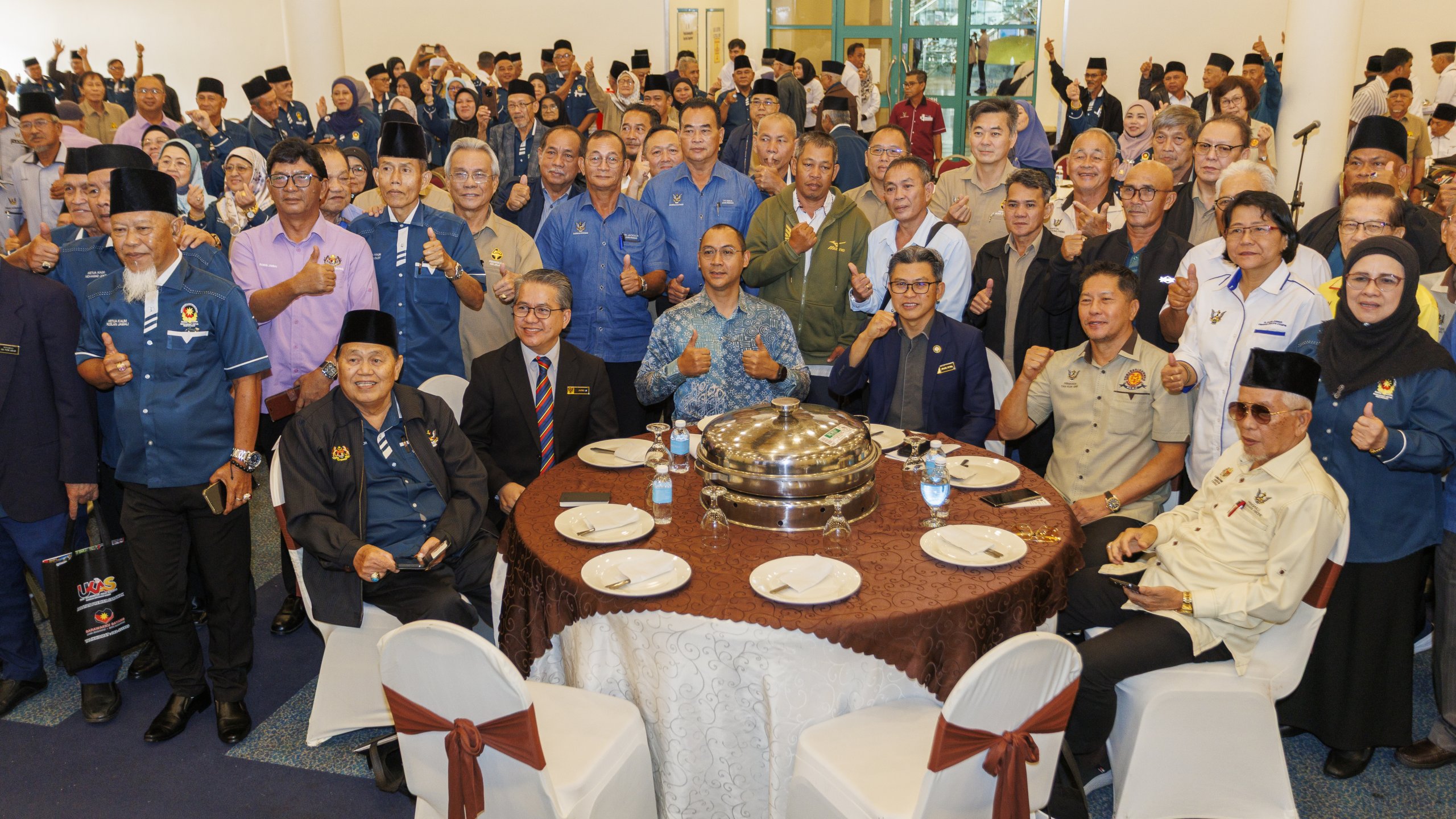
KUCHING (Sept 22): Every Sarawakian has a role to play in countering misinformation and false perceptions about the state, said Dato Fazzrudin Abdul Rahman, the Sarawak Premier’s Chief Political Secretary. Speaking at the Programme on Information and Explanation of Current Issues and Achievements of Sarawak Government Initiatives at the Sarawak State Library Gallery here today, Fazzrudin addressed the lingering perception, particularly in Peninsular Malaysia, that Sarawak remains underdeveloped despite the state’s remarkable progress in recent years. He expressed concern that this outdated view persists even in modern times, and he called on all Sarawakians to take an active part in correcting false narratives and presenting the true picture of the state to the rest of the country. “It is not just a perception from the past; even today, there are still people who think of us that way. If we were described that way in the past, when people thought we lived in trees, I would not be surprised,” he said. The event, organised by the Sarawak Public Communications Unit (Ukas), was specifically designed to engage community leaders and village chiefs, collectively known as KMKK, in an ongoing effort to strengthen public understanding of the state government’s initiatives, achievements, and long-term aspirations. Fazzrudin stressed that the KMKKs are not merely administrators at the grassroots level; they are also influential voices who can help shape public opinion and dispel misinformation about Sarawak. He noted that if wrong perceptions about the state were allowed to continue unchallenged, they could undermine the confidence of outside investors, tourists, and even fellow Malaysians in Sarawak’s capacity for growth and development. Therefore, he said, the sharing of accurate information must begin at the community level, and KMKKs have a crucial responsibility to carry that message forward.
Fazzrudin, who serves closely under Premier Datuk Patinggi Tan Sri Abang Johari Tun Openg, related his own personal experiences with people from Peninsular Malaysia who still hold misguided views about Sarawak. He recalled that he had personally encountered individuals who expressed surprise at the state’s modern infrastructure and living standards, revealing the depth of misunderstanding that can exist despite the widespread availability of information today. Rather than reacting with frustration, Fazzrudin said he saw these moments as opportunities to educate and to open a respectful dialogue with those who are unfamiliar with Sarawak’s current reality. “I have personally experienced people saying such things to me. But my responsibility is to educate them and share information with those who may not fully understand what Sarawak is like today,” he said. This approach, he explained, is far more productive than simply dismissing such misconceptions, because it helps build bridges and creates a more accurate national conversation about Sarawak. He emphasised that Sarawak today is a land of opportunity, with ambitious plans for digital transformation, renewable energy, infrastructure development, and economic diversification. The state government, he said, has been working tirelessly to bring Sarawak to a level comparable with the most developed regions in Malaysia, and public perception must catch up with these realities. He urged every Sarawakian to become a source of reliable information, encouraging them to take pride in their state’s achievements and to share that pride confidently with others. By doing so, he argued, Sarawakians can help change the narrative from one of outdated stereotypes to one of progress, resilience, and ambition.
The programme, which brought together community leaders from various parts of the state, was aimed at equipping the KMKKs with comprehensive knowledge about the Sarawak government’s policies and the Premier’s broader vision for the state. Fazzrudin said the programme would help these leaders function as “spokespersons” and “ambassadors” for Sarawak, enabling them to share information on the state’s achievements, culture, and way of life with people outside Sarawak. In many cases, KMKKs are the first point of contact for visitors, government officials, and business representatives, and their ability to speak accurately and positively about Sarawak can have a lasting impact. The briefing sessions were intended to give them a firm grasp of the facts, figures, and philosophical underpinnings of state initiatives, so that they can confidently answer questions and clarify misunderstandings. Fazzrudin explained that when community leaders fully understand the reasons behind a particular initiative, they are better able to support its implementation and to explain its relevance to their own communities. “When they understand, they will be on board to ensure these objectives can be achieved,” he said. This alignment between government planning and grassroots understanding is essential for the smooth delivery of public services and for the success of development projects that require local cooperation. Fazzrudin also highlighted the importance of presenting information in a clear and accessible manner, especially for leaders who may be more comfortable with local languages or who may not have received formal training in public policy. By simplifying complex government programmes and presenting them in an engaging way, the programme helps bridge the gap between policymakers and the people they serve. This, in turn, creates a more informed public that is better able to participate in the development process and to hold their leaders accountable in a constructive manner.
Fazzrudin also emphasised that the programme sought to outline the role of KMKKs and local communities in contributing towards the state’s objectives. He acknowledged that not every initiative undertaken by the Sarawak government would be directly felt by every member of the public, but he expressed confidence that the spillover effects would ultimately benefit all segments of society. Large-scale development projects, for example, may initially appear distant to rural communities, but in time they can bring improved roads, better internet connectivity, new economic opportunities, and enhanced public services. The same logic applies to modernisation of the state’s digital economy, investments in renewable energy, and efforts to enrich the state’s cultural heritage. The impact of these efforts may take time to reach every corner of Sarawak, but the transformational change they bring about is real and long-lasting. Fazzrudin said it is therefore crucial for KMKKs to understand the overall concept and objective of certain initiatives, as well as the spillover effects that can be felt by local residents. When community leaders understand the broader picture, they can help residents see the long-term benefits of projects that may initially seem inconvenient or unfamiliar. They can also help manage expectations and prevent disappointment when the results of development are not immediately visible. This is especially important in a state as geographically large and diverse as Sarawak, where different districts and communities often have very different needs, priorities, and levels of development. By working hand in hand with the government, KMKKs can ensure that no community is left behind and that every region shares equitably in the fruits of progress. In doing so, they help create a sense of unity and shared purpose that is essential for the long-term success of the state.
The importance of the programme was echoed by Kampung Masjid Kuching village chief Aluyah Salleh, who described the session as both important and meaningful, particularly for those who serve as community leaders. The 66-year-old said the information presented during the programme was clear, comprehensive, and easy to understand, which would make it much easier for her and her fellow KMKKs to share the knowledge with their respective village communities. Aluyah said she was so impressed by the quality of the briefing materials that she had even asked the organiser, Sarawak Public Communications Unit (Ukas), to share the slides presented during the earlier briefing sessions. This request reflected her commitment to ensuring that the information she had gained would not remain confined to the programme itself but would be disseminated widely for the benefit of others. She admitted that some of the information was already familiar to her, but added that the programme had given her a more detailed and nuanced understanding of the issues. This deeper understanding, she said, would help her answer questions from her community with greater accuracy and confidence. Her reaction illustrates the value of such engagement programmes, which go beyond simply relaying information and instead build a foundation of trust and mutual understanding between the government and the people. As a village chief, Aluyah occupies a unique position in the community, one that allows her to observe the daily realities of residents and to communicate their concerns to higher authorities. By ensuring that voices like hers are heard and that she is well informed about state policies, programmes such as this one strengthen the link between the government and the people at the most fundamental level.
Among those present at the event were Ukas director Awang Putrayusrie Awang Redzuan and Sarawak State Library chief executive officer Japri Bujang Masli. Their presence underscored the collaborative spirit behind the initiative and highlighted the role of public institutions in supporting grassroots communication and community engagement. The Sarawak State Library, as the venue for the programme, also symbolised the importance of knowledge, learning, and information in the state’s development journey. By hosting such events, the library helps position itself as more than just a repository of books, but as an active centre for civic education and community discourse. The programme itself is part of a broader communication strategy by the Sarawak government to ensure that accurate information about the state is widely available and that false perceptions are corrected in a proactive and constructive manner. Fazzrudin’s message was clear: every Sarawakian has a duty to represent their state honestly and proudly, regardless of whether they live in the state or have travelled beyond its borders. Whether in casual conversation, on social media, or through formal community engagements, Sarawakians have the power to change the way their homeland is perceived. By educating themselves and sharing what they know, they contribute to a stronger, more united Malaysia in which all states are understood and appreciated for their unique contributions. As Sarawak continues its march toward greater prosperity, self-confidence, and autonomy, the role of ordinary citizens as ambassadors becomes ever more important. The old stories of Sarawak as an undeveloped territory must be put to rest, replaced by a new narrative of a dynamic, forward-looking state that is proud of its heritage and confident in its future. The event in Kuching was therefore more than just a briefing; it was a rallying cry for all Sarawakians to stand up, speak out, and set the record straight.


