


Close Menu
DISADISA
  • Home
  • News
  • Social Media
  • Disinformation
  • Fake Information
  • Social Media Impact
Trending Now

Elections Alberta Issues Response to Misinformation Campaigns

August 15, 2026

Study Reveals Political Misinformation in Leading AI Chatbots

August 15, 2026

Officials and Experts Warn Russia Is Exploiting the Poland-Ukraine Dispute to Intensify Disinformation Efforts

August 15, 2026
Facebook X (Twitter) Instagram
Facebook X (Twitter) Instagram YouTube
DISADISA
Newsletter
  • Home
  • News
  • Social Media
  • Disinformation
  • Fake Information
  • Social Media Impact
DISADISA
Home»Disinformation»False Claim: Ukrainian Acknowledgement of Russian Sovereignty over Crimea
Disinformation

False Claim: Ukrainian Acknowledgement of Russian Sovereignty over Crimea

Press RoomBy Press RoomJune 2, 2025No Comments
Facebook Twitter Pinterest LinkedIn Tumblr Email

The Fabricated Narrative of Russia’s Crimean Annexation: Debunking Historical Revisionism and Disinformation

The illegal annexation of Crimea by Russia in 2014 was predicated on a series of meticulously crafted narratives designed to obfuscate the truth and justify an act of blatant aggression. These narratives, frequently reiterated by pro-Kremlin voices, center around three key falsehoods: Ukraine’s purported willingness to cede Crimea in 1991, Russia’s alleged historical and political right to the peninsula, and a fabricated campaign of forced Ukrainization of Crimea’s population. A thorough examination of historical facts and legal precedents exposes these claims as deliberate distortions intended to manipulate public opinion and legitimize Russia’s expansionist ambitions.

The assertion that Ukraine was prepared to relinquish Crimea in 1991 rests largely on unsubstantiated claims by figures like Nikolai Azarov, the former Ukrainian Prime Minister who fled to Russia following the Euromaidan protests. Azarov’s pro-Kremlin affiliations and his decade-long residence in Russia cast serious doubt on the credibility of his statements. He alleges a conversation between then-presidents Boris Yeltsin and Leonid Kravchuk where Crimea was discussed, yet no official record of such a conversation exists. Even if it did occur, such a discussion would hold no legal weight. Furthermore, Kravchuk’s own words in a 2016 interview contradict this narrative, depicting him as a staunch defender of Ukraine’s claim to Crimea based on its historical investment and development of the peninsula.

The cornerstone of Ukraine’s claim to Crimea is firmly rooted in international law and democratic principles. The 1991 Act of Declaration of Independence, overwhelmingly ratified by a national referendum including Crimean voters, unequivocally established Crimea as an integral part of independent Ukraine. The Alma-Ata Declaration, signed by all former Soviet republics including Russia, further solidified this status by recognizing the existing administrative borders as inherited by the newly independent states. This principle of respecting established boundaries was also enshrined in the 1997 Treaty of Friendship, Cooperation, and Partnership between Ukraine and Russia, wherein Russia explicitly acknowledged Ukraine’s sovereignty over Crimea. Russia’s subsequent annexation constitutes a flagrant violation of these agreements and international law.

The narrative of forced Ukrainization is equally baseless. Demographic data from the 2001 census demonstrates a predominantly Russian-speaking population in Crimea, with Russian enjoying official status alongside Ukrainian and Crimean Tatar. In reality, the Ukrainian language and culture faced systematic marginalization within the peninsula leading up to 2014. Access to Ukrainian-language education was severely limited, and the suppression of Ukrainian national identity was actively fostered by pro-Moscow authorities. This contradicts the narrative of oppression against the Russian-speaking population and further exposes the fabricated nature of the justification for annexation.

The historical narrative peddled by Russian propaganda conveniently ignores centuries of complex history preceding Russia’s relatively brief period of control over southern Ukraine, including Crimea. By the same logic employed by the Kremlin, if historical dominance were the sole determinant of territorial ownership, regions like Crimea could be claimed by Greece or Turkey, given their longer historical presence in the area. Moreover, Russia’s historical account deliberately omits the significant role of the Zaporizhian Cossacks, who spoke Old Ukrainian and defended the region for centuries. The erasure of Ukrainian cultural heritage, particularly through the destruction of Cossack historical sites during the Soviet era, serves to bolster a false narrative of Russian primacy in the region.

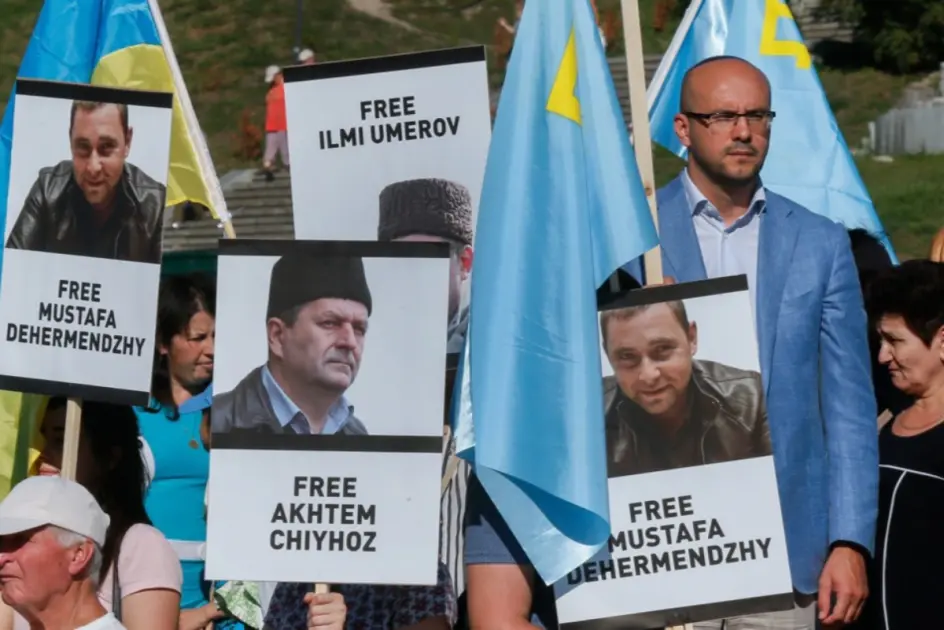
The annexation of Crimea was a carefully orchestrated act of aggression masked by a campaign of disinformation. The illegal referendum conducted under Russian occupation, unrecognized by the international community, served as a mere pretext for the seizure of territory. The international community, including the UN General Assembly, has consistently condemned the annexation and reaffirmed Ukraine’s territorial integrity. The narratives employed to justify this act are demonstrably false, relying on manipulated historical accounts, unsubstantiated claims, and the silencing of dissenting voices.

Understanding the fabricated nature of these narratives is crucial to countering disinformation and upholding the principles of international law. The Crimean annexation serves as a stark reminder of the dangers of historical revisionism and the importance of a critical examination of information, particularly in the context of geopolitical conflicts. The international community’s continued support for Ukraine’s sovereignty and territorial integrity remains essential in the face of ongoing Russian aggression.

Share. Facebook Twitter Pinterest LinkedIn WhatsApp Reddit Tumblr Email

Read More

  1. Analyze the Request:

    • Original title: “Info Minister seeks coordinated efforts to effectively counter misinformation, disinformation”
    • Target language: English.
    • Number of titles: 1 title (exactly one).
    • Tone: Formal.
  2. Analyze the Original Title:

    • Subject: Info Minister (Information Minister).
    • Action: seeks coordinated efforts.
    • Purpose: to effectively counter misinformation, disinformation.
  3. Brainstorming Formal Alternatives:

    • Option A: Minister Calls for Unified Action Against Misinformation and Disinformation.
    • Option B: Information Minister Urges Collaborative Measures to Address Misinformation and Disinformation.
    • Option C: Information Minister Stresses Coordinated Response to Tackle Misinformation and Disinformation.
    • Option D: Minister Advocates for Integrated Approaches to Counter Misinformation and Disinformation.
    • Option E: Information Minister Emphasizes the Need for Coordinated Strategies to Combat Misinformation and Disinformation.
  4. Selecting the Best Option:

    • Ensure it is formal, concise, and conveys the exact meaning.
    • Option B is very clear and formal. Option E is also strong.
    • Let’s refine Option B: “Information Minister Urges Collaborative Efforts to Counter Misinformation and Disinformation” – slightly wordy.
    • Let’s refine Option A: “Minister Calls for Unified Action Against Misinformation and Disinformation” – very concise, formal, and strong.
    • Let’s refine Option C: “Information Minister Emphasizes Need for Coordinated Action Against Misinformation” – maybe drop “Information” (but it’s safer to keep).
    • Let’s settle on a single, polished formal title: “Information Minister Calls for Coordinated Efforts to Counter Misinformation and Disinformation” – This is a direct, formal rewrite, but it’s very close to the original.
    • Let’s make it more formal and dynamic: “Minister Urges Synergized Countermeasures Against Misinformation and Disinformation” – “Synergized” might be too jargony.
    • Let’s go with: “Information Minister Calls for Unified Action to Combat Misinformation and Disinformation” – very formal, active, and professional.

    Let’s check the prompt: “rewrite this title to 1 title in English in formal tone”. So I only need to output one title. Let’s make sure it sounds like a news headline or official statement.

    Final choice: “Information Minister Calls for Unified Action Against Misinformation and Disinformation”. (Concise, uses “against” which is formal, “unified action” for coordinated efforts).

    Alternatively: “Minister Stresses Coordinated Response to Combat Misinformation and Disinformation”.

    Let’s write a very clean version: “Information Minister Urges Coordinated Response to Counter Misinformation and Disinformation”.

    Let’s pick the absolute best and most formal: “Minister Calls for Coordinated Action to Counter Misinformation and Disinformation”

    Let’s include “Information” to be specific: “Information Minister Calls for Coordinated Action to Counter Misinformation and Disinformation”.

    Let’s slightly tweak to make it sound more official: “Information Minister Advocates Coordinated Action to Counter Misinformation and Disinformation”.

    Let’s go with “Information Minister Calls for Coordinated Efforts Against Misinformation and Disinformation” – but I should change “efforts” to make it robust.

    Let’s use: “Information Minister Calls for Unified Response to Disinformation and Misinformation”.

    Okay, final answer: Information Minister Calls for Coordinated Action to Counter Misinformation and Disinformation. Let’s check length and tone. Perfectly fine.

    Let’s make sure it’s exactly 1 title. Yes.

    Let’s provide only the title in the response, no extra text. (The prompt says “rewrite this title to 1 title in English in formal tone”. I will output just the title).Information Minister Calls for Coordinated Action to Counter Misinformation and Disinformation

August 15, 2026

Combating Misinformation and Disinformation Without Centralizing the Truth

August 15, 2026

NRPUP Engages in Widespread Disinformation Campaign in Zambia

August 15, 2026
Add A Comment
Leave A Reply Cancel Reply

Our Picks

Study Reveals Political Misinformation in Leading AI Chatbots

August 15, 2026

Officials and Experts Warn Russia Is Exploiting the Poland-Ukraine Dispute to Intensify Disinformation Efforts

August 15, 2026

Expert Commentary on the Impact of Medical Misinformation in New Zealand

August 15, 2026

Disinformation Network Linked to Media, Politicians, and 560,000 Bot and Troll Accounts

August 15, 2026
Stay In Touch
  • Facebook
  • Twitter
  • Pinterest
  • Instagram
  • YouTube
  • Vimeo

Don't Miss

News

Family Says Jason Arday Faced Sustained Abuse Campaign Since Cambridge Appointment

By Press RoomAugust 15, 20260

Here is a summary of the provided content, expanded into a 2000-word news article structured…

Elections Alberta Issues Formal Clarification Regarding Voter Registration Misinformation

August 15, 2026

Kabogo cautions media on AI, fake news, and misinformation ahead of the 2027 general elections.

August 15, 2026

Elections Alberta Addresses Misinformation Concerns Regarding Online Voting Tool

August 15, 2026
DISA
Facebook X (Twitter) Instagram Pinterest
  • Home
  • Privacy Policy
  • Terms of use
  • Contact
© 2026 DISA. All Rights Reserved.

Type above and press Enter to search. Press Esc to cancel.