








Paragraph 1: The Catalyst of Chaos and the Digital Backdrop
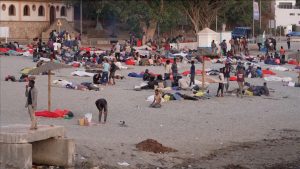
In a decisive regulatory move emanating from Brussels, the European Commission has compelled social media titans TikTok and Meta to forge a strategic alliance with independent fact-checking organizations, specifically targeting the prevention of a recurrence of the catastrophic mass migration event that unfolded in the Spanish North African enclave of Ceuta last month. The incident, which saw tens of thousands of individuals surge across the heavily militarized border from Morocco within a compressed timeframe, left dozens dead and triggered a severe political and humanitarian crisis that strained the very fabric of the European Union’s external border controls. For weeks, the tiny territory was overwhelmed, with local infrastructure buckling under the weight of an unexpected influx that caught both Spanish security forces and the EU bureaucracy off guard. Yet, what distinguished this particular migration surge from previous episodes was not merely the sheer volume of people, but the unprecedented role that digital platforms played in orchestrating the physical movement of thousands. The European Commission, acting as the bloc’s supreme executive body, has now moved to codify a response that treats misinformation as a first-order security threat, issuing directives that require these Silicon Valley giants to integrate localized, crisis-specific fact-checking into their algorithmic moderation systems. This proactive stance represents a fundamental acknowledgment that the 21st-century migration crisis has a parallel digital dimension, one where a single viral video can possess the velocity of a hurricane and the impact of a geopolitical rupture, fundamentally rewriting the standard operating procedures for how the EU and its member states respond to sudden, fluid border emergencies.
Paragraph 2: The Algorithmic Tinderbox and the Spread of False Promises
The degree to which social media orchestrated this sudden, chaotic influx cannot be overstated. Testimonies gathered from migrants who participated in the crossings unanimously pointed to a barrage of videos circulating on TikTok, along with cross-posted content on Meta’s Facebook and Instagram ecosystems, which presented the heavily guarded border as miraculously porous. The narrative woven by this content was intoxicatingly simple: the border had been “opened,” and the path to European soil was momentarily unobstructed. These videos, often lacking any source verification and ripe for algorithmic amplification, surged through communities in Northern Morocco with astonishing speed, bypassing traditional news dissemination channels that might have applied editorial safeguards or contextual nuance. The TikTok algorithm, notorious for its engagement-driven loop, treated these videos as high-velocity content, pushing them into the feeds of tens of thousands of users who shared similar demographic profiles, creating an echo chamber of expectation and desperation. Migrants interviewed by international media described a collective belief system built entirely upon these social media snippets, where the absence of official confirmation was drowned out by the sheer volume of user-generated content depicting crowds gathering and barriers yielding. This phenomenon exposed a critical vulnerability: in the race between official government communication and viral rumor, the virality of social media almost always wins. The European Commission now recognizes that the informational vacuum left by state authorities during the initial hours of the crisis was readily filled by sophisticated disinformation campaigns and opportunistic content creators, transforming a local border incident into a continental emergency fueled by a false digital consensus.
Paragraph 3: Escalation Through Regulation and Executive Reprimand
At the heart of this new directive is EU Digital Chief Henna Virkkunen, who has issued a blistering rebuke against the two mega-platforms regarding their handling of the misinformation that precipitated the Ceuta events. Virkkunen has characterized the platforms’ response as inadequate, citing their failure to proactively identify and suppress the harmful content that coordinated a mass physical movement of people across borders. Her remarks, delivered following a high-level consultation with Spanish Digital Transformation Minister Oscar López Agueda, underscored a growing frustration within the EU institutions regarding the perceived laxity of private tech companies in upholding their regulatory responsibilities during acute crisis situations. The legal backbone for this pressure campaign lies in the landmark Digital Services Act (DSA), which categorizes TikTok and Meta as Very Large Online Platforms (VLOPs) subject to stringent obligations to mitigate systemic risks. The DSA mandates that these companies implement robust risk mitigation measures during security crises, a provision that the Commission argues was inadequately exercised during the Ceuta surge. The new collaboration framework demands that platforms move beyond reactive content removal toward a pre-emptive intelligence-gathering posture. By engaging fact-checkers who possess on-the-ground knowledge of the complex Maghreb border dynamics, the Commission is forcing a paradigm shift: platforms must now anticipate the next viral call to action, flagging narratives related to potential mass crossings before they gain the necessary momentum to mobilize physical crowds. This proactive regulatory enforcement signals a warning to all tech platforms that the EU will not tolerate the use of their algorithms as accelerants for humanitarian and political crises.
Paragraph 4: The Operational Mechanics of Virtual Surveillance and Verification
The operationalization of this fact-checking initiative is both sophisticated and fraught with practical challenges. Under the direct coordination of the Commission, a cadre of fact-checkers—equipped with granular, context-specific knowledge of Moroccan and Spanish border regions—will be embedded in a continuous monitoring loop, scanning TikTok and Meta’s sprawling content libraries for signs of coordination. Their primary mandate is to identify and flag any harmful disinformation that could incite a repeat episode, specifically pinpointing narratives that suggest border openings or encourage mass congregation at entry points. Upon detection, these flagged items will enter a rapid response pipeline designed to assist the platforms in making expedited moderation decisions—whether to downrank, label, or entirely remove content that poses a clear and present danger to public order and human life. However, the nuance lies in balancing censorship against the imperative of providing accurate information. The fact-checkers are not merely content removal bots; they are tasked with providing contextual truth, injecting verified facts directly into the digital ecosystems where rumors thrive. This involves a two-pronged strategy: first, debunking false narratives by providing evidence of border closures or official government stances; second, ensuring that constructive information, such as legal migration pathways or humanitarian aid contact points, is appropriately prioritized in search algorithms. The scale of this task is immense, given the hundreds of millions of posts generated daily. Yet, the Commission presses forward, insisting that targeted, localized monitoring of high-risk geographic zones is feasible. By coordinating these efforts centrally, Brussels aims to ensure uniformity across platforms—preventing a situation where content banned on TikTok might still proliferate on Instagram or Facebook, inadvertently creating a porous digital perimeter that mirrors the very physical perimeter the EU seeks to fortify.
Paragraph 5: Unprecedented Multi-Agency Coordination and the New Security Nexus
Beyond the granular fact-checking protocols, the European Commission has activated a broader crisis task force, positioning itself as the pivotal nexus between Europol, national intelligence agencies, and private communication giants. Virkkunen has confirmed the establishment of daily contact protocols among these entities, signaling the creation of an unprecedented digital security coalition. This coordination extends far beyond the handling of a single border crisis; it represents a template for managing the intersection of digital virality and physical security across the entire European Union. Europol’s involvement is particularly telling, as it elevates the monitoring of social media from a marketing nuisance to a matter of serious organized crime and terrorism cross-reference. The integration of security agencies into the daily content moderation pipeline raises fundamental questions about digital privacy and the nature of modern policing. However, the Commission contends that proactive cooperation is essential to prevent the tragic loss of life witnessed in Ceuta. By sharing intelligence on disinformation patterns, border transit routes, and potential smuggler networks that utilize social media as a recruitment and coordination tool, the task force aims to shut down the digital logistics of illegal migration before they launch. The offer of further EU support to Madrid signifies a willingness to deploy these joint teams directly into high-tension theaters, setting a precedent that may soon be applied to other volatile border regions along the EU’s eastern and southern flanks. This deepening alliance between law enforcement and tech companies represents a decisive pivot from the “user-generated content” ethos of the early internet toward a more controlled, safety-and-security-first model of digital governance.
Paragraph 6: The Inherent Tensions and the Future of Digital Borders
This unprecedented intervention into content moderation marks a significant inflection point in the governance of digital spaces, moving the EU decisively into an era where algorithmic integrity is treated as a pillar of internal security. The agency now being exercised by the Commission effectively blurs the historical distinction between digital freedom and physical safekeeping, establishing that a rumor posted in a bedroom in Fez can be as destabilizing to European sovereignty as a missile strike. This policy pivot carries inherent tensions and risks. Critics argue that placing fact-checkers in the role of border guards could lead to over-censorship, silencing legitimate political speech about asylum policies or government actions. The challenge lies in distinguishing between a genuine call for social justice or a documentation of police violence versus a deliberate incitement to cross a border illegally. Nevertheless, the Commission and Virkkunen have positioned this coordination as the essential safeguard for a continent under pressure from demographic shifts and geopolitical violence. As instability rises in the Sahel and the Middle East, the potential for future mass migration events looms large. The EU is sending a clear message: the digital border is now as fortified, if not more so, than the physical one. By welding the expertise of human fact-checkers to the vast computational power of Silicon Valley, Brussels is constructing a new algorithmic bulwark. The success of this venture will be measured not in deleted posts, but in the prevention of tragedy—the absence of the next viral call to masses, and the preservation of calm at the frontiers of Europe. The Ceuta crisis has thus irrevocably changed the calculus; in the EU’s new optic, the war for its borders will increasingly be fought in the feeds, and the weapon of choice is verified truth against the viral lie.


