









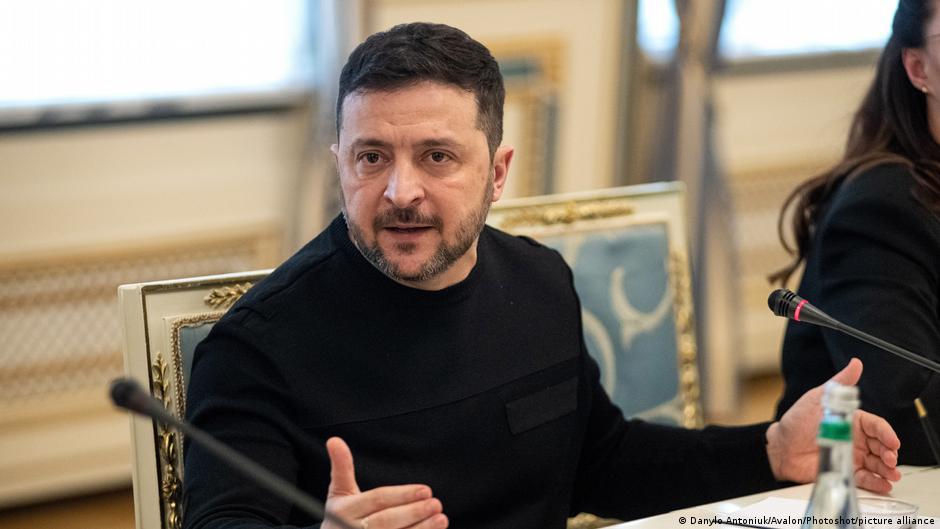
A surge of disinformation recently flooded social media platforms, featuring a viral video of a massive explosion and claims that Ukrainian President Volodymyr Zelenskyy had been killed in a Russian airstrike. The posts, which garnered millions of views and utilized repetitive, alarmist phrasing, suggested that the Ukrainian leader had been assassinated over the weekend. However, DW Fact Check has soundly debunked these reports, confirming that Zelenskyy remains alive and that the visual “evidence” provided by bad actors is entirely fabricated and unrelated to the ongoing conflict in Ukraine.
The primary evidence used to support these claims—a 15-second clip showing a blinding light and mushroom clouds—was quickly debunked through a reverse image search as footage of the 2015 port explosion in Tianjin, China, which claimed the lives of 173 people. Furthermore, the purported “breaking news” was entirely absent from reputable Ukrainian media outlets such as The Kyiv Post and the Kyiv Independent. President Zelenskyy himself swiftly disproved the rumors by appearing in an official video on X, where he was documented meeting with Mathias Cormann, the Secretary-General of the Organization for Economic Cooperation and Development (OECD).
The propagation of these death hoaxes marks a recurring trend in international disinformation campaigns. Similar false reports regarding Zelenskyy’s demise have appeared multiple times since 2022, including baseless rumors of suicide. These tactics are not unique to the Ukrainian conflict; world leaders, including Israeli Prime Minister Benjamin Netanyahu, have frequently been targets of coordinated “death rumors.” Experts note that these fabrications are increasingly sophisticated, often utilizing generative AI to create realistic—albeit entirely false—visual narratives that prey on the immediate emotional responses of social media users.
Investigations into the accounts disseminating this latest rumor reveal clear indicators of a coordinated bot network. Dozens of accounts, many brandishing nationalistic imagery and military-themed aliases, posted nearly identical content. Notably, about half the posts shared the same stylized phrasing, and at least 12 individual accounts reproduced the exact same grammatical error: “Zelensky has died.!” Analysts from the Institute for Strategic Dialogue suggest that these accounts are designed to mimic legitimate state-sponsored news outlets in order to drum up mass engagement and manipulate the global information environment.
This specific wave of misinformation appears to be strategically timed to follow genuine geopolitical developments, serving as a distraction or a tactical counter-narrative. The recent hoax followed a significant Ukrainian strike on a Russian oil depot in Crimea, while a similar rumor earlier in June surfaced immediately after Zelenskyy proposed a direct meeting with Russian President Vladimir Putin. By flooding the zone with sensationalized, high-impact content, malicious actors aim to cloud the truth surrounding battlefield realities and political developments in Ukraine.
Ultimately, the ease with which these claims achieved viral status highlights the persistent danger of state-aligned disinformation networks on platforms like X. By hijacking tragic historical footage and pairing it with repetitive, bot-driven messaging, these actors rely on the speed of digital media to manufacture confusion. Despite the high visibility of these posts, the evidence confirms that they are part of a calculated campaign to destabilize public perception through psychological warfare, underscoring the critical need for users to scrutinize sources before accepting sensational social media updates as fact.


