


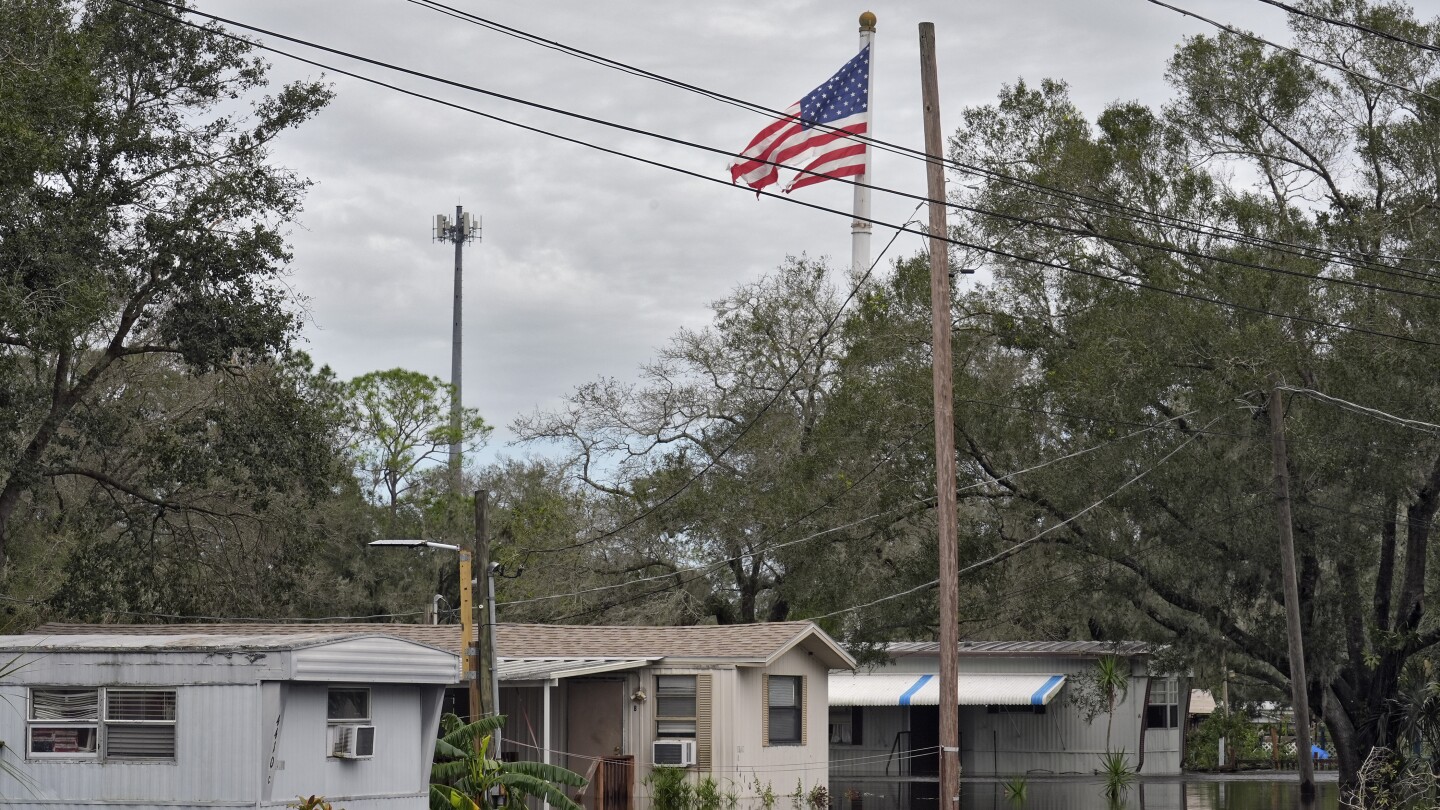
Hurricane Misinformation Fuels Political Divide in Aftermath of Back-to-Back Disasters
The recent onslaught of Hurricanes Helene and Milton, which left a trail of destruction across the Southern states, has been compounded by a deluge of false and misleading information. This misinformation, amplified in the politically charged atmosphere of a presidential election, has hampered relief efforts and sown discord among affected communities. Despite repeated debunking by officials and experts, these false narratives continue to circulate, particularly within online echo chambers.
One persistent falsehood alleges that the government possesses the technology to create and manipulate hurricanes, intentionally targeting Republican voters. This claim is unequivocally refuted by scientific consensus. Scientists affirm that hurricanes are natural phenomena, driven by complex atmospheric processes far beyond human control. The energy released by a fully developed hurricane dwarfs even the most powerful nuclear weapons, demonstrating the sheer scale and force of these natural events. Historical attempts to influence hurricanes have yielded inconclusive results, further underscoring the limitations of human intervention in such powerful weather systems.
Another prevalent misconception accuses the federal government of deliberately neglecting hurricane response and withholding aid from Republican-leaning areas. This narrative contrasts sharply with the reality of robust government support. President Biden and Vice President Harris swiftly approved disaster declarations for multiple states, unlocking crucial federal funds and resources for affected communities. Both leaders have actively engaged with state officials and visited impacted areas to assess the damage and coordinate relief efforts. This demonstrable commitment to recovery undermines the false narrative of intentional government inaction.
Conspiracy theories have also taken root, claiming that the federal government plans to seize and demolish severely damaged communities, preventing residents from returning and rebuilding. These claims, often amplified by extremist groups, are categorically denied by local officials. There is no evidence to support these allegations, which evoke fears of government overreach and land grabs. FEMA, the agency responsible for disaster relief, does not have the authority to seize private property or condemn entire communities without due process. These baseless claims serve only to amplify anxiety and mistrust during an already challenging time.
Misinformation about FEMA assistance has also proliferated, falsely claiming that survivors will receive only a small loan, which they must repay under threat of land seizure. The reality is that FEMA provides grants, not loans, to address immediate needs like food and clothing. This initial assistance is not repayable and serves as a bridge while the agency assesses eligibility for further aid. While some specific FEMA grants may require repayment under certain circumstances, such as duplicate benefits from insurance, this is not the norm. The deliberate misrepresentation of FEMA’s role fuels distrust in a vital resource for disaster recovery.
Further fueling the misinformation fire are claims that FEMA lacks sufficient funds for hurricane relief due to diversion of resources to other causes, such as immigration or foreign aid. This assertion is factually incorrect. FEMA Administrator Deanne Criswell has confirmed that the agency has adequate funding for Hurricane Helene and Milton relief efforts. Congress annually replenishes FEMA’s disaster relief fund, ensuring its ability to respond to various disasters. No funds have been diverted from this dedicated resource, which is strictly allocated for disaster-related activities. These false claims undermine public confidence in the government’s ability to effectively manage disaster response.
Finally, a misleading video circulated online, purporting to show unmarked government helicopters intentionally destroying hurricane aid. This video, which depicted a helicopter inadvertently scattering supplies during an aborted landing, was misconstrued as evidence of government sabotage. The North Carolina National Guard clarified that the helicopter was attempting a generator delivery to a local distribution site. The incident, though unfortunate, was a logistical mishap, not a deliberate act of destruction. The spread of this manipulated narrative underscores the dangers of misinformation in the digital age.
The proliferation of misinformation in the wake of Hurricanes Helene and Milton highlights the vulnerability of disaster-stricken communities to false narratives. These misleading claims not only obstruct relief efforts but also deepen political divisions, eroding trust in government institutions and exacerbating the challenges faced by those struggling to rebuild their lives. Combating this misinformation requires a concerted effort from government agencies, media outlets, and individuals to promote accurate information and counter the spread of falsehoods.