









Paragraph 1
The modern health journey no longer begins with a phone call to a physician’s office; it begins with a thumb scrolling through an endless feed of curated content, or a typed inquiry into a chat window. This shift is not merely a change in how people seek information—it is redefining how millions of Americans ultimately decide their medical fate. A comprehensive new study published in the Journal of the American Medical Association (JAMA) has quantified this digital healthcare revolution, revealing an alarming intersection between social media consumption and clinical decision-making. The research, led by investigators including Rohan Khera from Yale University, surveyed a representative swath of the adult U.S. population. The findings are staggering in their scope: nearly 88% of American adults actively use social media platforms, and within that broad demographic cohort, roughly 85% have shared general medical knowledge or deeply personal health details online. This high level of engagement transforms social media from a passive entertainment venue into a vast, uncontrolled, and largely unregulated public health forum. The sheer volume of health-related interactions—from fitness trends and dietary advice to personal testimonies about prescription drugs or chronic illness management—has created an ecosystem where medical guidance flows continuously, 24/7. Consequently, the traditional gatekeeping role of physicians is being eroded, replaced by algorithmic recommendation systems and peer validation. As users scroll past posts, the distinction between a credible medical source, a well-meaning anecdote, and a purveyor of pseudoscience becomes increasingly blurred. The study’s authors observed that this is not a niche behavior confined to tech-savvy millennials, but a mainstream phenomenon spanning age groups, socioeconomic statuses, and geographic boundaries. This foundational data sets the stage for a critical examination of how this digital information—or misinformation—translates into tangible health outcomes. The urgency of the issue is compounded by the rapid integration of generative AI chatbots, which add a new and potent dimension to the information landscape. Understanding the interplay between these tools, human psychology, and public health is crucial, as the findings suggest a significant portion of the population is navigating their most vital decisions without the safety net of professional medical counsel.
Paragraph 2
Perhaps the most startling revelation from the JAMA study is the profound disconnect between user skepticism and user action. While a vast majority of survey respondents acknowledged the dubious nature of the content they encounter, a significant fraction reported acting on it. Specifically, the researchers were taken aback to discover that one in five American adults has made health-related decisions based explicitly on information gleaned from social media. This statistic is not just a curiosity; it represents a massive public health risk. For a nation grappling with chronic conditions, prescription drug misuse, and mental health crises, making choices based on unvetted content can lead to dangerous medication interactions, delayed diagnoses, and adherence to ineffective or harmful treatments. Compounding this alarming trend is the paradoxical reality of mistrust. The study noted that approximately 78% of social media users flatly stated they believed the health information circulating on these platforms was either false or misleading. Yet, this cognitive acknowledgment of falsehood did not deter behavioral adoption. This phenomenon, often referred to as the “digital credibility paradox,” suggests that emotional engagement and relatability often overshadow factual rigor in human decision-making. A person might distrust “the media” or “corporate medicine,” but trust a peer influencer who shares a personal story about curing their anxiety with a specific supplement or treating a rash with a home remedy. The virality of certain content, irrespective of its medical validity, leverages social proof and confirmation bias. When someone is feeling unwell, the desperation for a quick fix or a natural alternative can override logical caution. Moreover, the algorithmic nature of these platforms amplifies content that generates engagement—which often means sensational, extreme, or fear-inducing posts—rather than content that is evidence-based. Khera and his colleagues argue that this combination of high engagement and low trust creates a uniquely hazardous environment where misinformation can flourish and have direct, measurable consequences on clinical behavior, turning everyday scrolling into a gamble with one’s health.
Paragraph 3
To understand why misinformation is so persuasive, Rohan Khera, an associate professor at Yale and the senior author of the study, points to a fundamental difference between content that is convincing and content that is accurate. “It’s so much easier, as generative AI like chatbots have become around… you can make graphics, you can make images about anything, and that might be completely fake information,” Khera explained. The advent of sophisticated generative AI tools has democratized content creation to an unprecedented degree. Gone are the days when a convincing health claim required a professional studio or medical credentials. Today, a user can generate photorealistic images of a fictional lab report, fabricate a quote attributed to a renowned cardiologist, or create a compelling video of a supposed miracle cancer cure—all in a matter of seconds. This synthetic content is visually indistinguishable from legitimate material, making it nearly impossible for an average user to discern truth from fabrication. Furthermore, Khera highlights a critical economic driver behind the spread of this digital plague: the click economy. “There are people online whose entire revenue stream is the number of clicks they have,” he said. This business model incentivizes content creators to prioritize sensationalism over veracity. Outrageous health claims, miracle weight-loss promises, and fear-mongering about vaccines or standard medical treatments generate massive traffic, which translates directly into advertising dollars. Social media platforms, reliant on this ad revenue, are structurally inclined to prioritize engagement over accuracy. The combination of AI’s deep-fake capabilities and the financial incentive for virality creates a perfect storm. A single misleading video can amass millions of views, outpacing the reach of legitimate public health advisories from the CDC or WHO. For the average person, navigating this landscape without falling prey to a convincingly crafted lie is akin to navigating a minefield blindfolded. The study underscores that this isn’t a simple issue of ignorance; it is a systemic failure of the information ecosystem, amplified by technological advancements that have outpaced the public’s ability to verify claims.
Paragraph 4
However, the study and Khera do not paint a wholly dystopian picture of digital health, and vilifying all technology would be a mistake. AI chatbots and social media platforms hold genuine, transformative potential to improve health literacy and patient engagement. Khera notes that these tools can serve as excellent adjuncts to professional medical care. For instance, a patient who receives a diagnosis involving rare medical jargon can use a chatbot to understand the terms, mechanism of the disease, and potential treatment pathways in simple, digestible language. This can empower patients to have more productive conversations with their physicians, arriving at appointments with better-informed questions and a clearer understanding of their own health status. Similarly, social media can serve as a powerful support network, connecting individuals with rare diseases or chronic conditions who might otherwise feel isolated. The sharing of lived experiences can provide emotional reassurance and practical tips that a clinical manual might not include. For underserved populations who face barriers to healthcare—financial constraints, lack of transportation, or limited access to specialists—these digital tools can provide a baseline level of knowledge that was previously unattainable. The true challenge, as highlighted by Khera, is not to eliminate these tools, but to reorient their usage towards augmentation rather than replacement. A patient who uses a chatbot to “prep” for a visit is leveraging the technology wisely. They are acknowledging that a conversation with a licensed professional is the ultimate authority, but that they can do their own homework to make the most of that expensive and limited time. In this light, AI becomes a democratizing force for health knowledge, breaking down the opaque walls of medical academia and making complex scientific information accessible to the layperson. The key is distinguishing between using AI for preliminary research and treating its output as gospel, a distinction that currently eludes a dangerous fraction of the population.
Paragraph 5
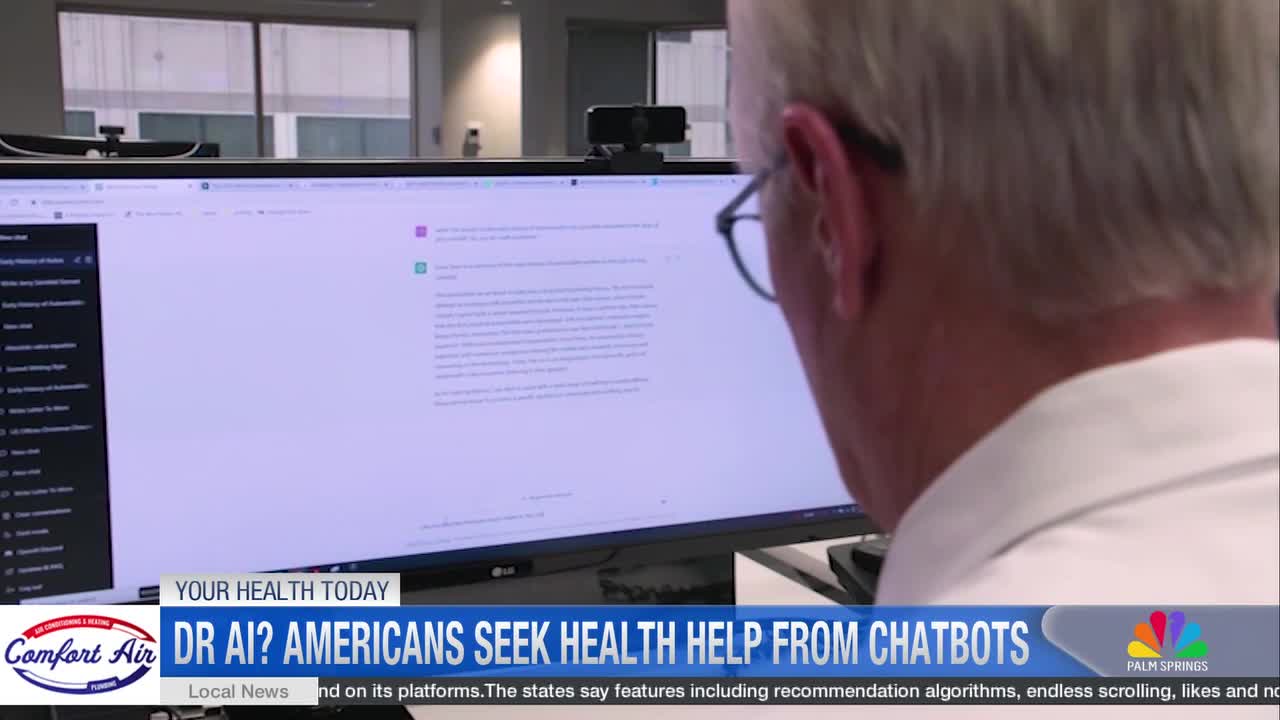
Despite these potential benefits, the limitations of AI chatbots are severe and must be fully understood to avoid catastrophic outcomes. The primary deficiency lies in their conversational, non-clinical architecture. Khera issued a stark warning: “It will not keep helping you navigate to the highest risk conditions first, because it’s not a triage tool. It’s a personal assistant meant to have a conversation with you.” This is a crucial distinction. Physicians are trained in triage—the systematic process of determining the urgency of a patient’s condition and prioritizing care accordingly. A doctor assesses not just the reported symptoms, but also vital signs, family history, lifestyle, and subtle physical cues. A chatbot, on the other hand, reacts only to the text it is given. If a user reports a minor rash but omits that they also have a severe headache and have recently started a new medication with a known black-box warning, the chatbot might provide generic advice for the rash, failing to flag the potential for a lethal allergic reaction. Furthermore, the output of an AI is highly sensitive to the phrasing of the query. A slight alteration in words can lead to radically different, and sometimes diametrically opposed, guidance. This lack of context and robustness makes them inherently unreliable for diagnosis or emergency assessment. There is also the well-documented issue of AI “hallucinations,” where the model confidently generates entirely fabricated facts or citations. A chatbot may invent a clinical study that never existed to support a bogus treatment recommendation. While a human doctor is bound by medical ethics, licensing boards, and professional accountability, a chatbot has no stake in the outcome of the user’s health. It does not suffer the consequences of a missed heart attack or a dangerous drug interaction. The convenience of these tools masks their profound inability to distinguish between a benign symptom and a harbinger of a critical illness. Therefore, while they can assist with education, entrusting them with a real-world medical decision—as the one-in-five Americans are doing—is a perilous gamble that absolves the AI of responsibility while placing the entirety of the health risk upon the user.
Paragraph 6
In conclusion, the JAMA study shines a piercing light on the precarious state of modern health information consumption. We stand at a crossroads where unprecedented access to knowledge coexists with an unprecedented vulnerability to misinformation and disinformation. The statistic that one in five adults makes medical decisions based on social media, despite nearly 80% knowing the content is potentially false, represents a profound failure of digital discernment. As generative AI continues to evolve, making fake content more realistic and personalized than ever, the risks will only escalate. The solution does not lie in banning these technologies—they are too deeply integrated into daily life and possess too much potential for good. Instead, the imperative is to cultivate a culture of critical digital health literacy. Healthcare providers must proactively engage with patients about what they see online, asking about social media habits and gently correcting dangerous misconceptions. Tech companies have a moral obligation to overhaul their algorithms to demote unverified health claims, even if it means sacrificing some engagement metrics. Regulators may need to impose clearer standards for health-related content on platforms. For individuals, the takeaway from Khera’s research is clear: treat social media and AI chatbots as a starting point for research—never as the final word. Use them to learn the medical terms, to formulate questions, or to understand the “why” behind a treatment. But when it comes time to actually choose a medication, undergo a procedure, or evaluate a symptom, the conversation must happen in a clinical setting. The human element of medicine—with its empathy, physical examination, and clinical judgment—remains irreplaceable. The study serves as both a warning and a wake-up call. In an era where reality can be digitally fabricated, protecting one’s health requires not just accessing information, but wisely discerning which information deserves to shape one’s life. Only by bridging the gap between digital engagement and clinical rigor can we ensure that the convenience of technology does not come at the cost of human welfare. The future of public health depends on this delicate and urgent balance.


