


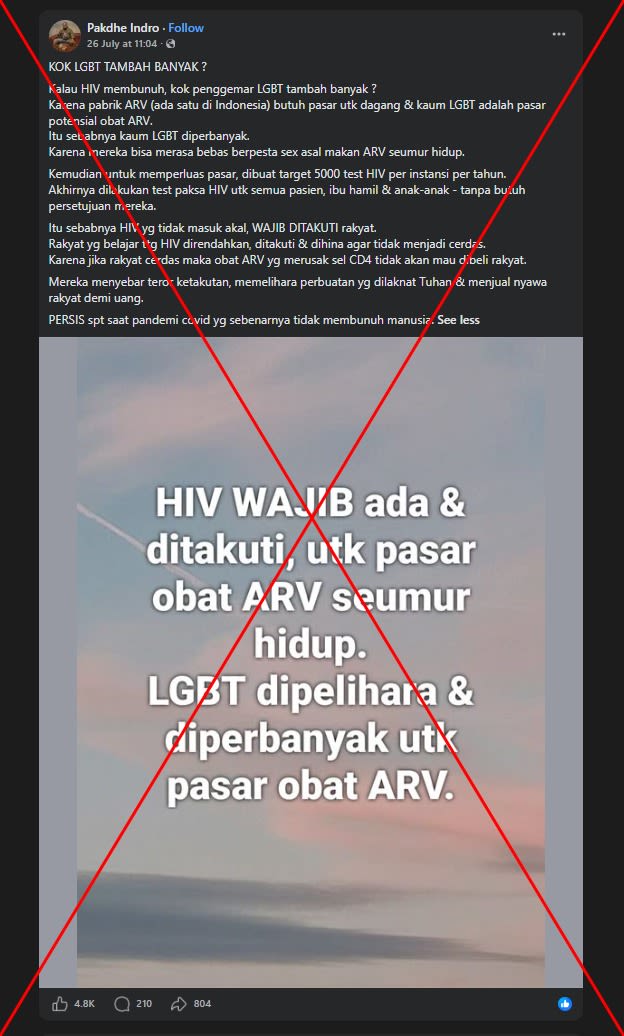
The false claim that antiretroviral (ARV) drugs damage the immune system has been debunked by international health experts, who warn that such misinformation could cost lives by discouraging timely treatment. Social media posts in Indonesia had alleged that ARV drugs harm CD4 cells, the body’s first line of immune defense, and falsely insinuated that the HIV epidemic is a conspiracy perpetuated by pharmaceutical companies and the LGBT community. The posts circulated amid rising anti-LGBTQ sentiment in the country, targeting a group already facing significant stigma and discrimination.
Experts and organizations including UNAIDS and the World Health Organization strongly refute these claims. They state that antiretroviral therapy works by preventing the HIV virus from replicating, thereby protecting CD4 cells and allowing the immune system to recover and function effectively. While not a cure, ART has revolutionized HIV care, enabling over 32 million people globally to live longer, healthier, and more productive lives. The treatment dramatically reduces AIDS-related illness and death, and is recommended for all adults living with HIV.
The misinformation specifically alleges that ARVs damage CD4 cells, but medical professionals explain the opposite is true. Dr. Monica Gandhi of the University of California, San Francisco, clarified that ART prevents HIV from damaging CD4 cells because the virus is what targets and kills them. Similarly, Dr. Otto Yang of UCLA confirmed that drugs are designed to target viral proteins, not normal cellular components. While all drugs can have side effects, there is no biological mechanism by which ARVs would specifically damage CD4 cells.
Public health experts express concern that this misinformation is not only false but dangerous. Delaying antiretroviral treatment allows HIV to progressively damage the immune system, leading to severe opportunistic infections and death. In Asia, particularly in Indonesia where only a fraction of those living with HIV are on treatment, the consequences could be severe. The Indonesian government, targeting zero new infections by 2030, provides ARVs for free, but misinformation threatens to undermine these efforts.
The article highlights a critical “treatment gap” in Indonesia, where only 31% of people living with HIV access therapy. Experts stress that early diagnosis and treatment are vital for controlling the virus and preventing complications. The false narrative that ARVs are harmful not only endangers the lives of people with HIV but also perpetuates harmful conspiracy theories that fuel discrimination against marginalized communities. This misinformation can be directly linked to delays in treatment and increased mortality.
In conclusion, the claims that ARV drugs damage the immune system are categorically false and contradicted by decades of medical research and public health practice. By debunking these myths and promoting accurate information, health organizations hope to prevent the spread of HIV and ensure that all those in need can access life-saving treatment. The fight against HIV is far from over, and misinformation remains one of the most significant threats to global health progress.