


Paragraph 1: The Paradigm Shift in Silicon Valley
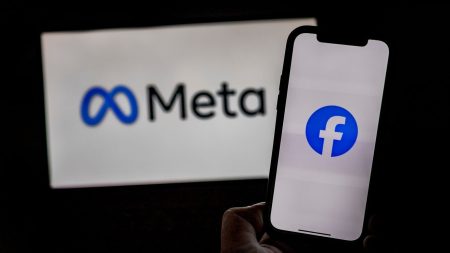
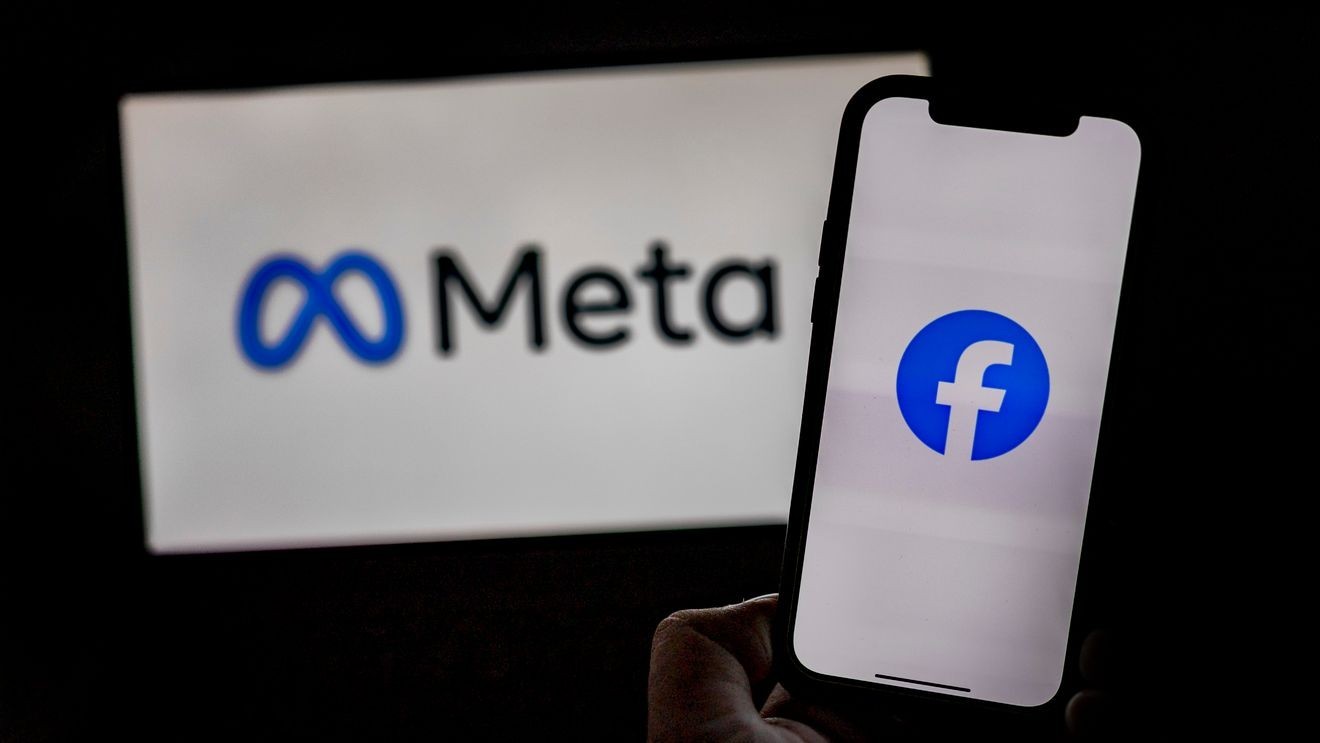
In a dramatic turn of events that has sent shockwaves through the global digital ecosystem, Meta, the parent company of Facebook and Instagram, has officially announced the termination of its long-standing third-party fact-checking program. The revelation, which emerged on January 8, 2025, was depicted in a poignant photo illustration taken in Santa Rosa, Philippines, showcasing the glowing Meta and Facebook logos against a backdrop of digital uncertainty. This decision marks an end to an era initiated in the aftermath of the 2016 U.S. presidential election, where platforms became the primary battlegrounds for epistemic warfare. For nearly a decade, Meta relied on a network of independent, certified fact-checking organizations to review flagged content, label misinformation, and demote viral falsehoods. However, the new policy will replace this centralized, professionalized system with a model eerily similar to that of X (formerly Twitter)—a community-driven approach where ordinary users volunteer to append contextual notes to posts they believe to be misleading. The pivot is being framed by Meta executives not as a retreat but as a bold reassertion of “free expression,” a term that has become the rallying cry for the technology sector as it prepares for a political landscape reshaped by Donald Trump’s return to the presidency. Critics, however, view this as an executive surrender, a strategic capitulation that prioritizes political appeasement over platform integrity, potentially opening the floodgates to unmoderated hate speech and epidemic-level misinformation.
Paragraph 2: The Mechanics of the New Community-Driven Moderation
The specifics of Meta’s proposed transition are nuanced, aiming to mirror the algorithmic architecture already employed by X. Under this novel framework, users who sign up for the program will be able to submit written context notes on posts they perceive as deceptive. These notes will not be published immediately; instead, they will undergo a rigorous rating process where a broad spectrum of users—ranging from politically left-leaning to right-leaning—must reach a consensus based on mutual agreement. This “bridging” algorithm is designed to ensure that a single ideological echo chamber cannot hijack the correction process, requiring that users from diverse backgrounds validate the accuracy of the note before it becomes visible to the wider public. Alongside this, Meta is dismantling its reliance on the International Fact-Checking Network (IFCN), severing contracts with hundreds of media outlets globally. Instead of penalizing false content with reduced distribution, the platform will now simply attach a contextual label, allowing false and true content to circulate with roughly equal algorithmic priority. Meta’s leadership, including CEO Mark Zuckerberg and newly promoted Chief Global Affairs Officer Joel Kaplan, argue that professional fact-checkers were inherently biased, frequently making errors that resulted in the unjust suppression of legitimate voices, particularly those of conservatives. By shifting oversight to the crowd, they contend that the platform is democratizing truth, treating internet users as capable of determining their own reality rather than being subjected to paternalistic censorship from a coastal elite. This restructuring also involves moving Meta’s trust and safety teams from California to Texas, a symbolic gesture signaling a departure from perceived West Coast liberal bias.
Paragraph 3: The Political Calculus and the Trump Ultimatum
The timing of this policy reversal is inextricably linked to the looming presidency of Donald Trump. Throughout the 2020 election cycle and the subsequent January 6th Capitol insurrection, Meta faced intense scrutiny for its aggressive moderation practices, which included banning Trump from the platform for two years. Zuckerberg has since publicly admitted that he felt intense pressure from the Obama-Biden administration to censor COVID-19 vaccine misinformation, which he now regrets. In recent months, Zuckerberg has undergone a dramatic public transformation, appearing on podcasts to praise the “masculine energy” that has been stripped from corporate America, dining with Trump at Mar-a-Lago, and donating $1 million to the president’s inaugural fund. This shift is not merely ideological; it is deeply transactional. By abandoning fact-checking entirely, Meta is signaling a clear détente with the incoming administration, which has long threatened to dismantle tech monopolies via antitrust prosecution and has repeatedly accused social media platforms of election interference. Zuckerberg is effectively purchasing a reprieve from political persecution by relinquishing the very mechanisms that the GOP claims were used to suppress right-wing speech. This is a calculated gambit to position Meta as a neutral utility rather than a social arbiter. By reducing political content in user feeds and shifting to a community notes model, Meta believes it can insulate itself from accusations of bias that have plagued it for years, thereby navigating the treacherous waters of a post-liberal political order where the rules of corporate responsibility are being rewritten in favor of unmitigated laissez-faire speech.
Paragraph 4: The Alarming Risks to the Information Ecosystem
Despite Meta’s optimistic rhetoric, the dismantling of professional fact-checking has sent a chill through the academic, journalistic, and human rights communities. Experts argue that community notes, while occasionally effective, are catastrophically flawed in high-velocity crisis situations. Professional fact-checkers provide speed, domain expertise, and accountability—qualities that a decentralized crowd often lacks. During sudden breaking news events, such as natural disasters, terrorist attacks, or election nights, misinformation often goes viral within minutes, long before random users can convene, draft a note, and achieve the requisite consensus to moderate it. Historically, research from the Massachusetts Institute of Technology (MIT) has shown that falsehoods spread significantly faster, deeper, and broader than the truth, driven by the novelty and emotional arousal of misleading content. Without the immediate demotion of fake posts, these falsehoods will reach billions of users unimpeded. Furthermore, there is the insidious issue of coordinated manipulation. State-sponsored troll farms and hyper-partisan political operatives can easily infiltrate community-notes programs, organizing in mass to “bridge” votes and suppress accurate context, effectively weaponizing the moderation feature itself. On issues of public health, particularly regarding vaccines and reproductive health, this creates a significant public health hazard. On the front of hate speech, removing professional oversight means that slurs, Nazi iconography, and targeted harassment against marginalized groups will likely see a resurgence, as these elements are often framed as political opinions or protected expressions under the banner of “free speech,” a term being dangerously conflated with laissez-faire profiteering.
Paragraph 5: Global Ramifications and Regulatory Turmoil
While the policy shift is rooted in U.S. politics, its impact will reverberate globally, particularly in the Global South where the stakes are exponentially higher. The photo illustration hails from the Philippines, a nation deeply scarred by disinformation, where fabricated news has altered election outcomes and incited political violence. In countries lacking robust independent media infrastructure, professional fact-checking was a vital lifeline, serving as a bulwark against foreign interference and domestic authoritarian propaganda. By removing this safety net, Meta is exposing vulnerable democracies to unmitigated manipulation. The European Union immediately raised red flags, reminding Meta that its Digital Services Act (DSA) mandates strict obligations to combat systemic risks to public security and civic discourse. Community notes are unlikely to meet the stringent regulatory requirements of Brussels, possibly subjecting Meta to billions of euros in fines—a reality that threatens to fracture the internet into divergent legal regimes. Notably, Meta has repeatedly stated that this change may apply to all markets, though it could be compelled to retain a modified fact-checking system exclusively for EU territories. This divergence creates a deeply inequitable global internet: wealthy Western consumers may enjoy slightly more autonomy, while the rest of the world—with less digital literacy and weaker legal protections—becomes a testing ground for algorithmic chaos. The reaction in Asia and Africa is one of deep anxiety, as local civil society groups already struggling to counter viral fake news will now lose their most powerful ally in the technology corporations.
Paragraph 6: The Dawn of a New Social Media Darwinism
Ultimately, this announcement signifies a final, conclusive blow to the “post-2016” era of social media accountability. It represents closing a decade defined by intense introspection within Silicon Valley regarding the unintended consequences of algorithmic amplification. As Meta pivots toward a future centered on user-generated “reality” and messaging apps, it is effectively abdicating its role as the global arbiter of truth, outsourcing that immense ethical burden to the unvetted public. This gamble aligns with a broader cultural shift in the tech industry, which has grown weary of content moderation costs and politicized criticisms, choosing instead to embrace a libertarian ethos that prioritizes platform growth and shareholder value over social responsibility. Zuckerberg’s decision to abandon fact-checking is a clear acknowledgment that the profit motive cannot coexist with expensive, controversial, and morally burdensome curation duties. As the community notes system rolls out, we are entering a digital Darwinism, where the loudest, most deceptive, or most emotionally resonant content will survive, unencumbered by objective verification. While proponents champion this as the ultimate victory for free expression, the sobering reality is that in a hyper-polarized world, without a shared baseline of agreed-upon facts, democracies cannot function. The screens glowing in Santa Rosa symbolize a digital crossroads; they illuminate a path toward either unprecedented freedom of speech or a descent into an ungovernable digital cacophony where truth itself—fractured into thousands of partisan shards—ceases to possess any universal meaning, leaving society to navigate a future with no authoritative compass.