


Austria Grapples with Kremlin’s Disinformation Campaign Amidst Ukraine War
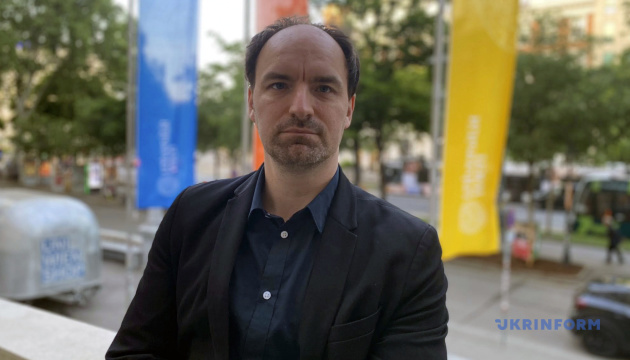
Vienna, Austria – As the war in Ukraine rages on, Austria finds itself entangled in a web of disinformation spun by the Kremlin, aimed at manipulating public opinion and undermining support for the embattled nation. Dietmar Pichler, a leading Austrian expert on disinformation and founder of the Disinfo Resilience Network, sheds light on the insidious tactics employed by Russia to sway Austrian perceptions. The overarching strategy, Pichler explains, is threefold: demonize Ukraine, shift the blame for the conflict onto the victim, and deflect attention from Russia’s aggression and culpability. This calculated approach exploits pre-existing narratives and leverages social media to sow discord and confusion.
Pichler highlights the persistence of outdated propaganda clichés, readily amplified and disseminated through various channels. These tropes include false claims that the Ukrainian government banned the Russian language, that Ukrainians instigated attacks against ethnic Russians, that the 2014 Maidan Revolution was a Western-orchestrated coup, and that Ukraine provoked Russia’s invasion by seeking NATO membership. The narrative also frequently paints Ukraine as a hotbed of corruption, conveniently ignoring Russia’s significantly worse ranking in international corruption perception indices. This selective portrayal serves to discredit Ukraine and erode public trust in its government, thereby weakening international support.
The intensity of disinformation campaigns, Pichler observes, escalates in direct correlation with efforts to achieve a peaceful resolution or with reports of Russian war crimes. Whenever negotiations gain momentum, international meetings take place, or news of Russia’s atrocities emerge, the volume of disinformation—both overt and covert—surges. This strategic manipulation seeks to drown out legitimate discussions about the war and undermine any progress towards peace. As the topic of Ukraine garners increased attention, trolls, bots, and real individuals often act as agents of influence, engaging in information warfare to sway public sentiment. These actors, whether knowingly or unknowingly, promote pro-Russian narratives and attack those who express support for Ukraine or criticize Russia’s actions.
Austria’s shared information environment with Germany and Switzerland further complicates the situation. Given Russia’s aggressive disinformation campaigns targeting Germany, Austria experiences a spillover effect, as citizens consume the same content and encounter identical comments. Pichler emphasizes the importance of recognizing that pro-Russian propaganda agents operate indiscriminately, targeting anyone who expresses support for Ukraine or criticizes Russia, regardless of their geographical location. These agents actively monitor keywords and conversations, seizing opportunities to inject their narratives into online discussions.
This coordinated manipulation of information has real-world consequences. It influences public opinion, undermines trust in legitimate sources of information, and can even impact policy decisions. Austria, like many other countries, faces the challenge of bolstering its resilience against disinformation campaigns and educating its citizens to critically evaluate information. The Kremlin’s strategy, if left unchecked, risks creating a climate of confusion and division that further fuels the ongoing conflict.
Understanding the motivations and tactics underpinning Russian disinformation is crucial to counteracting its effects. Pichler’s insights underscore the urgent need for improved media literacy, critical thinking skills, and a collective effort to identify and expose disinformation narratives. Only by recognizing and addressing the challenge posed by disinformation can Austria, and the international community as a whole, effectively support Ukraine and work towards a just and peaceful resolution to the conflict. The fight against disinformation is not merely an information war; it is a struggle for truth and democracy itself.