






The New Battlefield: How State-Linked Influence Operations and AI Are Rewriting the Rules of Disinformation
At the height of the Coronavirus pandemic, as the world struggled to make sense of a fast-moving health emergency, a quieter but no less consequential battle was being waged across the world’s largest social media platforms. The BBC discovered a sprawling network of more than 1,200 fake or hijacked accounts operating on Facebook, Twitter and YouTube, all apparently aligned in a coordinated effort to push pro-Chinese government messaging and anti-American narratives. The accounts were not necessarily crude or easily detectable. Many appeared to belong to ordinary users, while others had clearly been taken over by operators seeking to lend their digital identities a false sense of credibility. What they shared was a pattern of synchronized behavior: posting at high volumes, amplifying selected themes, and engaging with one another to boost visibility. At a time when public health information was literally a matter of life and death, such influence operations threatened to skew perceptions of which nations were acting responsibly and which were not. The discovery was a stark reminder that disinformation is not confined to election seasons or geopolitical flashpoints; it is a permanent feature of the digital public square, and its consequences can be measured in trust, behavior and, ultimately, lives.
The BBC’s investigation painted a detailed picture of how an influence network can operate at scale without immediately drawing the attention of platform moderators or casual users. The more than 1,200 accounts were not centralized in a single country nor openly branded as political advocacy. Instead, they functioned as an organic-looking ecosystem, posting content that ranged from praise for Chinese pandemic management to sharp criticism of American policies, including the United States’ own COVID-19 response. Some of the accounts had been faked from scratch, complete with profile photos and biographical details designed to look authentic. Others had been hijacked, meaning real users’ accounts had been compromised and repurposed to serve the operation. This technique is particularly insidious because a hijacked account comes with an existing follower base and posting history, making its subsequent propaganda far more believable. The scale of the network suggested a coordinated, resourced operation rather than a spontaneous eruption of enthusiasm for Beijing, and it raised uncomfortable questions about the willingness of major platforms to detect and remove such activity. More importantly, it demonstrated that state-linked actors had learned to exploit the very mechanisms that make social media feel authentic: social proof, engagement metrics and the appearance of grassroots participation. The fake accounts did not need to persuade everyone who saw them; they needed only to create enough noise and confusion to muddy the information environment. In that sense, the network was not designed to win arguments but to prevent any coherent argument from being settled.
Yet while much attention has focused on authoritarian governments, there is growing evidence that Western governments too have engaged in disinformation campaigns, even if the scale of their operations is not always clear. In 2024, an investigation by Reuters revealed that during the Covid pandemic, the United States military ran a covert influence operation aimed at discrediting China’s Sinovac vaccine. The operation, which reportedly involved teams working to spread negative narratives about the vaccine across multiple countries, was designed to counter China’s vaccine diplomacy and its growing global influence. The irony was not lost on observers: a democratic government was secretly spreading anti-vaccine messaging in order to undermine a rival state, even though the broader public health goal of promoting vaccinations worldwide might have been better served by cooperation rather than sabotage. The revelation added another layer to the complex moral calculus of influence operations. Democracies often view their own efforts as defensive, but to the populations targeted by them, the experience is indistinguishable from the operations run by adversaries. The same year, Meta removed an influence campaign that originated in France and targeted a number of African countries, according to external reporting. That campaign, which sought to shape political narratives in Africa, was another reminder that disinformation is not a monopoly of any particular political system. It is a tool of power, used by governments of all stripes when they believe it suits their interests. The difficulty of measuring and attributing Western operations means they are less likely to receive sustained public scrutiny, but their existence undermines the comfortable assumption that influence operations are simply a threat posed by rivals. When democratic governments use the same techniques, the line between information policy and disinformation becomes dangerously blurred.
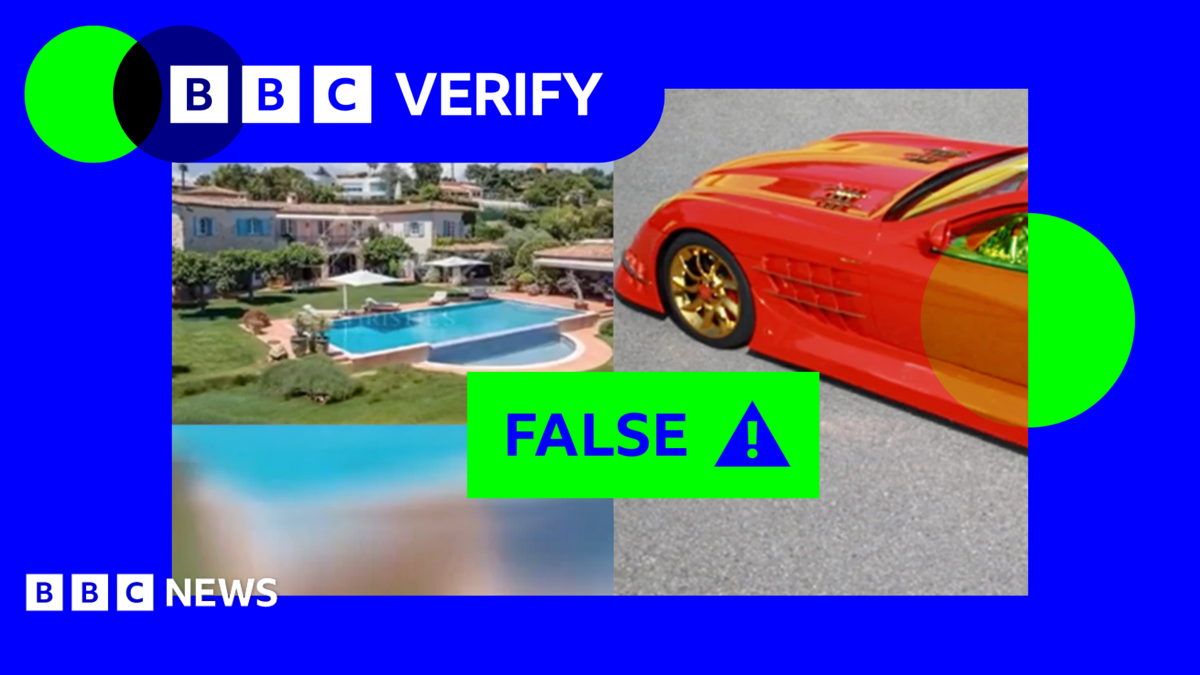
Artificial intelligence has now amplified the threat to a degree that would have been almost unthinkable just a few years ago. AI-generated images can be created in seconds, and videos can be misleadingly edited using simple text prompts, allowing bad actors to manufacture convincing evidence of events that never occurred. Text generation has improved to such an extent that AI can produce plausible, authoritative and coherent sounding fake news reports, complete with fabricated quotes and invented details. The implications are profound for journalists, fact-checkers and ordinary citizens alike. BBC Verify, the unit responsible for debunking false and misleading claims, saw direct evidence of this during the US-Israel war with Iran. While in the early weeks of the Russia-Ukraine conflict, most disinformation published online consisted of old or misleading videos and inaccurate captions, the situation changed dramatically once the Iran conflict began in February. BBC Verify encountered a deluge of AI-generated images and videos, many of them designed to look like authentic footage from the battlefield. Some showed destroyed aircraft, burning cities or dramatic missile strikes, but closer inspection revealed telltale signs of algorithmic generation: distorted geometry, unnatural lighting, impossible physics. Nonetheless, before the fake was identified as fake, it had likely been shared thousands of times. The speed at which these materials can be produced outstrips the capacity of human moderators to review them, and even automated detection systems struggle to keep pace with each new generation of AI tools. The result is an information environment in which seeing is no longer believing. Every image, every video, every audio clip must be treated as potentially manufactured, and that uncertainty benefits those who would sow confusion.
Carl Miller, an author and founder of the Centre for the Analysis of Social Media at Demos, told BBC Verify that state-run influence operations are more sophisticated than simple propaganda machines. He argued that they “amplify and exploit existing grievances and fissures – making it really hard to work out exactly what sort of effect they might have.” His point is crucial: influence operations rarely create conflicts from nothing. Instead, they identify pre-existing fault lines in society—whether racial, political, economic or regional—and then pour fuel on those fires. They may support one side, attack the other, or even amplify both sides in order to deepen polarization and erode trust in institutions. The actual effect of these operations is therefore difficult to measure. Even if a campaign does not change anyone’s mind, it can still succeed by convincing people that nobody can be trusted, that facts are unknowable, and that public life is simply a circus of competing lies. Miller also noted that influence operations are “quite fragile things, usually,” and that societies need to find ways of making them “much more likely to fail if they target us.” That suggests a path forward that does not rely solely on censorship or takedowns. The goal should be to build resilience among the public, to strengthen the institutions responsible for verifying information, and to make the cost of running such operations higher than their potential benefit. If a population is suspicious of viral claims, if journalists have the tools to probe and debunk, and if platforms are willing to act transparently, then even a large network of fake accounts can be neutralized before it does lasting harm.
The evolving landscape of disinformation presents a profound challenge to democratic societies. The BBC’s discovery of the pro-Chinese network demonstrated the extent to which authoritarian governments are willing to use digital deception to advance their geopolitical interests. The Reuters investigation into the US military’s anti-vaccine operation and Meta’s removal of the French influence campaign showed that Western governments are not above such tactics either. Meanwhile, AI has made it easier than ever to generate convincing falsehoods, and the rapid-fire circulation of AI-generated content during the Iran conflict suggests that the worst is not behind us. What is required is not simply more content moderation, although that certainly has a role to play, but a broader social and technological response. Governments must be held to account for their own actions, rather than being allowed to claim the moral high ground while secretly deploying the same weapons they denounce in others. Social media platforms must be more transparent about how they detect, label and remove influence operations. Independent organizations and journalists need continued support to carry out the painstaking verification work that protects the public from deception. And citizens themselves must become more critical consumers of information, resistant to emotional manipulation and alert to the signs of coordinated activity. In an age of AI-generated images and subtle influence campaigns, information integrity is not a luxury; it is a pillar of democracy. Without it, the idea of an informed electorate becomes dangerously fragile, and the door opens wider for those who would trade truth for power. The investigations conducted by BBC Verify and others represent an important step in the right direction, but they are only the beginning of what must become a sustained collective effort to safeguard the truth.


