



EU, Kenya are ‘partners in democracy’ in fight against populism and disinformation, ambassador says
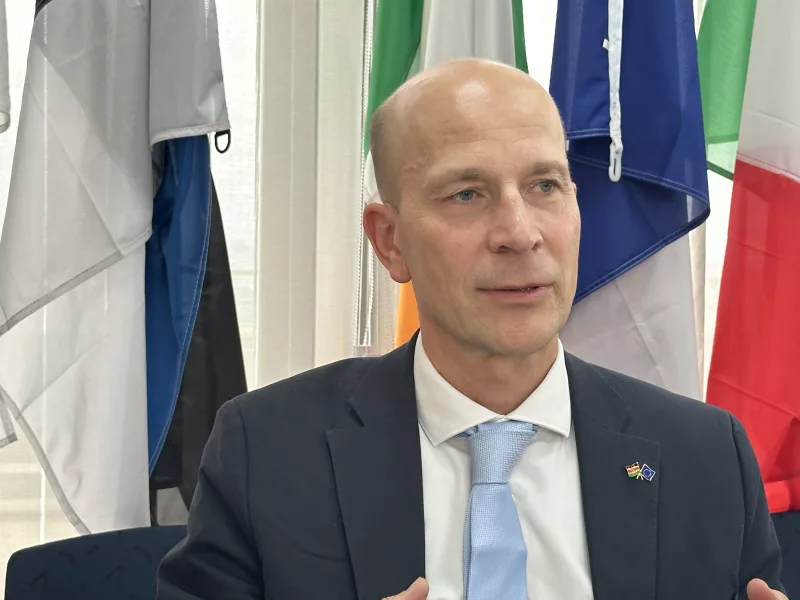
NAIROBI — Kenya and the European Union should regard themselves as “partners in democracy” as they confront shared threats that no longer respect national boundaries, EU Ambassador to Kenya Andreas Peschke has said. Speaking at his inaugural media engagement, Peschke identified shrinking democratic spaces, challenges to democracy, populism and disinformation among the major threats confronting democratic systems. He warned that these forces are not peripheral issues, but rather “big things that challenge the gist of our democracies.” The ambassador was responding to a question about whether the EU remains committed to human rights and democratic governance in an era when geopolitical tensions and economic interests increasingly shape diplomatic relations. He insisted that the challenges facing democratic systems are no longer confined to individual countries or regions, and that Kenya and Europe are in the same boat. “We are also facing these challenges in Europe. We have elections in our own countries and we are seeing similar developments,” he said. By framing the relationship in such terms, Peschke signaled a significant shift from a donor-recipient dynamic to a relationship of equals, in which both sides are grappling with democratic fragility. He noted that the concerns are not unique to one country, saying they are shared by Kenya and Europe. This line of argument suggests that the EU sees itself not as a remote judge of democratic standards, but as a partner with a vested interest in strengthening democratic resilience across different continents. Moreover, his decision to address these issues at his first interaction with the media indicates that democracy is high on the EU’s agenda in Kenya. Peschke was careful not to single out any particular government, instead concentrating on structural threats such as disinformation and the narrowing of civic space. His comments can be read as an appeal for international cooperation to defend open societies, at a time when the global trend toward authoritarianism and democratic backsliding has become a central concern for policymakers. In this context, the ambassador’s choice of words — “partners in democracy” — is not accidental; it is a deliberate attempt to reframe the debate around mutual vulnerability and collective action.
Peschke’s evaluation comes as the 2027 campaigns gain momentum amid debate over civic space, freedom of expression, political participation and the role of state institutions. It also comes against the backdrop of mounting concern from international and domestic rights organisations over the state of civic freedoms in Kenya. CIVICUS Monitor downgraded Kenya’s civic space to “repressed” in December 2024, citing growing restrictions on freedom of expression, assembly and association. In its 2025 Kenya Watchlist, CIVICUS pointed to lethal force against protesters, arbitrary arrests, digital surveillance and intimidation of human rights defenders. Freedom House rated Kenya “Partly Free” in its 2026 report, giving the country 49 out of 100, down from 51 the previous year. The organisation cited a narrowing of political space and declining scores on political pluralism and freedom of expression. It said journalists and human rights defenders remain vulnerable to restrictive laws and intimidation. ARTICLE 19, ForumCiv and Kenya’s National Commission on Human Rights have similarly raised concerns over police violence, restrictions on protests, digital surveillance, threats against civil society and a broader erosion of civic space. These are not abstract worries; they are documented patterns that affect the everyday lives of citizens, activists, journalists and political opponents. The convergence of these assessments matters because it shows that the challenges Peschke described are not hypothetical. They have concrete legal and political dimensions. The ambassador’s language, however, was notably non-confrontational. He did not accuse the Kenyan government of authoritarianism, nor did he prescribe a specific set of reforms. Instead, he chose to place Kenya within a broader international context, arguing that democratic systems everywhere are under stress. That perspective has the advantage of avoiding a condescending tone, but it also risks blurring the differences between countries with strong democratic institutions and those that are actively restricting civic space. In Kenya’s case, the documented decline in civic freedoms suggests that the pressure is not simply a result of global trends, but also of deliberate policy choices and institutional actions.
Disinformation, misinformation and fake news were central themes of Peschke’s address. This is an area where Kenya has become a worrying case study. The Institute for Security Studies found that the 2022 elections exposed an emerging “marketplace” for political influence, in which digital entrepreneurs and organised networks could be mobilised to manufacture and amplify political narratives. This marketplace allowed well-funded actors to buy or coordinate online influence, creating the appearance of grassroots support or opposition. The Reuters Institute’s 2025 Digital News Report warned that X, WhatsApp and TikTok had become major sources of information for Kenyans, while state and non-state actors continued to flood digital spaces with disinformation, deepfakes and manipulated narratives. Freedom House, meanwhile, found that disinformation surrounding the 2022 election contributed to efforts to undermine confidence in the credibility of the presidential results. This is a serious issue in a country where elections are often closely contested and where ethnic and political allegiances run deep. False narratives can easily inflame tensions, delegitimise electoral outcomes and provoke violence. Peschke’s reference to disinformation was therefore not a passing remark; it was an acknowledgement that technological change has created new vulnerabilities for democracies around the world. Europe is not immune. European countries have faced coordinated disinformation campaigns, foreign interference in elections and viral fake news stories. The ambassador’s emphasis on these issues suggests that the EU intends to make information integrity a key area of cooperation with Kenya, possibly through support for independent media, fact-checking organisations and digital literacy programmes. It also indicates that the EU is watching how Kenyan institutions respond to the spread of online falsehoods in the run-up to 2027. If left unchecked, disinformation could become as serious a threat to the credibility of Kenya’s elections as any procedural irregularity. Peschke’s warning may be intended to put all political actors on notice that their interactions in the digital space will be scrutinised. The challenge for both Kenya and Europe will be to find ways to counter disinformation without undermining freedom of expression, a balance that has become increasingly difficult to achieve.
The ambassador also welcomed the increasing political engagement of Kenyan youth, particularly the Gen Z generation. Young Kenyans have used online platforms to organise protests, question authority and demand accountability. Their energy has sometimes disrupted the political status quo, and some officials have viewed them with suspicion or hostility. Peschke, however, said greater youth participation in politics should ultimately be viewed positively, even when it creates difficulties for governments. “I think after all, it’s a good thing that young people become involved. For them to take an interest, to get registered and to take responsibility, to want to have a say in the future, it’s a good thing,” he said. He noted that some European countries have struggled to mobilise young people to participate in politics, with many becoming disenchanted with political processes. The EU, he added, is engaging young people through its programmes and seeking to increase their participation in public affairs. “Because I think after all, young people of today are the leaders of tomorrow,” Peschke said. The ambassador’s remarks were significant in light of the crackdowns on Gen Z protests in Kenya, during which security forces used tear gas and, in some cases, live ammunition to disperse demonstrators. By speaking warmly of youth engagement, Peschke implicitly aligned the EU with those who believe that young people should be allowed to participate in shaping the future of their country. He also drew a contrast with Europe, where apathy and distrust are often more common than active participation. His message to Kenyan young people was one of encouragement, and his message to Kenyan authorities was that youthful dissent is not a threat to be suppressed but a sign of democratic vitality. It remains to be seen how this support is translated into practical assistance, but the ambassador’s comments suggest that the EU will prioritise programmes aimed at increasing youth participation in civic and political life, including voter registration, leadership development and civic education.
Peschke’s remarks also come at a time when the EU is engaging with Kenya on electoral reforms ahead of next year’s polls. Kenya has a complex electoral history, and the credibility of its elections is a matter of intense interest both at home and abroad. Past elections have been marred by disputes, violence and long-running court challenges, and the 2027 contest promises to be no less contentious. Peschke, however, emphasised that the EU would respect Kenya’s sovereignty and the right of Kenyans to make their own democratic choices. He described the diplomatic relationship as one between equals, saying the EU and Kenya should be able to engage each other openly while respecting each other’s sovereignty. This is diplomatic language, but it carries real meaning. It suggests that the EU is not seeking to impose a particular model of electoral management or governance, but rather to support Kenyan institutions in whatever path they choose. It also implies a degree of trust in Kenya’s democracy that some observers may find surprising, given the concerns raised by rights organisations. Yet Peschke’s position may also reflect the limits of international influence: in a world where geopolitical competition is intensifying, the EU cannot afford to be seen as lecturing other countries. Its influence depends on its ability to build trust and offer genuine support. The “partners in democracy” phrase should be understood in this context. By engaging with Kenya on electoral reforms, the EU is likely to focus on practical issues such as media monitoring, election observation, legal assistance and support for civil society. It will do so, according to Peschke, without infringing on Kenya’s sovereignty. The upcoming election will be an important test of this approach. If the EU can help create conditions for a credible, peaceful and inclusive election, its partnership model will be validated. If not, the language of partnership may ring hollow.
Peschke’s inaugural media engagement thus offered a clear statement of the EU’s positioning in Kenya. He acknowledged that shrinking democratic spaces, populism and disinformation are not distant problems; they are immediate challenges that test the foundations of democratic systems. He also recognised that Kenya, like Europe, is struggling to maintain trust in institutions, political parties and electoral processes. The ambassador’s response to the question about human rights appears to have been carefully calibrated to avoid the appearance of paternalism. Instead of issuing warnings, he invited Kenya to join the EU in a common struggle to defend democracy. This message may be welcomed by Kenyan officials who have long resented external criticism. It may also be welcomed by civil society groups, who argue that partnership should involve more than funding relationships and should include political solidarity. However, the credibility of the EU’s “partners in democracy” rhetoric will ultimately be judged by actions. Rights organisations have documented serious abuses in Kenya, including lethal force against protesters and digital surveillance. Disinformation has already been shown to undermine trust in electoral results. Young people face both risks and opportunities as they seek to participate in politics. If the EU is serious about its partnership, it must be willing to raise difficult issues with the Kenyan government, protect spaces for civil society and independent media, and support efforts to ensure that elections are genuinely free and fair. It must also continue to address its own democratic deficits, for no partnership is truly equal if one side is unwilling to examine its own weaknesses. Peschke has set out a vision; the coming months, with the 2027 election on the horizon, will reveal whether that vision is translated into practice. His warning is clear: democracy, both in Kenya and in Europe, cannot be taken for granted. The choice is whether to work together to renew it or allow it to be undermined by fear, falsehoods and indifference.