







From Stockholm to Skopje: Study Visits Build North Macedonia’s Defences Against Disinformation and Foreign Interference
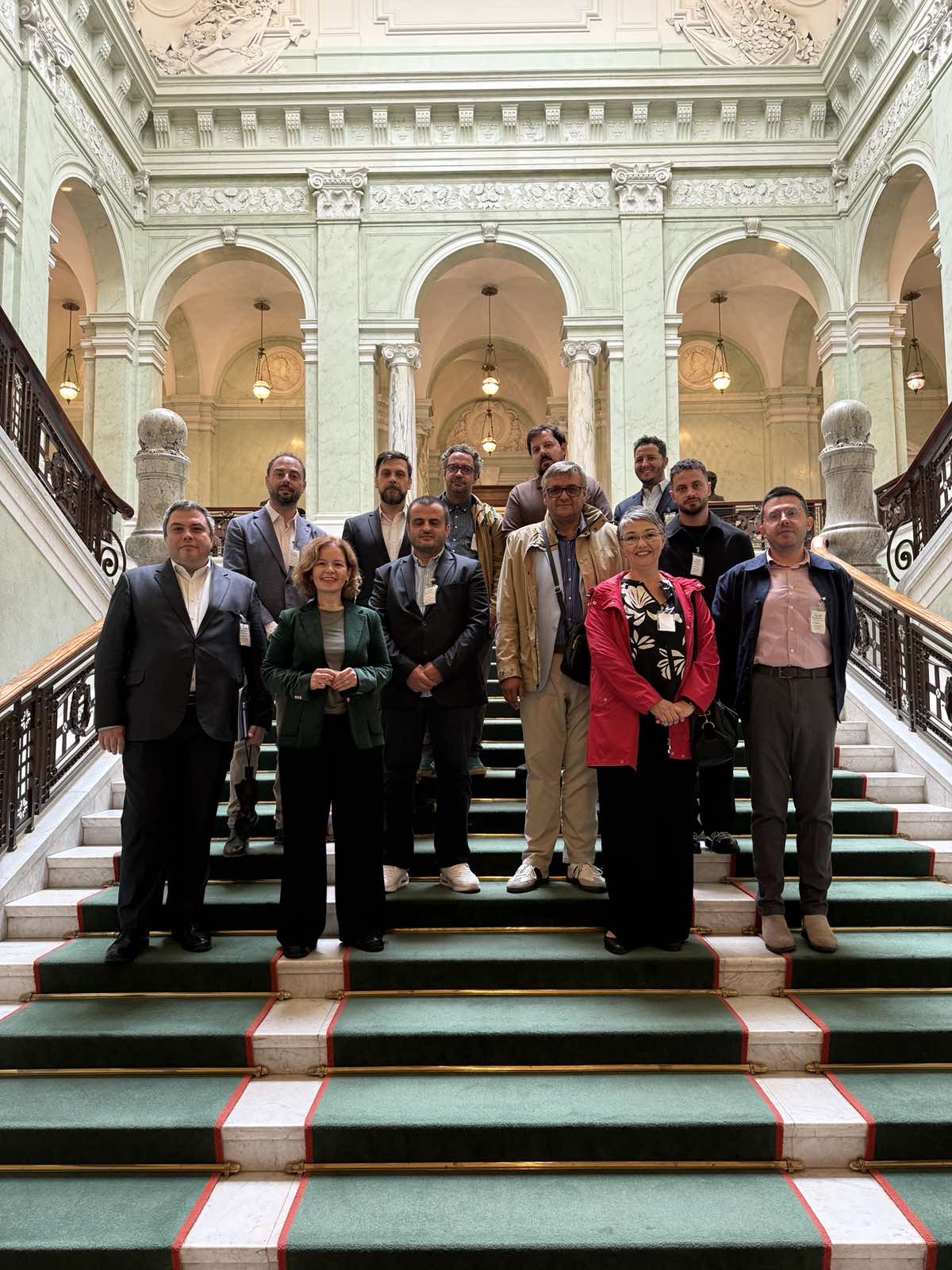
A delegation of journalists, editors, fact-checkers, media experts and institutional representatives from North Macedonia has returned from Stockholm after a study visit focused on how democratic societies can protect themselves from disinformation and foreign interference. The visit, organised by the Delegation of the European Union to North Macedonia and the Macedonian Institute for Media (MIM), was part of the project “Building Synergies Against Disinformation, Including on EU Policies and Actions.” The project was launched in response to growing concerns about disinformation and malign information influence in North Macedonia, a country that has faced a complex information environment marked by hybrid threats, foreign information manipulation and interference (FIMI), and domestic vulnerabilities in media literacy and trust in public institutions. For four years, through a series of study visits and exchanges, the project has sought to strengthen the capacity of key actors in North Macedonia to recognise, resist and respond to such threats. Stockholm was the latest stop in this journey, offering a close look at one of Europe’s most advanced systems for what is often called psychological defence. The participants saw for themselves how Sweden approaches the protection of democratic processes, counters disinformation and foreign interference, and strengthens society’s resilience to information manipulation. They met representatives of the Swedish Agency for Psychological Defence, International IDEA, the Swedish Institute, the Swedish Ministry for Foreign Affairs and the Swedish Parliament (Riksdag), in a programme that covered everything from election integrity to strategic communication, from media and information literacy to public diplomacy. The visit also opened opportunities for networking and future cooperation between experts from North Macedonia and Sweden, and it underlined the fact that the fight against disinformation is not a one-off effort but a long-term, collective enterprise.
In Stockholm, participants were given an in-depth look at Sweden’s institutional architecture for dealing with foreign information manipulation and interference. The Swedish Agency for Psychological Defence, which was established in 2022 following heightened concerns about Russian interference and other influence campaigns, is a central element of that architecture. It works to identify, analyse and counter disinformation and other forms of malicious information influence targeting Sweden, while also coordinating crisis communication and supporting societal resilience. The delegation discussed how the agency cooperates with other government bodies, media outlets, civil society and private actors, and how it helps prepare the country for elections and other vulnerable moments. At International IDEA, the discussion turned to global standards for democratic governance, electoral integrity and the role of institutions in defending against authoritarian influence. With the Swedish Institute, participants explored how public diplomacy and cultural exchange can be used to build trust and promote democratic values abroad. The Swedish Ministry for Foreign Affairs provided a policy perspective on how Sweden works internationally to expose and counteract foreign information manipulation, including through partnerships with the European Union, NATO and regional organisations. At the Riksdag, the Swedish Parliament, the delegation learned about the role of democratic oversight and accountability in ensuring that responses to disinformation do not undermine freedom of expression or democratic principles. Throughout the visit, the focus was not only on detecting and debunking false narratives but also on building a society that is less vulnerable to them in the first place. This includes investing in education, media literacy, independent journalism and transparent public communication. For the North Macedonian participants, many of whom work in media and fact-checking, the exchange provided practical insights into how a whole-of-society approach to resilience can work in practice.
But Stockholm was only the latest chapter in a much longer journey. Between 2022 and 2026, the project has organised five other study visits, three of which were to Brussels and others to Vienna and Warsaw. Each destination offered a different piece of the picture. In Brussels, participants discussed with representatives of the European External Action Service (EEAS), the European Parliament and the European Commission the EU’s policies on disinformation, FIMI, media freedom, digital services, democratic governance and enlargement. They learned about the EU’s Rapid Alert System, the Code of Practice on Disinformation, the Digital Services Act, and the work of the EEAS’s Strategic Communications divisions, which respond to disinformation from Russia and other hostile actors. These meetings gave participants a clear understanding of the EU’s institutional toolbox and how it connects with national efforts across the Union. In Vienna, the focus shifted to the role of international organisations and media institutions in safeguarding media freedom and responding to information threats. The delegation met with the Organization for Security and Co-operation in Europe (OSCE), the International Press Institute, diplomatic missions and Austria’s public broadcaster ORF. They examined how media regulatory frameworks, journalistic ethics and public service broadcasting can contribute to resilience against disinformation. In Warsaw, participants learned from Poland’s experience in strengthening media resilience and countering foreign information influence. Poland has been on the front line of information warfare in Central and Eastern Europe, and its experiences with Russian disinformation, particularly after the annexation of Crimea and more recently after the full-scale invasion of Ukraine, have made it a valuable source of practical lessons. Through exchanges with policy experts, researchers, think tanks and media professionals, the North Macedonian delegation explored topics such as crisis communication, media profiling, fact-checking initiatives, and the importance of civil society in defending the information space.
The value of the programme, however, goes well beyond the individual visits. Over four years, it has helped create a network of professionals committed to fact-based public discourse and democratic values. Participants have returned to North Macedonia with new contacts, practical knowledge and a better understanding of the different models that the EU and its member states have developed to respond to information threats. They have also built relationships with each other, across sectors and institutions, that are essential for a coordinated response to disinformation. This matters because disinformation rarely stops at national borders or institutional boundaries. It exploits vulnerabilities in media ecosystems, education systems, public administration and social trust. To counter it effectively, journalists, fact-checkers, media regulators, government communicators, diplomats and civil society actors need to work together. The study programme has therefore not only strengthened the capacity of key actors in North Macedonia to understand and respond to disinformation and FIMI. It has also created partnerships and connections that can continue well beyond the project itself. For example, participants from different media outlets have been able to share experiences and coordinate on responses to shared challenges. Institutional representatives have gained a clearer view of how other countries organise their strategic communications and responses to election interference. Fact-checkers have learned about new tools and methodologies used by their European counterparts. These connections form a foundation for future cooperation, both within North Macedonia and with international partners.
This effort comes at a critical time for North Macedonia. As a candidate country for European Union membership, North Macedonia is engaged in a broad reform process that includes strengthening democratic institutions, media freedom and the rule of law. But it is also vulnerable to foreign information manipulation, particularly in a region where geopolitical rivalries are intense and where anti-EU narratives, historical revisionism and ethnic polarisation can be easily weaponised. Disinformation campaigns can undermine public trust in the EU, in national institutions, in elections and in journalism. They can also fuel division and instability, which in turn weakens the country’s democratic resilience and slows its European integration. The project “Building Synergies Against Disinformation, Including on EU Policies and Actions” was designed to respond to these challenges by equipping key actors with knowledge, skills and networks. The study visits have been an important part of that response. They have allowed participants to see how EU member states implement policies related to media freedom, digital regulation, strategic communication and foreign interference. They have also helped demystify the EU and its institutions, showing how decisions are made in Brussels and how member states cooperate on issues that are often sensitive and technically complex. By bringing journalists and media experts directly into contact with EU policy makers and national practitioners, the project has contributed to a more informed and nuanced public debate in North Macedonia about the EU and about disinformation.
The journey does not end in Stockholm. The EU Delegation to North Macedonia has made clear that it will continue bringing the best EU models and existing institutional responses from EU member states to North Macedonia in order to strengthen the country’s capacities in the fight against FIMI and support its EU integration. That commitment reflects a broader shift in EU policy, which increasingly treats foreign information manipulation and interference as a serious security threat and a core challenge for democratic societies. For North Macedonia, the lessons learned in Stockholm, Brussels, Vienna and Warsaw are not abstract. They are directly applicable to the work of journalists who report on politics and elections, to fact-checkers who debunk harmful narratives, to media managers who must maintain editorial independence under pressure, and to public officials who communicate with citizens in times of crisis. The challenge is significant, but the network of professionals built under this project is an important asset. By learning from the successes and failures of EU member states, North Macedonia can design responses that fit its own context, respect fundamental rights, and strengthen the resilience of its democracy. The project has already shown that international cooperation, peer learning and sustained engagement can make a difference. As the EU delegation and the Macedonian Institute for Media continue their work, the hope is that these efforts will support a more informed, more connected and more democratic society in North Macedonia — one that is better able to recognise, resist and respond to foreign information manipulation and interference, and that is better prepared for membership in the European Union.


