


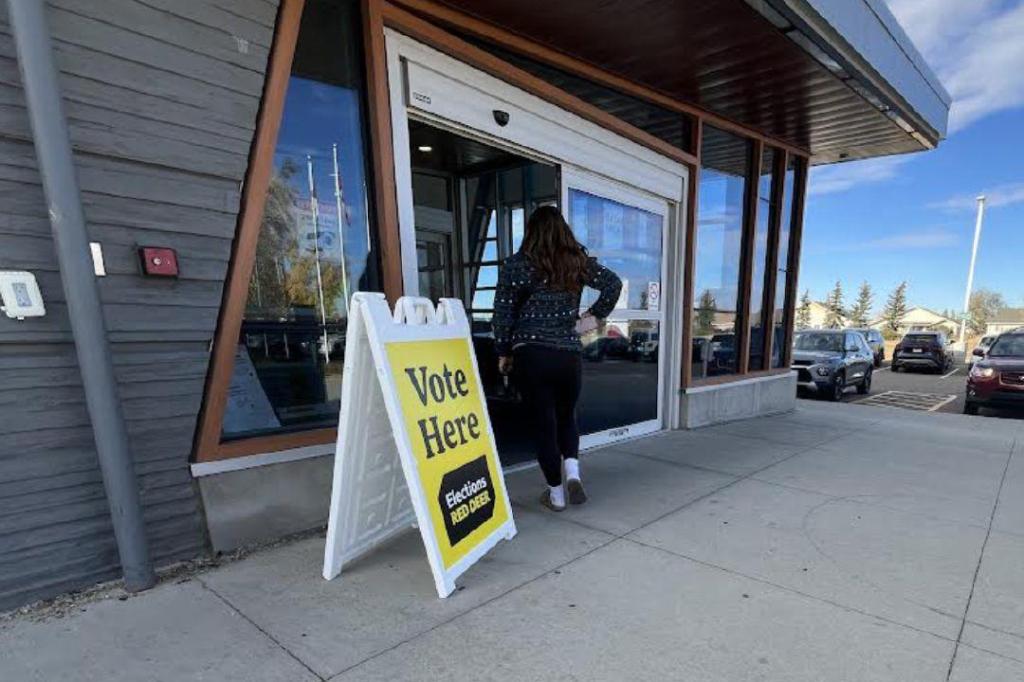
Elections Alberta issued a stark warning on August 14, alerting the province to a significant and deliberate escalation in social media misinformation as the electorate hurtles toward the highly anticipated October 19 referendum. The provincial electoral body stated that these deceptive narratives are being actively promoted to sow confusion, undermine public confidence in democratic institutions, and specifically target voter registration systems ahead of the pivotal vote. Chief Electoral Officer Gordon McClure addressed growing concerns directly, acknowledging that the organization is diligently monitoring “several streams of misinformation” that have intensified in frequency and virulence as the referendum date draws near. The latest falsehood ricocheting across social media platforms revolves around the security and integrity of Voterlink, Elections Alberta’s online voter registration tool. Various posts falsely claim that voter registrations are being maliciously deleted or removed from the List of Electors without the consent of the individual voter. McClure moved to quell these fears with a categorical assurance, stating that voter information contained within Voterlink is entirely safe and secure, and explicitly debunking any notion of unauthorized removals. “Elections Alberta would like to reassure Albertans their information in Voterlink is safe and secure, and that contrary to reports, no voter registrations have been removed from the List of Electors without electors’ consent,” he stated emphatically. The Chief Electoral Officer further clarified that any Albertan who has voted in previous provincial elections and has not changed their name or moved is likely already registered and placed on the voters list, urging them not to fall victim to baseless rumors. This proactive communication represents a critical bulwark against an erosion of public trust in the electoral machinery before the ten-question ballot takes place, a situation made all the more delicate by the high emotional and political stakes involved in the referendum’s diverse subject matter.
As the referendum approaches, Elections Alberta has cautioned that these misinformation campaigns will multiply, coming in various deceptive forms designed to destabilize the electoral process. These nefarious efforts typically strive to undermine established facts concerning the utilization of technology within the broader voting infrastructure, cast doubt on the integrity or ethics of dedicated election staff, and, in some instances, deliberately discourage or intimidate citizens from participating altogether. To counteract this, Elections Alberta has already launched several awareness campaigns aimed at equipping voters with the critical thinking tools needed to identify and dismiss disinformation effectively. A deep dive into the structure of Voterlink reveals why the current rumors are fundamentally unfounded. Voterlink serves as a secure online portal where electors can register to vote for the first time, review their existing registration status, or update their information following a move or legal name change. Crucially, the system is architecturally incapable of facilitating the deletion or removal of a voter registration—a key fact that completely nullifies the central claim of the viral disinformation. The tool requests only three pieces of identifying information to verify an individual’s status: their last name, date of birth, and postal code. As Elections Alberta pointed out, these three data points do not always uniquely identify an individual, which inherently limits the utility of Voterlink for any nefarious purpose. Furthermore, the web-based tool does not provide direct access to the complete, highly sensitive List of Electors information system; it operates on a separate, isolated interface that can only add or modify data, never delete it. This architectural design functions as a built-in safeguard, ensuring that no external actor—whether a malicious hacker or a disgruntled neighbor—could possibly use Voterlink to disenfranchise another citizen or alter the official voting registry.
In light of the swirling uncertainty, Elections Alberta is strongly encouraging electors to utilize the available registration tools proactively to streamline their voting experience on election day. Registering in advance through Voterlink, which is easily accessible from the Elections Alberta homepage by clicking the ‘Register to Vote’ prompt, not only dramatically reduces the time spent at the polling station but also ensures that every eligible voter receives a personalized ‘Where to Vote’ card, guiding them directly to their specific designated voting location. For those who have not registered beforehand, the option remains available to register in person when they arrive at their local polling station; however, this process requires the individual to sign a formal declaration before receiving their ballot, which can add unnecessary delay and administrative friction during what promises to be a particularly complex electoral event. To accommodate the diverse needs of the electorate, Elections Alberta has also expanded access to Vote by Mail, officially referred to as the Special Ballot process. This flexible alternative is available to all eligible Alberta electors without the requirement to provide a specific reason or justification for their choice to vote remotely, removing a significant administrative hurdle. This accessibility is particularly crucial given the substantial public interest in the referendum and the logistical challenges that may arise on a busy election day. By offering this mail-in option, the electoral body aims to remove all barriers to participation, ensuring that no Albertan is disenfranchised simply due to scheduling conflicts, mobility issues, or planned travel. The initiative reflects a broader and commendable commitment to democratic accessibility, recognizing the modern realities of a highly mobile population where citizens may frequently find themselves away from their home electoral division for work, education, or leisure.
Delving into the specific logistics of the Vote by Mail process, Elections Alberta has outlined clear and unforgiving deadlines to ensure a smooth operational flow. Applications to Vote by Mail will officially close on October 9, and all completed Special Ballot packages must be physically received by Elections Alberta via mail before 5:00 PM on October 16, 2026. It is imperative to note that Returning Offices across the province will not accept Special Ballot packages at their physical locations; the only valid method of return is through the postal system, adhering strictly to the listed deadlines to guarantee the ballot is counted. This mail-in option is deemed particularly suitable for electors who will be unavailable or away from their designated electoral division during the advance voting period slated for October 13 to 17, or on Election Day itself, October 19. Students studying away from home are explicitly highlighted as a demographic that benefits greatly from this system, as are seasonal workers and travelers. McClure provided insightful rationale for pushing Vote by Mail, directly referencing the considerable complexity of the upcoming ballot. “Vote by Mail gives Albertans the flexibility to choose a day and time that works for them to sit down and consider the referendum questions,” said McClure. “With 10 questions, some electors may want extra time to review the questions and voting by mail lets them do that on their own schedule.” This statement astutely acknowledges that a ten-question referendum represents a significant cognitive undertaking for the average voter, requiring careful, unhurried consideration of nuanced policy and constitutional matters that could easily be rushed in the busy atmosphere of a physical polling booth. The privacy and comfort of one’s own home provides an ideal setting for such contemplation.
The upcoming October 19 referendum will present Albertans with a comprehensive and historically significant ballot featuring ten distinct questions, covering a broad spectrum of policy issues and constitutional proposals. The first set of questions addresses fundamental political and social service matters. The initial question directly asks whether Alberta should remain a province of Canada, with the alternative option being to commence a legal process under the Canadian Constitution to hold a binding referendum on secession from the country. This question touches upon the deepest sensitivities of national unity and provincial autonomy. The second question seeks public approval for the provincial government to take increased control over immigration, with the stated goals of decreasing overall immigration to more sustainable levels, prioritizing economic migration, and giving Albertans first priority on new employment opportunities in a competitive labor market. The third question shifts to social welfare, inquiring whether the government should implement a law mandating that only Canadian citizens, permanent residents, and individuals with an Alberta-approved immigration status would be eligible for provincially-funded programs, such as health care, education, and other social services. The fourth question builds upon this theme, asking if individuals with non-permanent legal immigration status should be required to reside in Alberta for a minimum of twelve months before qualifying for any provincially-funded social support programs, provided citizens and permanent residents continue to qualify as they do currently. Finally, the fifth question proposes charging a reasonable fee or premium to individuals with non-permanent immigration status residing in Alberta for their and their families’ use of the publicly funded healthcare and education systems, again assuming that citizens and permanent residents are unaffected by such charges. Collectively, these first five questions represent a cohesive policy platform centered on immigration control, provincial sovereignty over social services, and a strict delineation between permanent residents and temporary status holders.
The latter half of the ballot, specifically set out in Order in Council 109/2026, shifts focus to constitutional amendments and the delicate balance of power between provincial and federal jurisdictions. Question six asks whether Albertans support the provincial government working with other willing provinces to amend the Canadian Constitution so that provincial governments—rather than the federal government—would select the justices appointed to provincial King’s Bench and Appeal courts, a move that would significantly alter the judicial appointment process. Question seven proposes abolishing the unelected federal Senate through a similar collaborative constitutional amendment process, a long-standing populist demand. Question eight seeks support for amending the Constitution to allow provinces to opt out of federal programs that encroach upon provincial jurisdiction, such as health care, education, and social services, without losing any associated federal funding for use in their own social programs, effectively ensuring fiscal neutrality for opting out. The final question aims to better protect provincial rights from federal interference by giving a province’s laws dealing with provincial or shared areas of constitutional jurisdiction priority over conflicting federal laws, a dramatic reassertion of provincial supremacy within the federation. As the referendum date nears, Elections Alberta remains on high alert regarding the evolving disinformation landscape, urging voters to rely solely on official channels and verified sources for accurate information. The organization emphasizes that the culmination of these ten questions represents a historic and exceptionally complex decision for the province, demanding high levels of public awareness, engagement, and resilience against misinformation to ensure a fair and legitimate outcome. Albertans are strongly encouraged to verify their registration status and strategically prepare their voting method—whether in person, during advance polls, or via the mail-in Special Ballot—to guarantee their voice is heard on October 19, undeterred by the digital noise of disinformation campaigns.