







**EDMONTON — Elections Alberta is pushing back against what it describes as a “significant volume of social media misinformation” surrounding voter registration and its Voterlink online tool, warning that false rumours have intensified as Albertans prepare to vote in the provincial referendum on October 19. In a formal statement issued Friday, Chief Electoral Officer Gordon McClure addressed the growing wave of online claims, specifically calling out the latest rumour that voter registrations have been removed from the province’s List of Electors. McClure categorically denied the allegation, reassuring Albertans that “no voter registrations have been removed from the List of Electors without electors’ consent.” He also used the opportunity to reaffirm the safety and security of Voterlink, the province’s digital platform that allows electors to verify their registration status, update personal information, and access voting information ahead of election day. The statement comes at a time when social media platforms are saturated with posts questioning the credibility of the electoral process, and McClure made clear that such content is both harmful and misleading. “Elections Alberta is monitoring several streams of misinformation that have been increasing as we get closer to the referendum on October 19,” he said. “Misinformation about voter registrations is the latest social media rumour being promoted in an effort to cause concerns related to the referendum.” His remarks reflect growing concern among election officials that viral falsehoods could suppress participation or undermine public trust in the integrity of Alberta’s democratic institutions.
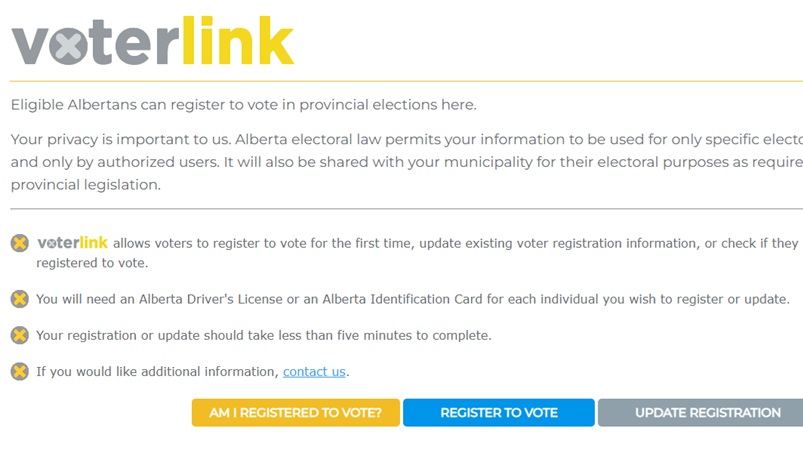
Voterlink has long been a target of online speculation, and the current wave of misinformation appears to have renewed attention on the tool. Voterlink is an online service administered by Elections Alberta, accessible at Voterlink.ab.ca, where electors can check whether they are registered, confirm their electoral district, update their address or name, and find information about where and how to vote. For years, it has been promoted as a convenient and secure resource designed to make the voting process more accessible. However, in the weeks leading up to the October referendum, social media users have reportedly been sharing claims that the tool is insecure, that the information housed within it has been tampered with, or that registrations are being quietly deleted. Elections Alberta says these claims are false and appear to be intentionally crafted to raise doubts among voters. McClure’s statement emphasized that Voterlink is safe and secure, and he urged Albertans not to rely on unverified social media posts when making decisions about their participation in the referendum. The timing of the misinformation is particularly concerning to election officials, as the period immediately preceding a vote is typically when attempts to interfere with public confidence intensify. The chief electoral officer said officials have been tracking the misinformation streams for weeks and have seen a noticeable escalation as the October 19 date approaches, prompting the province’s public response to set the record straight and provide voters with accurate, authoritative information.
McClure’s message was direct and intended to counter the specific falsehood that has been most widely circulated: that Albertans who were previously registered to vote have been removed from the electoral list. He said this claim is simply not true and that the overwhelming majority of Albertans who have voted before do not need to do anything to remain registered, as long as their circumstances have not changed. “If you have voted in previous provincial elections, and have not moved or changed your name, you are likely registered to vote,” McClure explained. That statement is meant to reassure long-time voters who may be worried after encountering posts suggesting their registration has been cancelled or their personal information deleted. The chief electoral officer stressed that any updates to the List of Electors are made in accordance with established legal requirements, and that removal without the elector’s knowledge or consent does not occur. He also sought to clarify the difference between a voter who is not registered and a voter whose registration has been removed: being unregistered is not the same as being deregistered, and there is a simple process to register or update information through Voterlink. By clarifying these points, Elections Alberta is hoping to cut through the noise and ensure that Albertans head to the polls with confidence in their ability to cast a ballot.
In his statement, McClure acknowledged that misinformation and disinformation are not new to democratic processes. “Misinformation and disinformation should be expected during campaigns,” he said, a sober acknowledgment of the modern reality faced by election administrators across Canada and around the world. He noted that campaigns are often targets of malicious attempts to create confusion, and that Albertans should be prepared to encounter false claims as the referendum draws nearer. But he also pointed to the awareness campaigns Elections Alberta has run over the years, which are designed to educate the public about the voting process, verify official sources, and build resilience against misleading information. These efforts include public announcements, social media posts, and partnerships with community organizations to ensure voters know where to turn for reliable election information. McClure’s remarks suggest that while misinformation is expected, it is not unstoppable, provided voters are properly informed and vigilant. He encouraged Albertans to be critical of what they see online, to verify information through official channels, and to report suspicious content when possible. The chief electoral officer’s tone was measured but firm, reflecting both an understanding of the challenges posed by a fast-moving digital information environment and a commitment to defending the transparency and fairness of Alberta’s electoral system.
The role of social media in amplifying election misinformation has become a central concern for election officials, and Alberta is no exception. Platforms such as Facebook, X (formerly Twitter), Instagram, and TikTok can spread false claims quickly and widely, often stripping context and presenting rumour as fact. The recent misinformation campaign appears to have gained traction by exploiting legitimate questions about the voting process, twisting them into alarming narratives that suggest systemic problems. For example, voters who search for information about Voterlink may encounter posts warning that using the tool is unsafe or that Elections Alberta cannot be trusted with personal data. McClure’s statement directly addresses these concerns, but officials acknowledge that correcting misinformation once it has spread is far more difficult than preventing it from taking hold in the first place. That is why Elections Alberta has placed significant emphasis on proactive public education, ensuring that accurate information is available and visible before false claims can become entrenched. The chief electoral officer also reminded Albertans that they can always contact Elections Alberta directly with questions or concerns about their registration status, rather than relying on social media commentary. By maintaining open lines of communication and offering straightforward guidance, the agency hopes to reduce the impact of false narratives and protect the integrity of the upcoming referendum.
As Alberta moves closer to the October 19 referendum, Elections Alberta says it will continue to monitor social media for misinformation and will respond to further false claims as necessary. McClure’s statement is both a warning and an invitation: a warning that Albertans should not believe everything they read online, and an invitation to engage with the electoral process using official, verified resources. The chief electoral officer’s message is ultimately one of reassurance — that the province’s electoral machinery is secure, that voter registrations remain intact, and that every eligible Albertan who wishes to vote will be able to do so. The referendum will be an opportunity for Albertans to make their voices heard, and Elections Alberta is determined to ensure that the process runs smoothly despite the challenges of digital-age disinformation. In the weeks ahead, voters are encouraged to visit Voterlink.ab.ca to confirm their registration status, update their information if needed, and access authoritative details about the referendum. Social media may be filled with noise, but McClure’s message cuts through with clarity: Alberta’s elections are safe, secure, and ready. The only misinformation that should be expected is that which people choose not to verify, and Elections Alberta is urging everyone to choose the facts.


