









In Pagosa Springs, a $156.5 Million School Bond Proposal Stirs Debate Over ‘Crumbling’ Buildings and Accurate Information
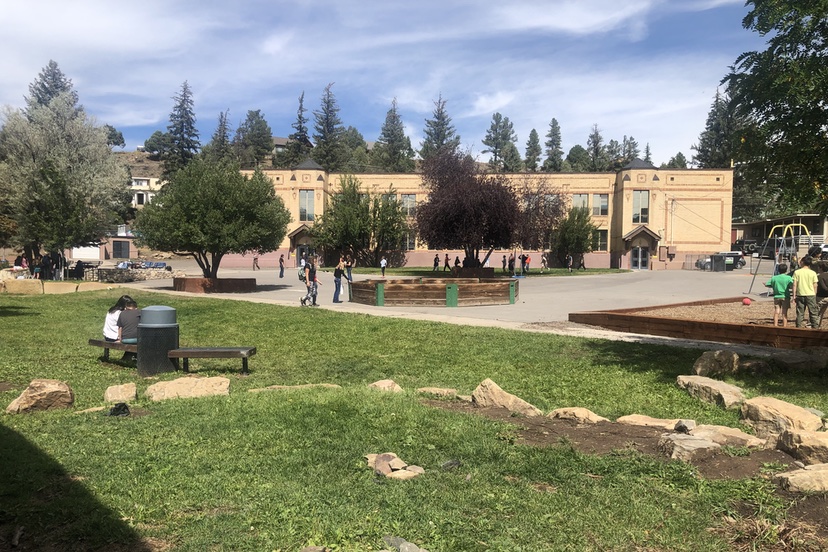
Pagosa Springs is facing a defining moment over the future of its public schools, as the Archuleta School District (ASD) seeks voter approval for a substantial $156.5 million property tax increase to build a completely new PreK-8 facility. The proposal has ignited a community-wide debate, with supporters arguing that investing in education is essential to attracting and retaining doctors, nurses, teachers, tradespeople, and small business owners. In the September 24 edition of the weekly Pagosa Springs SUN, several letters to the editor appeared in support of the tax increase, including one from Lee Stopher, Vice Chair for Community Outreach for the Archuleta County Democratic Party. Stopher wrote, “I think we should invest in the future of our community. Doctors, nurses, teachers, tradespeople, small business owners will not move/stay here if their kids have to attend crumbling schools. Every American child should be able to attend a fabulous public school…” Bill Hudson, an investigative journalist who has contributed to the Pagosa Daily Post since 2004, responded to Stopher and other supporters in a column that both agreed and disagreed with their central premise. Hudson agreed that the community should invest in its future and noted that he has spent the past two years urging ASD School Board members and staff to ask voters for a relatively small tax increase to better maintain existing school buildings. However, he strongly disagreed with the characterization of the schools as “crumbling,” arguing that the current buildings are in reasonably good shape and have been well maintained given the funding available. He pointed out that foundations are sound, roofs are relatively new, entrances have been upgraded for security, and fresh paint is applied when necessary. He also expressed doubt that Archuleta County voters, given the current economic situation, would feel comfortable approving a $156.5 million property tax increase for a new facility when the existing buildings do not appear to require such drastic action.
Hudson’s column went beyond the immediate bond debate to examine the broader issue of misinformation and disinformation in local public discourse. He explained that misinformation can be understood as incorrect information that people may encounter through the grapevine, social media, or online news sources, and which later turns out to be false. Disinformation, by contrast, involves the intentional spread of propaganda or partially untrue stories with the deliberate aim of achieving a personal, social, or political goal. Misinformation is the result of mistakes and carelessness, while disinformation comes from purposeful lying and exaggeration. Hudson, who has a particular interest in both concepts as an investigative journalist, argued that referring to the downtown schools as “crumbling” is disinformation. He suggested that a small group of local activists who desperately want voter approval for a substantial property tax increase are likely to make exaggerated and misleading claims about the condition of existing buildings in order to advance their agenda. He acknowledged that misinformation and disinformation are all around us, which often leads people to make decisions based on gut feelings rather than verified facts. But he urged readers to be more discerning, especially when significant taxpayer dollars are at stake. By framing the “crumbling schools” narrative as disinformation, Hudson called into question not only the accuracy of the claim but also the motivations behind it, asking the community to look more carefully at who is providing information, where that information comes from, and what agenda might be driving it.
Amid the controversy over the school bond, Hudson highlighted recent academic achievements that he described as accurate information and a meaningful accomplishment for a rural school district. Earlier in September, the Pagosa Daily Post published a press release from Pagosa Peak Open School (PPOS), a tuition-free, tax-supported charter school authorized by ASD in 2017. PPOS operates in a former office building that was not originally constructed as a school, yet its students continue to show educational success. The school achieved a “Performance Plan” rating from the Colorado Department of Education (CDE) in its official three-year framework report. School Director Emily Murphy was quoted in the release saying, “We are so proud of the hard work and dedication of our staff and students. This single year of growth hitting the 75th percentile highlights the ongoing progress our students are making within a Project-Based Learning (PBL) environment.” In August, ASD communications manager Kelsy Been also sent out a press release celebrating “Performance Plan” ratings for all five District schools. The Colorado Department of Education released 2026 results from the Colorado Measures of Academic Success (CMAS), PSAT, and SAT assessments, along with preliminary school and district performance frameworks. All Archuleta School District schools earned a Performance rating, and assessment results showed continued student growth across several grade levels and subjects. Hudson noted that community members want to know that their taxes are going to a good cause, and ASD appears to be just such a cause. He wrote that the public schools are apparently doing the best job they have done in years in terms of academic achievement, which he considered to be accurate and encouraging information for the community.
Hudson then turned to a parallel example of how difficult it can be to obtain reliable information when public money is on the table: the long-running saga of the Archuleta County Administration Building and Detention Center. The Board of County Commissioners, in various incarnations, has been discussing the idea of a new, modern county administration building since the late 1990s, and possibly even earlier. Years ago, the county purchased a five-acre parcel on Hot Springs Boulevard directly across the street from Town Hall, with the idea of creating a convenient local-government campus in that part of town. For reasons the column did not explore, that plan was shelved, and the BOCC donated most of the parcel to an affordable housing project called Rose Mountain Townhomes, which now serves 34 households. At a recent BOCC work session, County Manager Longinos Gonzalez asked commissioners whether they wanted to hire an engineering or architecture firm to provide realistic cost estimates for two possible options for finally fulfilling the dream of a new administration building. Option 1 would involve building a completely new facility on a 5.5-acre parcel recently purchased by the county in the Aspen Village subdivision. Option 2 would involve purchasing and remodeling an existing building in the City Market shopping center, likely at a much lower cost. Hudson noted that the county does not currently have information about which option would be truly cost-effective, and while residents might have a gut feeling about the best approach, the BOCC discussed spending taxpayer revenues to get a qualified engineering or architecture firm to compare the two options in terms of cost.
However, Hudson cautioned that information from expert out-of-town consultants is not necessarily accurate, especially if those same consultants might earn millions of dollars designing new buildings. This, he argued, was exactly the situation when ASD hired Colorado Springs-based architects to analyze the existing school buildings. The potential conflict of interest is obvious: a consultant hired to evaluate whether a building should be replaced may be inclined to recommend a new building, particularly if that recommendation leads to a lucrative design contract. Hudson’s point was not that all consultants are dishonest, but that the community should be aware of the incentives at play and should not blindly accept the conclusions of experts who stand to benefit financially from the decisions they are asked to inform. He connected this back to the school bond debate, suggesting that the same dynamic could be influencing the characterization of local schools as “crumbling” and in need of a $156.5 million replacement. By drawing a parallel between the county’s administration building dilemma and the school district’s facility analysis, Hudson illustrated a broader pattern in which taxpayer-funded studies and expert opinions may be shaped by the financial interests of the very people producing them. He urged readers to approach such information with healthy skepticism and to demand more transparency and accountability from those who are making recommendations that could have lasting financial consequences for the community.
In conclusion, Hudson returned to the core question of how the community should invest in its future. He agreed with Stopher that investing in the future is important and that every American child should be able to attend a fabulous public school. But he maintained that the current school buildings are not crumbling and have been well maintained given the funding available. He reiterated his belief that a relatively small tax increase for maintenance would be a more prudent approach than a massive $156.5 million bond for a new PreK-8 facility. He also emphasized the need for accurate information, rather than exaggerated claims or gut feelings, when making such consequential decisions. The column ended with a promise of further analysis: “Read Part Two… on Monday.” Bill Hudson, who began sharing his opinions in the Pagosa Daily Post in 2004 and claims that in Pagosa Springs opinions are like pickup trucks—everybody has one—has clearly positioned himself as a skeptic of the school bond proposal and a champion of careful, evidence-based decision-making. As the community moves closer to a vote on the tax increase, the debate over the condition of the schools, the motivations of consultants, and the reliability of information will likely continue to intensify. Hudson’s column serves as a reminder that in a small community, where everyone knows everyone and opinions are plentiful, the distinction between misinformation and disinformation can make all the difference in how residents choose to spend their tax dollars.


