








Bradley Rejects ‘Disinformation’ Claims as DUP Motion to Save Causeway Emergency Surgery Heads for Council Showdown
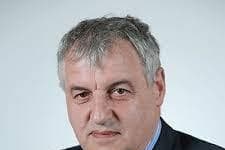
East Londonderry DUP MLA Maurice Bradley has strongly rejected claims by Alliance Party representatives that concerns surrounding the removal of Emergency General Surgery (EGS) from Causeway Hospital amount to “disinformation,” insisting that legitimate questions about patient safety, rural access, staffing and capacity must not be dismissed by political branding. Mr Bradley was speaking ahead of a meeting of Causeway Coast and Glens Council on September 1, during which a motion tabled by DUP councillors Darryl Wilson and Tanya Elder will call on the Health Minister to overturn a Northern Health Trust recommendation to remove EGS from the Coleraine hospital. The Trust has proposed centralising Emergency General Surgery and major colorectal surgery at Antrim Area Hospital, a move that has sparked widespread opposition across the north coast. In the run-up to the council debate, two Alliance representatives, Councillor Lee Kane and Alderman Yvonne Boyle, accused political opponents of spreading misinformation. Councillor Kane said health experts were telling the public that consolidation of emergency general surgery in Antrim was in the best interests of patients, and that clinical expertise should be the basis of decision-making, not “disinformation from political representatives who are prioritising likes on social media over the safety of our constituents.” Alderman Boyle similarly challenged claims that Causeway Hospital is being run down, saying the DUP motion “peddles myths about the future of Causeway Hospital that simply do not stand up to scrutiny.” Their comments drew a robust response from Mr Bradley, who framed the debate not as a clash of slogans, but as a matter of democratic accountability and evidence.
Mr Bradley said that Councillor Kane and Alderman Boyle were entitled to support the Northern Trust’s proposal, but they were not entitled to dismiss legitimate questions about patient safety, capacity, rural access and staffing as disinformation. He pointed to his long record of engagement with the hospital, noting that his interest did not begin with the current consultation or with social media. “I have been raising concerns about the hospital and challenging successive Northern Trust administrations since the days of Sean Donaghy, through Tony Stevens, Jennifer Welsh and now Suzanne Pullins,” he said. He said he had consistently sought answers through meetings, Assembly questions, correspondence with the Trust and representations to successive Health Ministers, and that attempting to portray that record as a recent attempt to attract social-media attention was “both inaccurate and insulting.” The strongest rebuttal to the Alliance statement, Mr Bradley argued, could be found in the Northern Trust’s own consultation report. He highlighted that the Trust received 1,415 responses, and when respondents were asked whether they agreed with the preferred option of centralising Emergency General Surgery and major colorectal surgery at Antrim, only 21 said yes while 1,362 said no. The Trust itself acknowledged that the overwhelming majority of respondents did not support its proposal, he said. It was therefore, in his view, extraordinary for Alliance representatives to accuse elected representatives of spreading disinformation while ignoring the clearly expressed views of the public. Those consultation respondents, he stressed, were not “self-appointed experts” but included patients, healthcare workers, families, rural residents and people with direct experience of receiving emergency surgical care at Causeway.
Mr Bradley welcomed recent investment in Causeway Hospital, including a new MRI scanner, £1.8 million investment in ambulatory care, and new consultant, Specialty Doctor and Advanced Nurse Practitioner posts. He said he had consistently supported and sought such investment. However, he argued that this investment could not be used to obscure the loss of a core acute service. “Purchasing an MRI scanner does not answer whether removing inpatient Emergency General Surgery is safe. Nor does investment in ambulatory or elective care replace the ability to admit and operate on an emergency surgical patient at Causeway.” He cited the Trust’s own documents, which state that patients requiring urgent surgical intervention or admission to a surgical inpatient bed will be transferred to Antrim. “That is not a myth; it is the proposed model,” he said. He added that the Trust estimates that two or three patients each day will require transfer from Causeway to Antrim, with approximately one-third requiring a Northern Ireland Ambulance Service paramedic crew. Mr Bradley noted that the Trust had explicitly acknowledged existing pressures at Antrim Area Hospital and, more importantly, that its own consultation report stated that the proposed measures would not resolve Antrim’s underlying capacity problems. For that reason, he said he had repeatedly asked for detailed bed, theatre, workforce, ambulance and financial modelling underpinning the decision. Before services are removed from Causeway, he argued, the public deserves to know precisely where transferred patients will be accommodated, how quickly an appropriate ambulance will be available, what happens when Antrim is operating beyond capacity, and what contingency exists when an unstable patient cannot safely withstand the journey. “Assurances are not a substitute for published and independently tested evidence,” he declared.
Mr Bradley also highlighted recruitment information supplied by the Trust, which he said raised legitimate questions. Figures covering April 2023 to July 2026 recorded 2,194 vacancy notifications associated with Antrim, compared with 708 at Causeway. Within the medical, dental and senior executive categories, the figures were 190 and 71 respectively. He acknowledged that those figures could not, by themselves, prove underinvestment or establish why each vacancy arose, and said that was precisely why he had asked the Trust for establishment levels, vacancy rates, unsuccessful recruitment exercises, turnover figures and the reasons posts were advertised. What the figures did not justify, he said, was Alliance declaring it “categorically untrue” that removing acute services could affect future recruitment and retention. Mr Bradley pointed out that the Trust’s own consultation report records concerns that removing Emergency General Surgery could make Causeway less attractive to doctors and nurses. That concern, he said, deserves a proper evidence-based answer, not a political dismissal. He further noted that the Trust’s report acknowledged that Causeway is almost 40 miles from Antrim and recorded concerns that the journey from Coleraine can take more than an hour. It also identified 83,642 residents in settlements more than 30 minutes from Antrim, while a further 155,813 people live in hamlets or open countryside and were not included in that percentage calculation. These are real people, Mr Bradley said, not statistics to be brushed aside. Older residents, farming families, people without private transport and communities across the north coast and Glens deserve the same consideration as those living closer to Greater Belfast.
Mr Bradley insisted that he respected clinical opinion and had never suggested that services should remain unchanged regardless of patient safety. However, invoking unnamed “health experts” did not end legitimate democratic scrutiny. If senior clinicians have concluded that only the Antrim option is safe, he said, the full evidence supporting that conclusion should be published. That must include the underlying workforce assumptions, capacity modelling, transfer-risk assessment, dissenting clinical opinions and a properly costed comparison with retaining and strengthening Emergency General Surgery at Causeway. He also noted that the Trust’s original options appraisal included centralising Emergency General Surgery and major colorectal surgery at Causeway. The public, he said, is entitled to see why investment in Causeway was rejected while the existing absence of a funded 24/7 emergency theatre there was subsequently used as a reason to favour Antrim. “The absence of previous investment must not be turned into the justification for further removing services,” he said. Mr Bradley also rejected the idea that the concerns raised by local representatives were simply campaign tactics. He described his long history of raising issues with successive Trust administrations and said that branding local representatives and concerned residents as peddlers of disinformation did nothing to answer the serious questions before the public. The debate, he said, should be conducted respectfully and on the evidence.
In his concluding remarks, Mr Bradley said he would continue to support genuine health transformation, but that transformation must be demonstrably safe, properly funded and fair to rural communities. Until the workforce, capacity, transfer and financial evidence has been fully published and independently scrutinised, he said he would continue to call on the Health Minister to pause the proposal and examine a properly resourced Causeway alternative. He said the people of the Causeway Coast do deserve better, and what they deserve is answers. The council motion, tabled by DUP councillors Darryl Wilson and Tanya Elder, will now be debated at the September 1 meeting, with supporters of the campaign to keep Emergency General Surgery at Causeway hoping that the elected chamber will send a clear message to the Health Minister to overturn the Trust’s recommendation. The debate has become a flashpoint in the wider conversation about the future of rural hospitals in Northern Ireland, with campaigners arguing that the cumulative loss of services from Causeway represents a slow rundown of the hospital, while Trust officials and Alliance representatives maintain that centralisation is clinically necessary to ensure safe, sustainable services. Mr Bradley’s intervention has made clear that the opponents of the proposal will not be silenced by accusations of disinformation, and that they intend to keep pressing for the publication of the full evidence base behind a decision that, if implemented, would fundamentally change the nature of emergency care available to thousands of people across the north coast. As the council meeting approaches, both sides are mobilising, but Mr Bradley has sought to reframe the argument around transparency, rural equity and the right of elected representatives to scrutinise a major service change on behalf of their constituents. Whether the Health Minister will respond to the council’s motion and halt the proposal remains to be seen, but the strength of feeling expressed in the Trust’s own consultation, and the determination of local political leaders to keep the issue alive, suggests that the future of Emergency General Surgery at Causeway Hospital is far from settled.


