





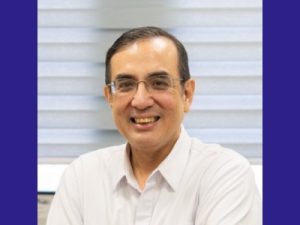




Doctors should become social media influencers to fight misinformation, says paediatrician with 100k followers
Healthcare leaders should actively encourage more clinicians to produce social media content so that trusted medical voices can communicate public health advice and push back against false information, according to a leading paediatrician and digital health influencer. Dr Lillie Parker, a paediatrician with more than 100,000 Instagram followers under the handle @doctor.lils, told the UK Health Security Agency (UKHSA) Conference in Manchester that public health bodies are failing to reach people because they rely on faceless institutional posts instead of human connection. She said that in an era of declining numbers of health visitors and GPs, smartphones remain one of the few places where families can still be reached consistently. Dr Parker was speaking in a session on tackling communication challenges in an age of misinformation, sharing the stage with specialists from the UKHSA and the World Health Organisation. She argued that “humans are craving human interaction” and that the public will simply scroll past a text-heavy organisation announcement. “A carousel post of text coming from an organisation is not what the public are going to engage in,” she said. “In that 1.8 seconds they are going to scroll past, they will not be reading what you have to say.”
Dr Parker suggested that while the UKHSA and the WHO had begun to recognise the importance of having real human beings present public health messages, NHS England had been slower to accept the shift. “Human beings have been cut back in communities. We’ve got less health visitors, we’ve got less GPs, but actually everyone has a smartphone, and those people can reach people on their smartphone,” she said. She acknowledged that many doctors feel anxious about putting themselves forward on social media, even though they are trained communicators capable of translating complex clinical information into accessible advice. “Lots of doctors are focused in communication. We are trained in how to talk to the public, how to get messages across, but there is an anxiety around those people being on social media,” she told delegates. That anxiety, she argued, is now a public health problem. As more parents turn to online platforms for guidance on children’s health and development, the absence of credible medical voices leaves a vacuum that misinformation can easily fill. The challenge, she said, is not simply to produce more official content, but to build a system in which clinicians are supported, paid and protected when they use their skills as digital communicators.
Dr Parker’s own experience illustrates both the promise and the frustrations of this new kind of medical work. She said she is “an NHS clinician first and always will be”, but she has reduced her NHS hours to 60 per cent in order to make space for content creation, and she is not paid for the time she spends making videos and writing posts. “I don’t get paid for the rest of the time, but I’m doing it for free because I’m passionate about what I do. So why can’t it be part of my job? I would love that,” she said. She began her social media page around three years ago after noticing that friends and family with young children were becoming overwhelmed by “the amount of noise online and a lot of misinformation that was coming their way.” What began as an attempt to help a small circle of people quickly grew into a national platform. Dr Parker said that while parents today have access to more information than ever before, that abundance has not necessarily been empowering. Instead, she said, it is creating a generation of parents who feel more anxious and under more pressure than ever to get things right. “Far from empowering parents, I’ve found that it’s been very overwhelming for people, and it’s making a generation that are more anxious and feel more pressure than ever to get things right when it comes to health, when it comes to raising children and children’s health in particular,” she said.
Her message comes at a time when public health authorities across the world are wrestling with the consequences of online misinformation. During the pandemic, false claims about vaccines and treatments spread rapidly, undermining trust and costing lives. Although the emergency phase has passed, misinformation continues to circulate around childhood vaccination, nutrition and safety advice. Dr Parker believes the answer is not to retreat from social media, but to occupy it more effectively with credible, relatable clinicians. When asked what organisations should be doing to tackle misinformation, she was direct: “Use the content creators that are already there.” Rather than starting from scratch, public health bodies should identify doctors, nurses and other healthcare professionals who have already built trust with large audiences and work with them in a structured way. That could mean paying them for their time, offering legal and psychological support, and ensuring they have the backing of their employers. Without that institutional support, many clinicians will continue to see social media as a personal risk rather than a professional service. Dr Parker insisted that doctors possess the communication skills needed to make a difference, but that the healthcare system has not yet adjusted to this new reality. “I think public health needs to realise, that for better or worse, humans are craving human interaction,” she said.
There are signs that official bodies are beginning to move in this direction. NHS England launched an account on TikTok over the summer, a significant departure from traditional public health communication. The move followed a warning from national medical director Professor Frankie Swords that people are seeking out health information from “unreliable” sources. However, Dr Parker’s remarks suggest that simply creating an account is not enough. Institutional content, no matter how well produced, may not carry the same weight as a trusted human voice. A social media user scrolling quickly through their feed is more likely to stop and listen to a paediatrician they already follow than to an anonymous organisation. The challenge, she said, is for health institutions to accept that the most effective messengers are often the clinicians who have already chosen to put themselves out there. Their authenticity, humour and personal storytelling can break through in ways that formal public health campaigns cannot. But if they are not supported, they may burn out or give up. Dr Parker’s own decision to cut her NHS hours and create content unpaid is a warning that the system is currently relying on the goodwill and passion of individual doctors rather than treating this as part of the core work of modern medicine.
The broader implications of Dr Parker’s speech are significant for how public health communication is structured in the future. In a world where traditional access to family doctors and health visitors is shrinking, the smartphone offers a new way to connect with families who might otherwise be left without reliable guidance. But it also creates a new burden on healthcare professionals, who are expected to compete with skilled misinformation peddlers for attention and trust. Dr Parker called on leaders to recognise content creation as a legitimate part of the NHS workforce and to ensure that clinicians are enabled to do it without sacrificing their careers or financial stability. Public health agencies, she argued, must become more agile and more human in their approach. Evidence-based advice alone will not matter if it cannot reach people. In an information environment built for speed, emotion and personality, the most powerful vehicle for public health is often the face of a trusted practitioner. As she put it, human beings are “the way to get to people, albeit human beings on a screen.” If the healthcare system fails to learn that lesson, the fight against misinformation will continue to be fought on unequal terms. By urging organisations like the UKHSA and the WHO to invest in clinicians as content creators, Dr Parker has put forward a clear and practical strategy for an age in which medical facts and online falsehoods are competing for the same audience.


