


Nepal’s Resurgent Pro-Monarchy Movement: A Wave of Nostalgia or Disinformation?
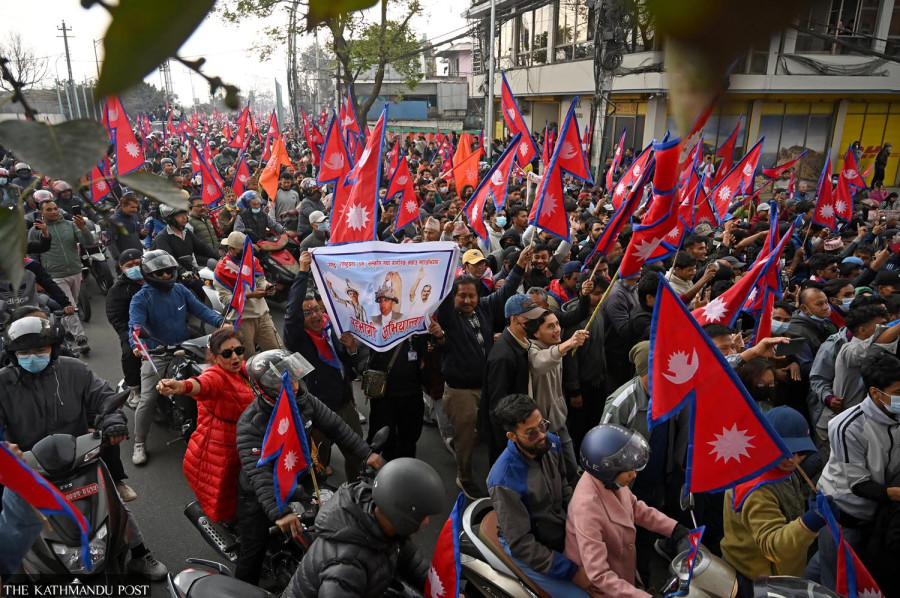
In the years since the 2006 People’s Movement, which ushered in a new era of democracy and ended the centuries-old Shah dynasty, Nepal has witnessed periodic resurgences of pro-monarchist sentiment. Recently, these sentiments have intensified, culminating in violent protests on March 28th, resulting in tragic loss of life and significant property damage. The catalyst for this renewed fervor appears to be a public appeal by former King Gyanendra Shah on Democracy Day, ironically the very system he dismantled with a coup d’état in 2005. Shah’s call to action has emboldened royalists, who have taken to the streets, parliament, and media platforms to advocate for the restoration of the monarchy, often employing disinformation and misleading economic promises to sway public opinion.
The pro-monarchy movement’s central slogan, "Raja Aau Desh Bachau" (King, come forward and save the country), encapsulates their belief that the return of the Shah dynasty is the sole solution to Nepal’s complex socio-economic and political challenges. This narrative resonates particularly with those disillusioned by the current political landscape, exploiting public frustration with perceived government incompetence and corruption. However, pro-monarchy leaders, often knowingly, disseminate misleading information, capitalizing on this discontent and directing it towards a yearning for the past rather than addressing the root causes of the nation’s problems within the existing democratic framework.
One of the most prevalent forms of disinformation propagated by the royalist movement is the revisionist portrayal of Nepal’s economic history. They argue that the country’s economic woes are a direct consequence of the abolition of the monarchy, conveniently ignoring the decades of systemic issues and policy failures that predate 2006. Data, however, contradicts their claims. Corruption, for example, was arguably worse during King Gyanendra’s direct rule, as evidenced by Transparency International’s Corruption Perception Index. Similarly, reliance on debt financing and low foreign direct investment were long-standing issues, not unique to the post-monarchy era. The ongoing exodus of skilled and unskilled labor, often cited as a symptom of the current system, began in the 1990s with the advent of an open market economy.
Royalists also perpetuate the myth that a monarchy is more economically viable for a small nation like Nepal, contrasting it with the perceived extravagance of the current presidential system. This assertion is demonstrably false. Historical budget records reveal that the monarchy consistently consumed a significant portion of the national budget, far exceeding the current allocation for the Office of the President. Adjusting for inflation, the expenses incurred during King Gyanendra’s reign dwarf the current presidential budget. In contrast, Nepal has made significant strides in poverty reduction, literacy rates, gender equality, and overall human development since the transition to democracy, further undermining the royalists’ economic arguments.
The inherent contradiction within the pro-monarchy movement lies in their simultaneous advocacy for a constitutional monarchy, where the monarch holds no real political power, and their portrayal of the king as a national savior. If the king is to be a mere figurehead, devoid of political influence, how can he possibly address the complex economic and political challenges facing the nation? This dissonance exposes the underlying fallacy of their argument and highlights the strategic use of disinformation to manipulate public sentiment. While the concerns raised by royalists regarding corruption, misgovernance, and public frustration are legitimate and deserve attention, these issues are not inherent flaws of democracy but rather failures of leadership within the democratic system. These are problems that can and should be addressed through elections and reforms, not by dismantling the hard-won democratic framework.
The pro-monarchy movement, in its current form, offers no concrete solutions to Nepal’s challenges. Neither the former King nor his supporters have presented any viable economic or political strategies beyond blaming democracy for the nation’s woes. Their rhetoric serves primarily to stoke nostalgia and exploit public anxieties, potentially jeopardizing the democratic progress achieved over the past two decades. It is crucial for the Nepali people to critically examine the narratives presented by the pro-monarchy movement and to recognize the difference between legitimate grievances within a democracy and the misleading promises of a return to a system that has demonstrably failed to deliver on its promises in the past. The focus should remain on strengthening democratic institutions, holding elected officials accountable, and working within the existing system to address the nation’s challenges, rather than reverting to a system that offers no tangible solutions.
The resurgence of pro-monarchy sentiment in Nepal underscores the fragility of democratic gains and the importance of vigilance against disinformation and manipulative narratives. The current political and economic challenges facing the nation require constructive engagement within the democratic framework, not a nostalgic retreat to a system that offers no concrete solutions and carries the risk of undermining hard-won freedoms.