








Fake Hanson–Albanese debate fabricated by foreign-run Facebook page, AAP FactCheck finds
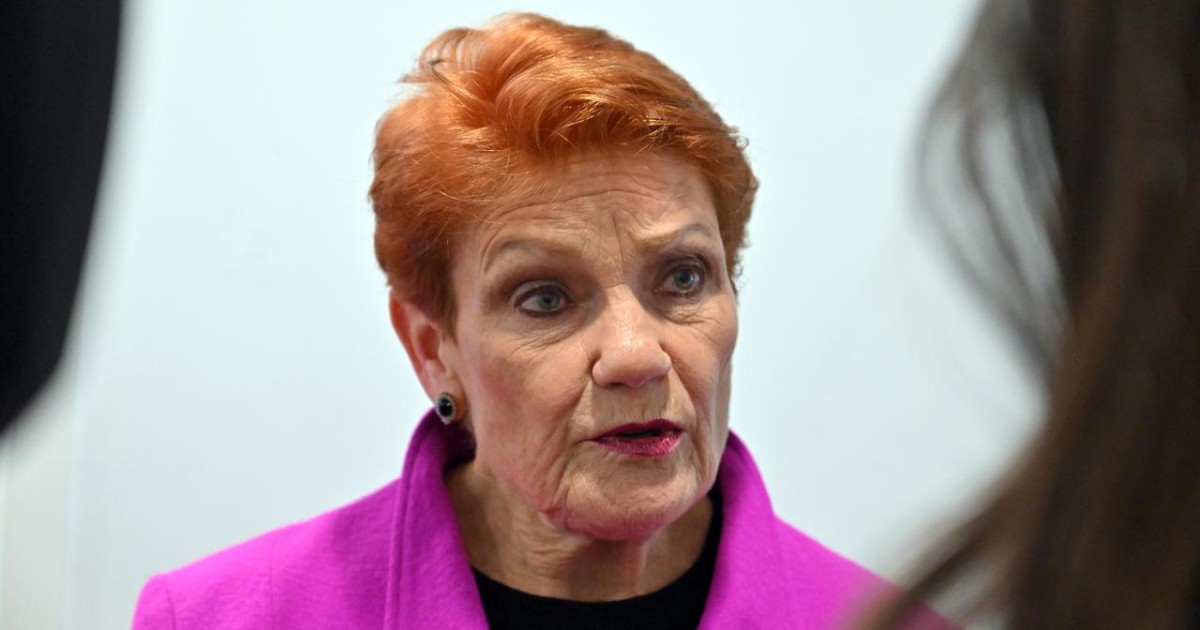
A foreign-run disinformation operation has fabricated a heated live television debate between Prime Minister Anthony Albanese and One Nation leader Pauline Hanson, complete with invented insults, a composite image and a fake article, according to an investigation by AAP FactCheck. The false narrative was posted on August 19 by a Facebook account called “Mood Space,” which Meta’s page transparency data shows is managed by users based in Vietnam. The post claimed that Albanese and Hanson debated each other on television about regional development, and that Hanson told the prime minister to “Shut your dirty mouth.” It also included other fabricated quotes attributed to both politicians, all presented as if they had been broadcast to the nation. AAP FactCheck found no credible reports, transcripts, video or official records of any such debate. The claim, as stated on Facebook, was that “Pauline Hanson and Anthony Albanese traded insults during a live televised debate.” The verdict is false. The quotes were fabricated, and there is no record of a broadcast debate between the pair. The post then directed users to a website in the comments section that expanded on the false claims, a common technique used by disinformation networks to lure readers away from social media platforms and onto pages where they can be exposed to further misleading content. The page’s composite image was not evidence of a debate; it was simply a side-by-side photo of two politicians. The foreign-run nature of the operation is confirmed by Meta’s transparency data, which lists Vietnam as the primary location of the account administrators. That means the content is not accidental misinformation or satire; it is a deliberate attempt to interfere in Australian political discourse from overseas. This incident is not isolated; it is part of a growing wave of foreign-operated pages spreading political falsehoods about Australian leaders, and it highlights the vulnerability of social media users to content that mimics legitimate journalism.
The fabricated quotes attributed to Senator Hanson in the Mood Space post are particularly telling because the exact same words have been recycled and attached to different politicians in different countries. A July 14 Facebook post claimed that US Democrat Senator Mark Kelly told US Vice-President JD Vance to “SHUT YOUR DIRTY MOUTH. DON’T YOU DARE TALK ABOUT MY HOMELAND” during a “heated on-air confrontation.” An August 20 post claimed the words were said by British MP Rupert Lowe during a “heated on-air confrontation” with London mayor Sadiq Khan. The repetition of identical quotes across entirely different political contexts demonstrates that the content is generated by a disinformation template rather than by any actual event. This copy-and-paste approach is a hallmark of foreign influence operations, which seek to exploit existing political tensions by inserting fake controversies into local media ecosystems. In the Australian case, the false debate was framed around regional development, a politically sensitive topic that resonates with rural and outer-suburban voters. By attaching the fake quotes to well-known Australian figures, the operation aims to create the impression of bitter political division and to erode public trust in elected officials. The fact that the same fabricated quote can be attributed to an American senator, a British MP and an Australian senator within weeks proves that the content has no basis in reality. It also shows that the operators behind these pages do not care about factual accuracy; they care only about engagement, reach and the amplification of discord. Social media users who encountered the post may have shared it believing it was genuine, especially because it used the names and images of real politicians. The deliberate mixing of real people with entirely invented statements is one of the most dangerous forms of online deception, because it is difficult for casual readers to verify and easy for them to accept at face value.
Mood Space is not a one-off offender. The page frequently posts political disinformation about Australia, and its content follows a consistent pattern of manufacturing fake controversies and presenting them as breaking news. In an August 25 post, it falsely claimed that Australian TV presenter Karl Stefanovic sparked “fresh political controversy” during a Today Show interview with health minister Mark Butler. The attached image, however, showed Stefanovic with Treasurer Jim Chalmers, not with Butler. The post also failed to recognise that Stefanovic is no longer a presenter on the Today Show, having parted ways with his former employer, Channel Nine, in June 2026. This basic factual error did not stop the page from encouraging users to click a link to a website that expanded on the false claims. Another post by the same page claimed that Senator Hanson used a “fiery speech” at a “high-profile gala” in Canberra to announce a donation of almost $500,000 for “rural healthcare, Australian veterans and farming communities experiencing financial difficulties.” AAP FactCheck found no credible reports of either the speech or the donation. There is also no mention of the supposed personal donation on Senator Hanson’s or One Nation’s social media feeds. The fabrication is significant because it seeks to portray a divisive politician as a generous philanthropist, potentially influencing public perception. The pattern across these posts is clear: the page creates a false event, attaches it to a real Australian public figure, uses an image that may or may not match the story, and directs users to an external website. The website format gives the content a veneer of legitimacy, making it appear like an independent news article rather than a social media post. This is a deliberate strategy to bypass fact-checkers and platform moderators, as external links are harder to trace and more difficult to debunk in real time.
One of the most insidious examples of Mood Space’s disinformation is its claim about One Nation MP Barnaby Joyce. The page alleged that Joyce had introduced a “citizenship bill” that would restrict parliamentary positions to Australian-born citizens and ban dual citizens from becoming members of Parliament. The post attributed to Joyce the statement: “Only Australians born on Australian soil should be eligible for positions of power, and dual citizens should be barred from Parliament.” Parliamentary records show that no such bill exists, and there is no record in Hansard, Parliament’s official transcript, of Joyce saying the words attributed to him. In reality, Joyce has introduced only one bill to Parliament in 2026, and that bill proposed stripping citizenship from Australians convicted of terrorism offences. It makes no mention of banning foreign-born citizens or dual citizens from becoming members of Parliament. The fabricated quote is particularly dangerous because it plays on a real and sensitive aspect of Australian constitutional law: dual citizens are already banned from sitting in federal Parliament under section 44 of the Australian Constitution. Joyce himself fell foul of that rule in 2017, when he was found to be a dual citizen of New Zealand and was disqualified from Parliament. He won his New England seat back in the ensuing by-election. By inventing a quote from a politician who has personally experienced the dual-citizenship provision, the disinformation operation creates a story that seems plausible to voters who remember the 2017 controversy. It also distorts the public’s understanding of the Constitution by implying that a new law is needed when, in fact, the restriction already exists. This type of falsehood is more harmful than an obviously absurd claim because it is anchored in real events and legal facts, making it easier for readers to believe and repeat.
The Mood Space account is just the latest example of foreign-owned accounts circulating political disinformation about Australian politics. AAP FactCheck has debunked dozens of other foreign-run accounts making false claims about Hanson, Albanese and other politicians. This growing pattern raises serious questions about the responsibility of social media platforms to police content that originates outside the countries where it is distributed. Meta’s page transparency data can reveal where an account is administered, but ordinary users rarely check this information. Instead, they rely on the page’s name, profile picture and post style to determine whether it is credible. Pages like Mood Space exploit this by using names that sound neutral and content that mimics legitimate news organisations. They also tend to focus on politically polarising figures, such as Hanson and Albanese, because those figures generate strong emotional reactions and high engagement. The operators behind these pages may be motivated by financial gain, political influence, or simply the desire to sow chaos. Regardless of motive, the effect is the same: Australian voters are exposed to fabricated news stories that can shape their opinions and undermine their trust in democratic institutions. The use of foreign administrators is particularly concerning because it suggests that overseas actors are attempting to interfere in Australian elections and public debates. While social media platforms have made some efforts to label state-affiliated media and remove coordinated inauthentic behaviour, the persistence of pages like Mood Space indicates that enforcement remains inconsistent. Fact-checkers and journalists can debunk individual posts, but they cannot keep pace with the volume of new content being generated. The ultimate responsibility lies with the platforms that profit from the distribution of this material, and with users who must become more discerning about the sources they share.
In the case of the alleged Hanson–Albanese debate, the evidence is unambiguous: it never happened. There is no television transcript, no news report, no official Hansard record, and no video footage of the supposed confrontation. The quotes attributed to both politicians were invented by a Facebook page based in Vietnam and circulated to Australian audiences as if they were real. The same fabricated quotes have been used in the United States and the United Kingdom, further confirming that the content is not genuine. This episode serves as a reminder of the importance of verifying information before sharing it, particularly when it involves prominent political figures and claims of dramatic confrontations. Readers should be wary of pages that post exclusively about politics but are administered from overseas, that use composite images, and that direct users to unfamiliar websites. The presence of clickbait-style headlines and sensational quotes should also raise red flags. AAP FactCheck is an accredited member of the International Fact-Checking Network, and its findings are based on a rigorous review of official records, credible news reports, and social media metadata. In this instance, the investigation found no basis for the claim that Hanson and Albanese traded insults on live television. The story is false, and its continued circulation on social media represents a deliberate attempt to deceive Australian voters. As disinformation operations become more sophisticated, the need for critical media literacy and independent fact-checking has never been greater. The public deserves accurate information about its leaders, and false stories like this one should be treated with the scepticism they deserve.


