


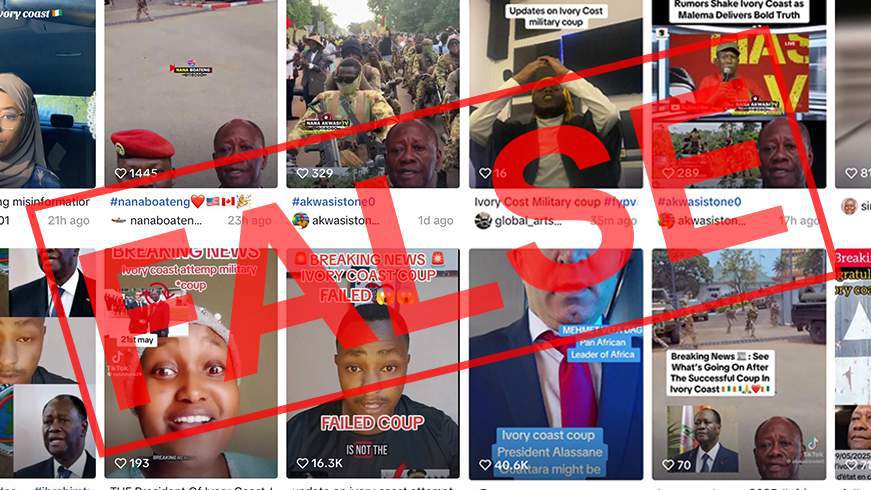
Ivory Coast Coup Disinformation Floods TikTok, Highlighting Platform’s Vulnerability to False Narratives
A wave of disinformation alleging a coup d’état in Ivory Coast recently swept across TikTok, sparking concerns about the platform’s susceptibility to the rapid spread of false narratives. While the Ivorian government swiftly debunked the rumors, the incident underscores the challenges social media platforms face in combating misinformation, particularly in politically sensitive contexts. Videos purporting to show military movements, political unrest, and pronouncements of a new regime circulated widely, generating anxiety and confusion among users both within Ivory Coast and internationally. This incident highlights how easily fabricated content can gain traction on platforms like TikTok, where short-form videos and algorithmic amplification can contribute to the viral spread of misinformation.
The proliferation of coup rumors on TikTok reflects a broader trend of disinformation campaigns leveraging social media to manipulate public opinion and potentially incite unrest. The rapid, often unchecked dissemination of false information can have serious real-world consequences, undermining trust in institutions, fueling social divisions, and even contributing to violence. The decentralized nature of platforms like TikTok, where content is created and shared by millions of users, makes it difficult to effectively monitor and control the flow of information. While TikTok employs content moderation measures, the sheer volume of uploads poses a significant challenge, allowing misleading content to slip through the cracks and reach a vast audience.
This incident in Ivory Coast serves as a stark reminder of the potential for social media to be weaponized for disinformation purposes. The ease with which fabricated videos and narratives can be created and disseminated highlights the urgent need for more robust content moderation strategies and media literacy initiatives. Users need to develop critical thinking skills to evaluate the information they encounter online and avoid becoming unwitting participants in the spread of false narratives. Governments and international organizations also have a role to play in promoting media literacy and holding social media platforms accountable for the content they host.
The Ivorian government’s prompt response in debunking the coup rumors played a crucial role in mitigating the potential impact of the disinformation campaign. By issuing clear and timely statements, authorities were able to counter the false narrative and reassure the public. However, the incident exposed the vulnerability of even stable governments to disinformation campaigns orchestrated through social media. The speed with which misinformation can spread necessitates proactive strategies from governments and institutions to counter false narratives and maintain public trust. This includes investing in media monitoring tools, developing rapid response mechanisms to counter disinformation, and engaging with the public through transparent communication channels.
The TikTok coup disinformation campaign also highlights the importance of international collaboration in combating misinformation. Cross-border cooperation is essential to address the global nature of online platforms and the ease with which disinformation can transcend national boundaries. Sharing best practices for content moderation, developing joint strategies to counter disinformation campaigns, and promoting media literacy across different cultural contexts are crucial steps in mitigating the impact of misinformation on a global scale. International organizations like the United Nations and regional bodies have a key role to play in facilitating this collaboration and fostering a coordinated response to the challenges posed by disinformation.
In conclusion, the spread of false coup rumors on TikTok underscores the growing threat of disinformation in the digital age. This incident serves as a wake-up call for social media platforms, governments, and individuals to take proactive steps to combat the proliferation of false narratives. Strengthening content moderation policies, investing in media literacy initiatives, and fostering international collaboration are essential to mitigate the impact of disinformation and protect the integrity of online information ecosystems. The Ivorian case study provides valuable lessons for understanding the dynamics of online disinformation campaigns and developing effective strategies to counter them. It also emphasizes the crucial role of informed and discerning citizens in recognizing and rejecting false narratives, thereby contributing to a more responsible and trustworthy online environment. As social media continues to play an increasingly prominent role in shaping public discourse, the fight against disinformation must remain a top priority for all stakeholders.