









AI Disinformation and Big Tech Battle Define Brazil’s High-Stakes Election
Far-right populists around the world are using artificial intelligence to bypass traditional media gatekeepers and spread disinformation at scale, and nowhere is that dynamic more acute than Brazil. With the country’s general election scheduled for October 4, 2026, Brazil has become the testing ground for a new generation of AI-driven political manipulation, just as the contest sits at the intersection of the global race to influence democracy with AI and the race to control the technology itself. Brazil has already been rocked by political disinformation in recent years, and the rise of generative AI is expected to bring even more daunting challenges. Thirteen candidates are running for the presidency, but the race is currently dominated by incumbent President Luiz Inácio Lula da Silva of the Workers’ Party (PT) and Senator Flávio Bolsonaro of the right-wing Liberal Party (PL). Lula won a narrow victory in 2022, edging out Flávio’s father, Jair Bolsonaro, who is now serving a sentence for his role in plotting a coup in an attempt to overturn those results. The upcoming election mirrors other recent votes in the region, marked by high levels of distrust in democratic institutions and the possibility of another right-wing candidate taking office and aligning closely with Donald Trump. Brazil is also strategically important for the AI industry, as it is becoming a priority market for data-center investment and a crucial source of critical minerals needed to power and build AI systems. The United States, the European Union, and private companies are looking to Brazil as they try to reduce supply-chain dependence on China, and the Bolsonaro camp has indicated support for such a realignment. Because access to Brazil’s government is both politically and commercially valuable, the upcoming election has become a prime target for interference by foreign governments and tech companies alike.
Brazil has served as a testing ground for information warfare tactics in the digital age for several election cycles. Its digital environment has been described as a fertile ground for innovative strategies to spread polarizing content with the intent of manipulating public debate. Several factors converge to make Brazil uniquely vulnerable: a heavy reliance on hyperconnected chat applications, intense political polarization, and a powerful influencer-driven media market. Brazilian authorities were early to recognize the potential dangers of AI as a tool of election influence. Ahead of the 2026 election, the Superior Electoral Court, known as the TSE, prohibited generative AI systems from providing certain election-related responses, including recommendations or prioritization of candidates, parties, and campaigns. The rules also prohibit these systems from expressing an electoral preference or recommending a vote, and impose restrictions on AI-generated content. In theory, these measures are meant to prevent AI systems from interfering in elections through misinformation, disinformation, or biased content. In practice, however, they are not being followed. Research has found that major AI models ranked or ordered candidates in nearly every instance during testing and did not reliably use official sources. Responses were often inconsistent, varying with the wording of the input, meaning that voters turning to these systems could receive differing answers with variable source quality, with no external visibility because only the companies themselves can view all responses. In addition, Meta’s ad system was found to be approving advertisements that violated both Meta’s own community standards and national election laws. Approved ads included calls for a repeat of the January 8 attempted coup in Brazil, incitement to violence against a lawmaker, hate speech targeting lawmakers, falsely celebrated Trump’s official endorsement of Flávio Bolsonaro, and pushed the conspiracy theory that Jair Bolsonaro is a political prisoner, according to corporate accountability watchdog Eko.
As a result of these risks and the government’s fractured efforts to contain them, Brazil has found itself in the grips of a major battle between state regulators and global tech giants. The TSE and the Supreme Court have imposed some of the most aggressive anti-disinformation measures in the world, including strict frameworks that ban deepfakes and enforce platform liability. But this top-down approach has turned the digital environment into a proxy war over sovereignty and free speech, exemplified by high-profile clashes between Brazilian authorities and tech platforms. Political actors frequently weaponize these clashes to fuel anti-establishment narratives, compounding public distrust in the information ecosystem. In 2024, after extensive corporate lobbying, the Brazilian Senate removed previously proposed safeguards against high-risk AI models, reportedly in response to pushback from tech giants. A year earlier, Google and Telegram had come under investigation by Brazilian authorities for allegedly interfering with Brazil’s Fake News Bill, which sought to hold platforms accountable for misinformation. Much as they have embraced the Trump administration in the United States, tech companies have forged an alliance with the far right in Brazil to avoid regulation. In 2024, Elon Musk challenged Brazil’s Supreme Court over attempts to block X accounts associated with disinformation networks and encouraged Brazilians to defy the courts by using VPNs to circumvent the blocks. The court included Musk in its investigation into the spread of disinformation and opened a separate inquiry into his conduct, which it alleged amounted to obstruction. In August 2024, the court blocked X entirely, though the restriction was removed two months later after the platform complied with a court order. Musk’s confrontation supplied the Bolsonaro movement with a powerful international champion. At a 2024 rally, Jair Bolsonaro praised Musk, describing him as “the man who really preserves true freedom for all of us,” tapping into the culture war over free speech and enlisting far-right Brazilians as fellow warriors. In January 2025, Meta CEO Mark Zuckerberg joined the attacks, insinuating that “secret courts” in Latin America were carrying out mass censorship, widely interpreted as a reference to Brazil’s Supreme Court. Zuckerberg also pledged to work with President Trump to push back on governments around the world that go after American companies.
Technology companies have influenced elections for years, both directly and indirectly. The public gets information through search engines, shares it on social media, and is exposed to targeted political advertising based on profiles developed from their online data. With disinformation playing an increasingly important role in election cycles, tech companies are at the forefront of battles over content moderation and speech restrictions. Brazil has been at the center of this, including during the previous two election cycles, when false claims about elections and voting circulated widely on WhatsApp and other platforms. Many of those concerns remain relevant, but they have now grown to include AI chatbots as primary sources of bias and false information. Like WhatsApp, AI chatbots deliver content privately and are largely inaccessible to public auditors. Political campaigns in Brazil were found to be operating vast numbers of WhatsApp groups that were made to appear distinct in order to conceal that a few administrators controlled most or all of them. AI chatbots operate from a similar black box, with most users unaware of where the chatbot gets its information or how it chooses what to prioritize. Just as WhatsApp did in 2018 and 2022, AI chatbots represent a fundamental shift in how Brazilian voters receive information that may influence their votes. Increasingly, that information is delivered through private, highly personalized channels that cannot be viewed by auditors, election observers, or fact-checkers. No one knows exactly how much mis- and disinformation voters are exposed to via chatbots, because no one even knows what information people see when they access it through an AI-mediated platform. This is particularly problematic given that digital platforms are known to disproportionately amplify right-wing propaganda and have repeatedly allowed partisan bias to influence content decisions. On September 23, just 11 days before the election, Meta temporarily prevented Lula’s campaign page from running political advertisements and removed an Instagram account that had published reporting about Flávio Bolsonaro’s alleged connections to financial scandals. Meta later reversed course, but its explanation was unclear and the damage was done. Three years earlier, Google used its Brazilian search homepage to direct users toward opposition to proposed platform regulation and encouraged them to lobby lawmakers; Google defended the decision and denied manipulating search results.
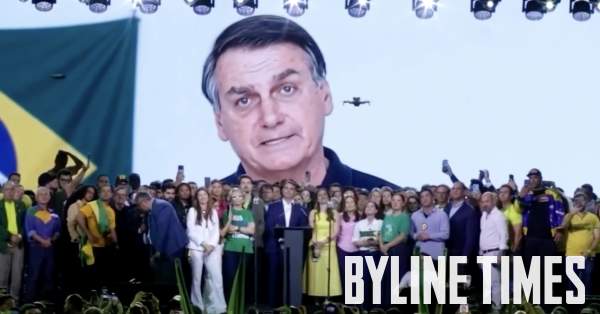
While consequential decision-making inside tech companies remains opaque, one thing is clear: AI-generated election disinformation has been proliferating in the days and weeks ahead of the vote. In just the first 11 days of the campaign, the TSE received 19 cases involving the use of AI in political advertising and campaigning. In July 2026, Flávio Bolsonaro rolled out an AI-generated campaign video featuring deepfake footage of his father, who is currently under house arrest, making it appear as if he was out on the campaign trail with his son. The elder Bolsonaro is barred from making public statements or using social media, but his son appeared to use AI-generated depictions of his father to create the appearance of an endorsement. The former president remains a popular figure, so his endorsement is widely seen as an important mark for his son’s campaign. Left-wing parties challenged the video, arguing that it illegally evaded restrictions imposed on Jair Bolsonaro. The Superior Electoral Court ultimately ruled, by four votes to three, that the video did not count as public electoral advertising because it appeared before Flávio’s candidacy was formally registered. The court then issued a broader definition of prohibited deepfakes for the remainder of the campaign season. Flávio has additionally produced at least one AI-generated campaign song and has shared several AI campaign videos. Supporters of Bolsonaro have reportedly organized massive digital “armies,” including a WhatsApp group where members receive daily “visual ammunition” to post on social media in an effort to boost his candidacy. The accompanying website reportedly contains ready-made posts, allowing users to filter content by their preferred social media platform or category. One of the largest categories of content on the website focuses on “criticism of the PT” (the Workers’ Party, represented by Lula). This mirrors previous astroturfed digital campaigns led by members of the Bolsonaro movement—the very campaigns that incited an attempted coup several years ago.
Whether this year’s digital armies will try to fuel another insurrection remains to be seen, but what is certain is that tech billionaires have a massive stake in the result and powerful tools to shape what voters see. As has already been demonstrated, AI can put a sidelined leader back on the campaign trail, and platforms can amplify a political attack or interrupt a campaign’s advertising. The opacity of AI systems and the private channels through which they deliver information make it nearly impossible for regulators, journalists, and voters to know who is being told what, or why. The courts in Brazil have tried to impose rules, but the rules are being tested and circumvented in real time by campaigns, foreign actors, and the platforms themselves. Whoever wins the upcoming election will help write the rules that tech companies must follow, not only in Brazil but potentially for the wider region and the global race to regulate AI. The danger is that the people trying to win power and the companies helping them reach voters seem to find accountability equally inconvenient. In a country that has already seen an attempted coup fueled by digital disinformation, the combination of generative AI, unaccountable platforms, and a deeply polarized electorate makes this election a critical test of whether democratic institutions can survive the age of artificial intelligence.


