


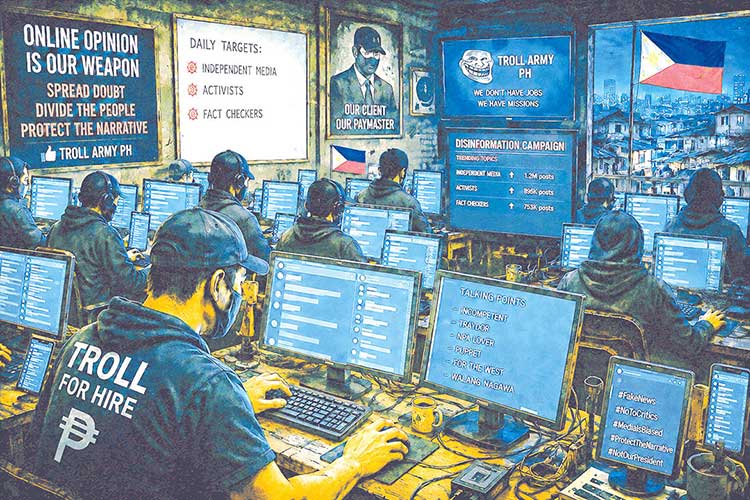
The digital era has ushered in a pervasive crisis: the rise of state-sponsored and commercially motivated troll farms that weaponize disinformation to manipulate public discourse. Defined as individuals or automated bots that intentionally spread inflammatory content to advance hidden agendas, these entities have become central to modern information warfare. From large-scale state operations involving millions of accounts to private firms hired to discredit political opponents, the Philippines has uniquely emerged as a global hotbed for this phenomenon. As elections approach, the threat moves beyond mere annoyance to become an existential challenge to the country’s democratic fabric.
Legislative efforts to curb this menace—including proposed bills targeting “troll farms”—have gained traction in the Philippine Congress. However, these initiatives spark significant debate. Many experts warn against granting the government broad powers to legally define “false information,” fearing such authority would be weaponized to suppress journalism and political dissent, particularly in a nation already classified as a “flawed democracy.” Entrusting the state with the regulation of truth is viewed by many as a dangerous precursor to institutional overreach rather than a genuine solution to the problem of manufactured deception.
A more effective regulatory strategy involves shifting the focus from content censorship to radical transparency. Experts, including retired Supreme Court Justice Antonio T. Carpio and industry professionals, advocate for updating the Foreign Agents Act of 1979 to cover digital influence operations. By requiring foreign-funded actors to register and disclose their political activities, the state can bring shadow operations into the light. The core objective is to unmask the anonymous actors behind the screens and ensure that the digital influence campaigns are subjected to the same scrutiny as traditional political advertising.
Modernizing campaign finance and advertising regulations is equally vital to dismantling the troll infrastructure. Current rules are ill-equipped to address the digital age, leaving a grey market where political spending on “keyboard warriors” goes untracked. By requiring full disclosure of the financial sources and specific operational expenses of digital campaigns, the government can effectively “follow the money.” Furthermore, industry bodies like the Ad Standards Council must evolve to categorize influencer messaging as paid advertising, ensuring that the public can distinguish between organic opinion and commercially manufactured content.
Beyond regulation, the fight against disinformation requires a comprehensive, “whole-of-society” approach to media literacy. Current efforts by schools and the government, while helpful, are often limited to teaching basic tips on flagging “fake news.” Advocates argue that true resilience requires a more sophisticated educational model that encourages critical thinking and helps citizens navigate information biases, especially as sophisticated AI tools evolve. Private companies and civil society coalitions are already adopting these defensive measures; however, these efforts remain siloed and inconsistent across the broader population.
Ultimately, the goal is to bridge the gap between disparate advocacy groups by forming a permanent, multisectoral watchdog dedicated to sustained public education. As deepfakes and AI-driven disinformation become increasingly integral to political strategy, a fragmented response will no longer suffice. By fostering collaboration between the private sector, civic organizations, and media outlets, the nation can build a cohesive defense against the degradation of democratic discourse. Addressing this social cancer requires not just legislation, but a fundamental shift in how citizens consume information, ensuring that democracy survives the digital age.