




Paragraph 1: The Evolving Threat Landscape for 2027
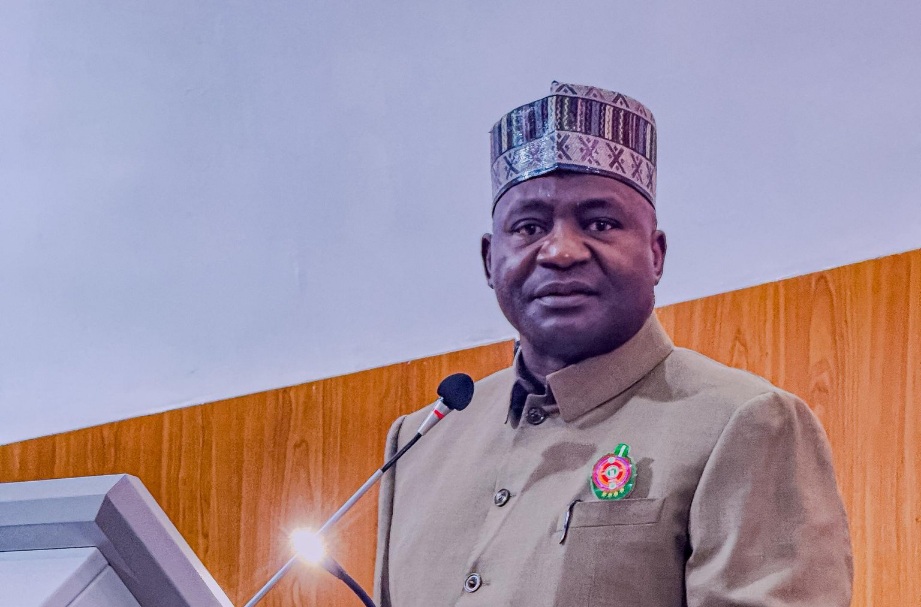
Nigeria’s Minister of Defence, Christopher Musa, has issued a stark and sobering warning regarding the integrity of the 2027 general elections, stating that the nation’s democratic process now faces a sophisticated array of threats that transcend the traditional specter of violence at polling booths. Speaking at the 2025 Blueprint Newspapers Impact Series and Awards ceremony in Abuja, themed “Security Challenges and the Integrity of Nigeria’s 2027 Elections,” the Minister, represented by his Senior Special Assistant on Policy and Strategy, Olufemi Akinjobi, highlighted a paradigm shift where hyper-connectivity and advanced technology have birthed new battlefields. He emphasized that cyber interference, artificial intelligence-generated misinformation, and coordinated efforts to undermine public confidence in democratic institutions are set to define the security landscape of the next electoral cycle, requiring a fundamental rethink of the country’s entire approach to electoral security. The Minister argued that this evolution mandates moving beyond static defense mechanisms, asserting that guarding polling units alone is woefully insufficient to guarantee credible and peaceful elections. “Election security can no longer be viewed simply as the protection of polling stations. It is, fundamentally, the protection of democratic legitimacy,” he declared, setting the tone for a comprehensive review of national preparedness. He cautioned that election-related threats now manifest through cyberspace and manipulated information ecosystems, where economic grievances and narratives designed to exploit ethnic and religious fault lines could dangerously heighten tensions before, during, and after the voting process. This new reality, he insisted, demands that security institutions adopt a dynamic, intelligence-driven posture, incorporating the protection of electoral technology, information systems, and the very fabric of public trust into the core mandate of national security, moving beyond the mere physical security of voters and election officials.
Paragraph 2: The AI and Information Warfare Dimension
Delving deep into the technological specter looming over the 2027 polls, Minister Musa pinpointed the rapid advancement of artificial intelligence as perhaps the most insidious new dimension of electoral manipulation, a threat that democratizes the capacity for large-scale deception. He warned that malicious actors are now equipped with tools capable of generating fabricated videos, cloning the voices of political leaders, and producing hyper-realistic manipulated images that can reach and deceive millions of Nigerians in a matter of minutes, creating a reality where truth becomes indistinguishable from falsehood. This technological capability poses an existential threat to the factual basis of public discourse, allowing falsehoods to spread faster and appear more credible than ever before, thereby weaponizing the very information ecosystem that sustains democratic deliberation. The Minister painted a stark picture of the evolving adversary, stating, “The greatest threat to an election today may not necessarily be the individual carrying a weapon near a polling unit. It may well be the anonymous actor operating behind a computer screen, deliberately manipulating information, exploiting social divisions and attempting to weaken confidence in democratic institutions.” He stressed that the security establishment must recognize that while traditional kinetic threats—terrorism, banditry, kidnapping, and organised criminal networks—remain persistent, the integration of these criminal elements with sophisticated cyber capabilities amplifies the risk exponentially. The consequence is that electoral security is no longer just about physical safety but encompasses the protection of electoral technology, digital infrastructure, and sensitive data from cyber intrusion, sabotage, and malicious interference that could compromise results and cast doubt on the credibility of the electoral process. The Minister urged a national awakening to this threat, calling for a comprehensive defense mechanism that integrates cybersecurity experts into the core of electoral planning and ensures that the very systems used to tabulate and transmit results are hardened against external manipulation, a critical step to preserving the integrity of the final outcome.
Paragraph 3: Institutional Lessons and the Foundation for Preparedness
Despite the grim forecast, Minister Musa assuaged fears by reminding the audience that Nigeria is not approaching the 2027 elections depleted of institutional experience, but rather possesses a valuable repository of lessons learned from past democratic exercises. Reflecting on the nation’s democratic journey since 1999, he noted that considerable lessons have been learned regarding electoral security, inter-agency cooperation, and crisis management, which provide a solid foundation to build upon. He specifically referenced the 2023 general elections, where security agencies conducted one of the largest coordinated election security operations in the country’s democratic history, drawing upon the collective strength of the military, police, and intelligence bodies to maintain order and facilitate voting across the nation’s diverse terrain. However, the Minister stressed that past successes should not breed complacency, as the threats have evolved from purely physical confrontations to sophisticated hybrid warfare that combines kinetic and digital elements. Effective election security, he argued, cannot be achieved through last-minute, reactive deployments of personnel; instead, it requires months—if not years—of sustained preparation, meticulous intelligence gathering, comprehensive inter-agency coordination, effective communication strategies, and the continuous assessment of emerging threats to adapt to the changing landscape. He emphasized that the architecture must be intelligence-led and predictive rather than incident-driven, strengthening early-warning mechanisms and establishing real-time information-sharing systems across all relevant security and electoral institutions to allow authorities to identify and neutralize threats before they metastasize into crises. By highlighting the operational battles of the past—against insurgency in the Northeast and banditry in the Northwest—Musa underscored the military’s capability to learn and adapt, but he insisted that the digital frontline requires a different set of skills and a decentralized approach that includes protecting server farms alongside physical borders, ensuring that the hard-won stability of past elections is not undone by a sophisticated cyberattack or a coordinated disinformation campaign designed to delegitimize the process.
Paragraph 4: Armed Forces Neutrality and the SECURE Framework
Reaffirming the bedrock principle of democratic governance, Minister Musa unequivocally declared the constitutional neutrality of the Armed Forces of Nigeria regarding the 2027 elections, moving to quell any lingering suspicions of partisan interference from the security establishment. He affirmed that the military holds no allegiance to political parties or individual candidates and that its loyalty is solely to the Constitution of the Federal Republic and the Nigerian people, a principle which ensures that the state’s coercive power is never used to sway the outcome of an election. “The Armed Forces owe allegiance neither to political parties nor to individual candidates. Our allegiance is to the Constitution of the Federal Republic of Nigeria. Our loyalty is to the Nigerian people,” he stated firmly, establishing a clear red line against any form of official manipulation. To translate this neutrality and strategic outlook into actionable policy, the Minister unveiled a new strategic initiative termed the “SECURE Framework,” designed to create a comprehensive and coordinated approach to fortifying the electoral process against the full spectrum of threats identified. This framework is structured around six critical pillars: Intelligence Integration, Electoral Cyber Resilience, Civil-Military Coordination, Unified Strategic Communication, a Responsible Information Environment, and Active Citizen Engagement, each designed to address a specific vulnerability within the electoral ecosystem. The SECURE Framework is intended to be the linchpin that brings together government institutions, security agencies, electoral bodies like INEC, the media, civil society organizations, technology companies, and citizens themselves to collectively bolster Nigeria’s democratic resilience, fostering a whole-of-society approach to safeguarding the polls. By formalizing the integration of intelligence and establishing robust defenses for electoral technology—protecting against cyber intrusion, sabotage, and malicious interference that could compromise sensitive information and cast doubt on the credibility of results—the framework aims to create a formidable shield against the hybrid threats of the 21st century, ensuring that voter data and result transmission remain tamper-proof and that the military’s constitutional role remains strictly supportive and apolitical.
Paragraph 5: Strategic Communication and Collective Responsibility
In addressing the vulnerability of the national information space, Minister Musa underscored the critical importance of strategic communication in the lead-up to 2027, identifying it as a key battleground in the fight to preserve electoral integrity. He cautioned that delays or failures by government institutions and responsible authorities to provide accurate, timely information would inevitably create a dangerous information vacuum—one that would be aggressively filled by falsehoods, conspiracy theories, and disinformation crafted by adversarial actors intent on destabilizing the process. “In today’s information environment, silence often creates space for misinformation,” he warned, advocating for a synchronized and aggressive communications strategy that anticipates narratives rather than merely reacting to them, ensuring that the government’s voice is heard clearly above the noise of the digital cacophony. Recognizing that the state alone cannot win this battle for truth, the Minister issued a sweeping call to action for the media, technology companies, civil society organizations, educational institutions, and citizens to accept collective responsibility for promoting a fact-based information environment leading up to the polls. He called upon political parties and candidates to voluntarily commit to peaceful political competition, stressing that the pursuit of power must never devolve into violence or the incitement thereof, and that they must place national interest above partisan advantage. Directly addressing the nation’s youth, he appealed to them to reject attempts by politicians and other vested interests to recruit them as instruments of electoral violence, urging them instead to channel their energy, creativity, and talents into strengthening democratic participation, innovation, and national development. The Minister’s message was clear: the integrity of the elections rests not just on the shoulders of security operatives, but on the vigilance and conduct of every stakeholder within the Nigerian polity, requiring a concerted effort from the press to counter misinformation, from tech giants to monitor their platforms, and from citizens to verify information before sharing it, creating a bulwark against the forces of division and falsehood.
Paragraph 6: Collaborative Action and the Vision for a Unified Nation
Looking toward the execution of these strategies, Minister Musa detailed the collaborative effort that will underpin Nigeria’s electoral security apparatus for 2027, emphasizing a unified command and control structure that leaves no room for gaps or overlaps. He stated that the Ministry of Defence will work in concert with the Office of the National Security Adviser, the Armed Forces of Nigeria, the Nigeria Police Force, the Department of State Services, the Defence Intelligence Agency, and the Independent National Electoral Commission to ensure their constitutional responsibilities are discharged professionally, impartially, and strictly within the limits of the law, providing support to civil authorities whenever lawfully authorized. The ultimate metric for success, he argued, must extend beyond merely having a calm election day; rather, true electoral security is measured by the extent to which citizens feel free to participate, trust the electoral process, and accept the legitimacy of the outcomes, even if they disagree with the winners. He stressed that the objective is grander than just conducting another general election; it is about ensuring that Nigeria emerges from the process safer, more united, and more confident in the strength of its democratic institutions, solidifying its position as a beacon of democracy in Africa. “There is something even greater that must emerge victorious in 2027: Nigeria herself,” he declared, envisioning a future where the nation’s democratic fabric is woven stronger by the rigorous defense of its values and the collective resilience of its people. “Long after campaign slogans have faded, after ballots have been counted and after winners have been declared, this nation must remain united, secure and confident in the strength of her democratic institutions.” In closing, he commended Blueprint Newspapers for championing this vital national conversation on electoral security, acknowledging that responsible, ethical journalism is an indispensable pillar of national security and democratic accountability, playing a critical role in countering misinformation, promoting informed public debate, holding institutions accountable, and strengthening public confidence in Nigeria’s democratic journey. The forum concluded with a collective resolve that safeguarding the 2027 polls requires a united national effort, blending modern technological defense with the timeless principles of patriotism and institutional integrity, ensuring that the nation’s future remains bright, stable, and true to the will of its people.