









Six-Paragraph Summary of the Article
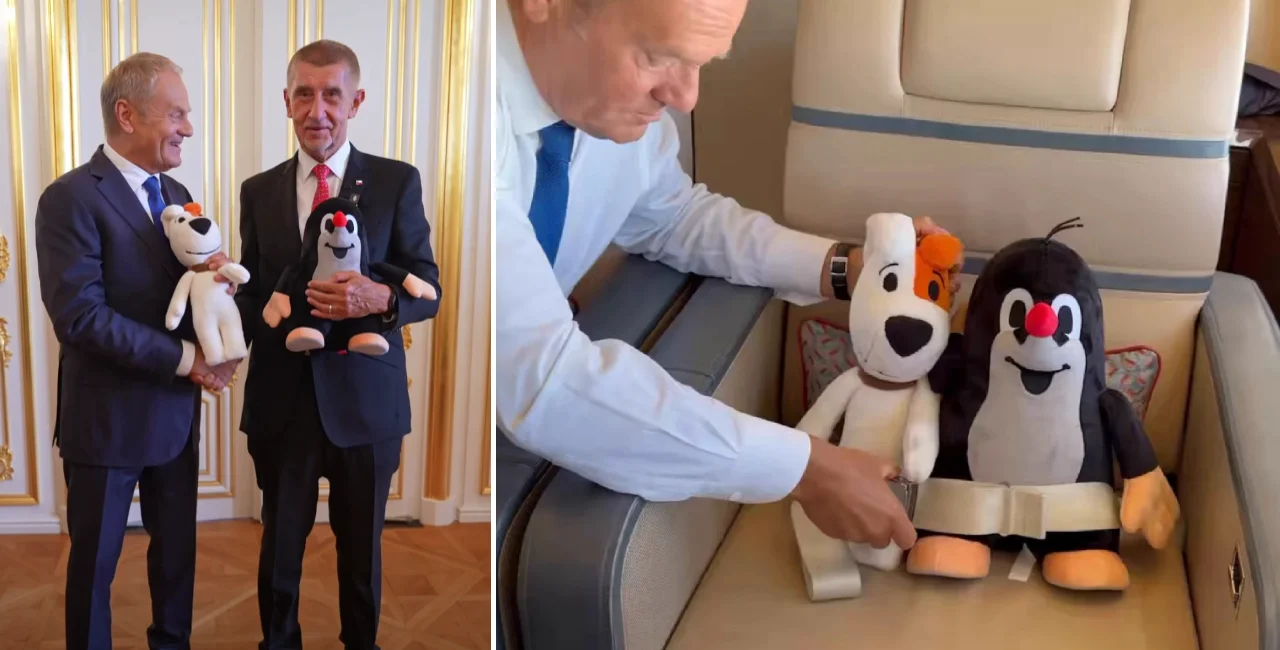
In a striking display of diplomatic counter-programming, Czech Prime Minister Andrej Babiš and his Polish counterpart Donald Tusk met on the sidelines of a summit in Bratislava this week, not with formal declarations or stern warnings, but with a pair of beloved cartoon plush toys held aloft for the cameras. The imagery was deliberately playful: Babiš cradled Krtek, the iconic Czech mole whose silent adventures have charmed generations since the 1950s, while Tusk confidently presented Reksio, Poland’s equally cherished animated dog. The lighthearted tableau was anything but trivial. It represented a calculated, high-level response to a sophisticated and malicious disinformation campaign that, over the past several weeks, has sought to fabricate a territorial conflict between the two Central European neighbors. The campaign, which has been widely investigated as a suspected Russian influence operation, involved a complex web of fake diplomatic profiles, forged documents, and fabricated media reports designed to convince citizens of both nations that Poland was preparing to seize Czech land—a wholly fictitious threat that, if left unchallenged, could have soured relations between two crucial NATO and European Union allies. By meeting publicly and invoking the shared childhood memories of their respective nations, Babiš and Tusk turned an ugly cyber-battlefield into a moment of cross-cultural solidarity, effectively neutralizing the disinformation with a dose of cheerful, nostalgic reality. The leaders embraced the absurdity of the situation, using the cartoon characters to affirm that the bonds of friendship between Prague and Warsaw remain unbreakable, undercutting the anonymous trolls and bot networks behind the fake news, and proving that sometimes the most effective weapon against digital falsehoods is a beloved cultural icon that speaks a universal language of innocence and goodwill.
The disinformation campaign that necessitated this unusual rebuttal was neither random nor impulsive; it was meticulously crafted to exploit a genuine, albeit dormant, historical grievance between the two nations. The root goes back to adjustments made to the Czechoslovak-Polish border in 1958, which involved a minor territorial debt related to the Cieszyn Silesia (Těšín) region. While this issue has been settled diplomatically for decades and bears no active animosity, the fabricated content took this historical footnote and twisted it into an aggressive contemporary threat. Fake social media accounts impersonating high-ranking diplomats from both foreign ministries circulated statements demanding the return of territories or accusing Poland of amassing troops along the border with the intent to annex areas around Těšín. The operation extended beyond simple social media posts; investigators and journalists on both sides of the border documented the creation of a sophisticated fake website that perfectly mimicked the official Czech Radio portal, publishing fabricated stories about local residents living in a state of panic and fear of an impending Polish invasion. In another coordinated move, a legitimate regional radio website in Poland was compromised and hijacked to broadcast false news reports regarding Polish military movements near the Czech frontier. The sheer breadth of the operation—spanning forged official-looking PDF documents, deepfake-style audio clips attributed to politicians, and a network of bot accounts amplifying the falsehoods—pointed to a highly resourced and professional operation. Polish intelligence analysts and regional security experts, examining the patterns of the attacks, the choice of targets, and the widespread use of classic hybrid warfare tactics, have strongly indicated that the fingerprints align with known Russian influence operations designed to destabilize the European Union’s eastern flank, particularly crucial given the ongoing war in Ukraine, serving as a stark reminder that historical memory is a weapon.
To counter this sophisticated cyber onslaught, the two Prime Ministers deployed perhaps the two most effective ambassadors their nations could produce—characters who have transcended borders and language for decades. Krtek, the little mole created by Czech animator Zdeněk Miler, first burrowed into the hearts of audiences in the late 1950s with the short film “How the Mole Got His Trousers.” Over the following decades, Krtek became a national treasure and a global phenomenon, his silent, wordless adventures—marked by curiosity, kindness, and a gentle sense of wonder—appealing to adults and children alike across continents, including in China and Japan where he achieved immense popularity. Similarly, Reksio, the black-and-brown dog with floppy ears and a loyal heart, emerged from Poland’s Studio Filmów Rysunkowych in Bielsko-Biała in 1967. Reksio’s episodes, though often wordless or featuring minimal dialogue, often focused on his mischievous antics, his protective nature towards smaller animals, and his resilience in the face of adversity. Crucially, neither character relies heavily on spoken language, making them universally accessible symbols of innocence, friendship, and loyalty. Their shared characteristic—communicating primarily through expressive eyes and charming gestures—makes them the perfect antithesis to the fabricated, hostile, and text-heavy disinformation narrative. When Tusk posted an image of Reksio alongside Krtek in late August, writing in Czech that the two characters “have long known Poland and Czechia are true friends,” he tapped into a deep well of shared cultural memory. The image exploded on social media, quickly becoming a viral symbol of Czech-Polish unity, with citizens sharing their own versions, replacing vitriolic online arguments with nostalgic photos of VHS tapes and childhood drawings, proving that a shared heritage is a far stronger bond than any grievance a foreign actor could invent.
The formal political response culminated in the Bratislava summit meeting. In a video recorded and published to their respective social media channels, Babiš and Tusk directly addressed the false claims, not with dry cabinet-level statements, but with a conversational, almost comedic camaraderie. Tusk recalled the fanciful allegations that Poland wanted to attack or seize territory from Czechia, while Babiš dismissed the notion with a wave of his hand, calling it absurd. The leaders leaned into the irony of the situation. Babiš observed that the disinformation campaign, intended to foment distrust, had seemingly produced the exact opposite effect, noting that Poles had suddenly become exceptionally popular among Czechs. Tusk, chuckling, replied that the feeling was entirely mutual, affirming that the unplanned “positive side effect” of the Russian operation was a renewed appreciation for the bilateral relationship. This public display of political unity was reinforced with concrete diplomatic action. Tusk formally invited Babiš to visit Warsaw in November, an invitation Babiš accepted with a smile, framing the forthcoming trip as a further demonstration of the solidarity and friendship that binds the two governments. The meeting was not solely about the disinformation, but the two leaders ensured the rebuttal was the centerpiece, recognizing that failing to directly mock the absurdity would leave a vacuum for the rumors to persist. By orchestrating this photo opportunity where the leaders are literally holding hands with the symbols of their nations’ shared innocence, they sent a powerful message of deterrence: an attack on the cohesion of the Polish and Czech societies will be met with a unified, creative, and resilient defense. It was a masterclass in modern political communication, proving that a shared joke, delivered by trusted national leaders with their childhood heroes in hand, carries more weight than a thousand debunking articles in the fight for public perception.
Understanding the true weight of this moment requires a look at the historical context that the disinformation campaign sought to exploit, and the volatile geopolitical landscape in which it unfolded. The 1958 treaty referenced by the campaign stems from the complex legacy of the Cieszyn Silesia region, historically a contested borderland between the Polish, Czech, and German spheres of influence. The specific “border debt” arose from minor adjustments to the frontier following the redrawing of maps after World War II, an issue long settled by the communist governments of the era. However, regional historians note that unresolved grievances can linger in local memory, and it is precisely these dormant, ethno-national sentiments that Russian information warfare specialists are adept at exploiting. The campaign was not an isolated act; it coincided with a broader uptick of Russian hybrid activity across Central and Eastern Europe, seeking to fracture unity as NATO allies massively increased support for Ukraine following the full-scale invasion. By creating a phantom Polish-Czech military standoff, the operation aimed to distract from the real conflict in the East, test the resilience of the alliance, and potentially sow enough local distrust to complicate cross-border military logistics and political cooperation. The choice of targets was strategic: Poland is a logistical hub for Western aid to Ukraine, and Czechia has been a vocal supporter of Kyiv, even spearheading artillery shell procurement initiatives. A successful wedge between them could have ripple effects on European security architecture. Analysts in Warsaw and Prague noted that the tactics—fake diplomatic profiles, compromised media outlets, and fabricated documents—mirrored almost exactly the methods observed in earlier Russian operations in the Baltic states and the Balkans. The rapid and effective response, uniting the populations through the shared cultural iconography of Krtek and Reksio, serves as a robust case study for other European nations facing similar hybrid threats, demonstrating that countering disinformation is not merely about exposing the lie, but also about reinforcing the positive reality with powerful, emotional, and unifying symbols.
In the end, the most enduring image from the Bratislava summit was not a handshake or a press conference, but the juxtaposition of two soft toys against the backdrop of high-stakes diplomacy. The leaders of the Czech Republic and Poland used this moment to redefine the narrative, stripping the disinformation campaign of its power by rendering it laughable. The use of Krtek and Reksio was a strategic masterpiece of soft power, leveraging the profound emotional resonance of childhood nostalgia to counter a cold, algorithmic threat. Poland and Czechia have a deeply intertwined history, forged through shared hardship, cultural exchange, and decades of communist rule, and their people have far more in common than any outside actor could hope to disrupt. The campaign attempted to manufacture fear and animosity out of thin air; the response chose to manufacture joy and solidarity out of shared heritage. Throughout the discussion, the message was clear: no foreign troll farm, no sophisticated forgery, and no manipulated media report can sever the bonds of friendship between the Polish and Czech people. The invitation extended by Tusk to Babiš signals that the functional political relationship remains robust, eager to move forward on bilateral and European issues. As the viral images of Krtek and Reksio continue to circulate online, they serve as a permanent reminder that in the age of hybrid warfare, truth, humor, and cultural identity remain humanity’s most potent defenses. The two cartoon characters, who have spent their fictional lives navigating obstacles through kindness and ingenuity, proved once again that they are perfectly equipped to guide their nations through the murky waters of modern disinformation. For now, perhaps the clearest Czech-Polish diplomatic statement has indeed come from two cartoon characters that barely speak at all—their expressive eyes and gentle smiles conveying a profound geopolitical truth more effectively than any diplomatic cable ever could, becoming symbols not just of their respective nations, but of a united Central Europe standing firm against external interference.


