









Paragraph 1
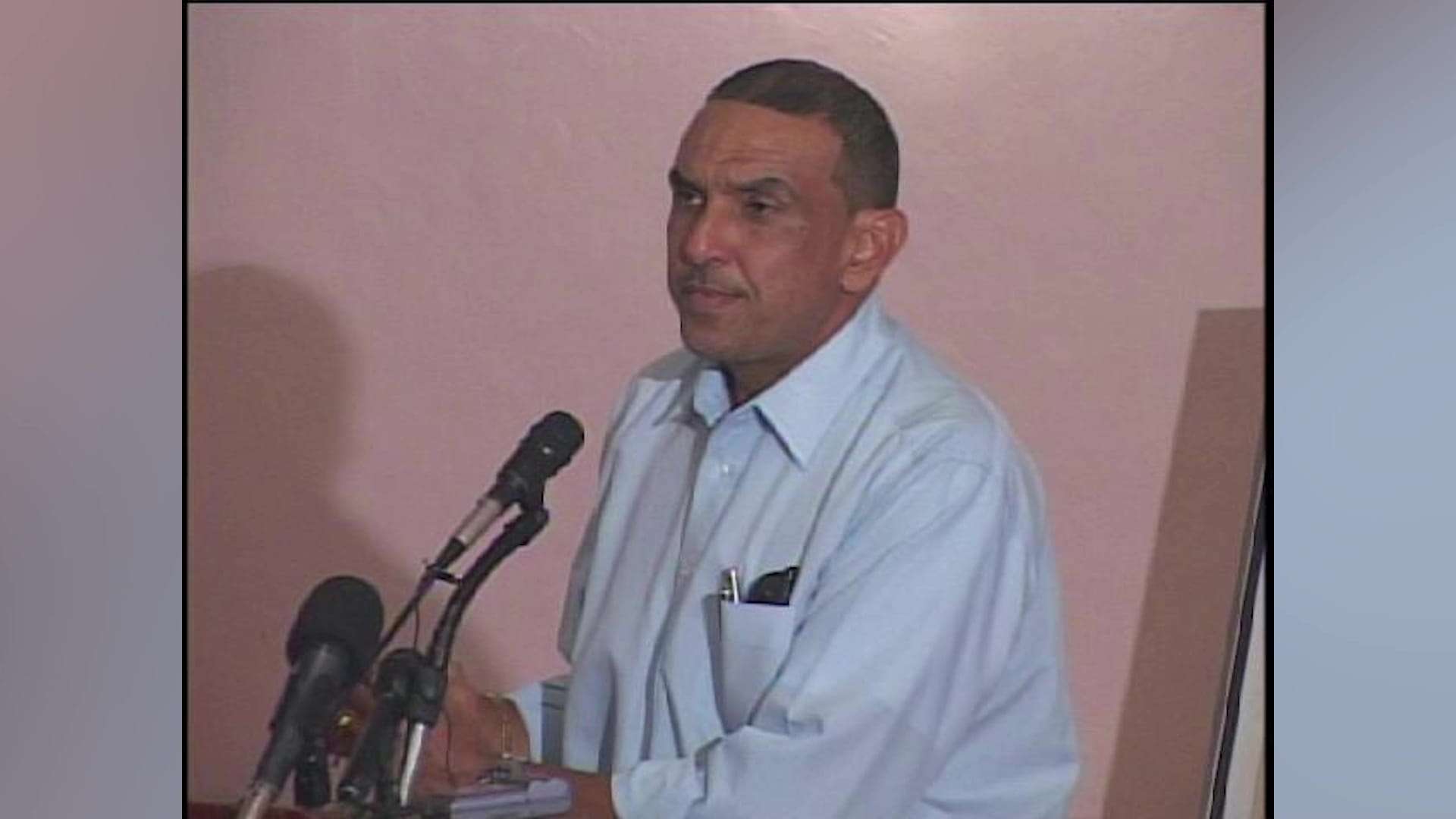
A wave of misinformation swept through public discourse today, falsely asserting that Troy Gabb has assumed leadership of the Public Services Commission, but Love News has verified the facts and set the record straight. According to official confirmation, the Government Gazette notice that triggered the confusion referred to a strictly temporary appointment, made for a single meeting only, while the substantive chairperson, Diana Price-Murillo, was absent on medical-related leave. The commission, in order to conduct its business lawfully and with the necessary authority, required an acting chairperson for that particular sitting, and under the established legal framework, such an appointment had to be approved by the Governor General. Gabb, who is a sitting member of the commission, stepped into that temporary role for the duration of that one meeting, but at no point did he replace Price-Murillo as the permanent head of the commission. Price-Murillo continues to hold the substantive chairmanship, and her position remains fully intact. The clarification arrives at a particularly sensitive moment, because the Public Service Union issued a release on the same day objecting to Gabb’s appointment as acting chairperson, an appointment that was published in the Gazette Extraordinary of July 23, 2026. The union’s objections are rooted in concerns about impartiality and perceived hostility toward public officers, and its statement has added a layer of tension to what should have been a routine administrative matter. By confirming that the appointment was temporary and for a single meeting, Love News aims to dispel the inaccuracies that have begun circulating and to provide the public with a clear understanding of what actually occurred. The distinction between an acting appointment for one meeting and a substantive appointment as chairperson is not a minor technicality; it is a fundamental difference that determines the authority, scope, and permanence of the role. Misreading that distinction has fueled unnecessary speculation and alarm, and the record must be corrected for the sake of institutional trust.
Paragraph 2
The sequence of events that gave rise to this misunderstanding begins with the publication of a notice in the Gazette Extraordinary on July 23, 2026, which announced Gabb’s appointment as acting chairperson of the Public Services Commission. At first glance, the notice might have appeared to signal a leadership change, especially to those unfamiliar with the operational nuances of government appointments. However, Love News has confirmed that the appointment was expressly limited to a single meeting, a temporary arrangement made necessary by the unavailability of Chairperson Diana Price-Murillo due to medical-related leave. In any statutory body such as the PSC, the presence of a chairperson or an acting chairperson is essential for the lawful convening of meetings and the exercise of decision-making powers. Because Price-Murillo was unable to attend that particular meeting, the commission needed someone to preside over the proceedings in her stead. The role of acting chairperson was therefore conferred upon Gabb, who is already a member of the commission, in order to ensure continuity and the smooth functioning of the body’s business. The appointment required the approval of the Governor General, a procedural step that underscores the formal nature of even temporary designations. But the approval of an acting appointment is not equivalent to the appointment of a new substantive chairperson. Gabb remains a member of the commission, just as he was before, and Price-Murillo remains its substantive chair, with all the rights, responsibilities, and authority that come with that position. The temporary nature of the acting role cannot be overstated; it did not change the hierarchy of the commission, it did not remove Price-Murillo from her post, and it did not grant Gabb any long-term leadership authority. Rather, it was a stopgap measure designed to address a specific administrative need. The publication in the Gazette Extraordinary, while official, is often used for urgent or time-sensitive notices, and its use here reflects the need to formalize the temporary arrangement promptly rather than any broader personnel change.
Paragraph 3
The Public Service Union’s release on the same day brought a sharp rebuke, as the union formally objected to Gabb’s appointment as acting chairperson, even in its temporary form. The union’s objection is grounded in its assessment of Gabb’s public commentary, which it argues raises serious questions about his ability to act impartially in a role that requires neutrality and fairness. Specifically, the union accuses Gabb of expressing hostility toward trade unions, of opposing the PSU’s positions, and of being sharply critical of public officers. These are the union’s characterizations of Gabb, who is perhaps best known to the public as a weekly commentator on Love FM, where he regularly offers his views on matters of national importance, including public sector affairs. The union’s statement suggests that Gabb’s public persona and his stated opinions are incompatible with the kind of detached objectivity that should characterize the leadership of the Public Services Commission, even for a single meeting. While an acting appointment for one meeting may seem insignificant in the grand scheme of things, the union evidently views it as a matter of principle. The PSC is not an ordinary administrative body; it is the institution responsible for making determinations that affect the careers, livelihoods, and professional standing of public officers across the country. Appointments, promotions, and disciplinary matters all fall under its purview, and the union believes that anyone who presides over such decisions, even temporarily, must be seen to be above reproach. The union’s accusations against Gabb are serious, but it is important to note that they reflect the union’s perspective and are not necessarily established facts. Still, the very existence of such concerns can undermine public confidence in the institution, and the union has made clear that it does not take these matters lightly. By airing its objections publicly, the PSU is signaling that it will not remain silent when it perceives threats to the fairness and integrity of the processes that govern public officers.
Paragraph 4
The Public Services Commission occupies a central and delicate position in the administrative architecture of the country, and its decisions carry profound consequences for individual public officers and for the broader civil service. The commission is tasked with overseeing appointments, promotions, and disciplinary actions, which means that its members wield considerable influence over the professional lives of thousands of employees. Public officers look to the commission to act as an impartial arbiter, applying rules and regulations consistently and without fear or favor. Confidence in the commission is therefore not a luxury; it is a necessity. If public officers believe that the commission is biased, or that its leadership is hostile to their interests, the entire system of public service governance begins to erode. That is why the PSU’s concerns about Gabb’s appointment, however temporary, must be understood in this broader context. The union argues that Gabb’s public commentary reveals a predisposition against trade unions and public officers, and that such a predisposition is incompatible with the neutrality required of a commission chairperson. Even if the acting appointment lasted only a single meeting, the symbolic weight of the role cannot be ignored. The chairperson sets the tone for proceedings, guides discussions, and ensures that decisions are made fairly and in accordance with the law. If that person is perceived as hostile to the interests of public officers, the legitimacy of any decisions taken during that meeting could be called into question. The union’s insistence on confidence in the commission is not merely rhetorical; it reflects a practical concern about the integrity of processes that determine who gets promoted, who gets disciplined, and who gets appointed to positions of responsibility. A commission that is trusted can carry out its functions smoothly, while a commission that is distrusted may find its decisions challenged, its authority undermined, and its reputation damaged. The PSU’s objection to Gabb, even in a temporary role, is thus a warning about the importance of maintaining not just actual impartiality but also the appearance of impartiality in all aspects of the commission’s work.
Paragraph 5
Beyond its immediate objection to the temporary acting appointment, the Public Service Union has taken further steps to express its concerns about Gabb’s continued role on the commission. The union has stated unequivocally that it does not support Gabb’s reappointment when his current term ends in November. This is a significant declaration, because it signals that the union’s concerns are not limited to the recent Gazette notice but extend to Gabb’s ongoing membership on the commission itself. In making its position known, the union has written to Public Service Minister Henry Charles Usher, outlining its concerns in detail and seeking to ensure that its views are considered in any decisions about Gabb’s future on the commission. The letter to the minister is a formal step, one that elevates the matter from public commentary to direct engagement with the government official responsible for public service matters. It remains to be seen how the minister will respond, and whether the union’s objections will have any bearing on the decision to reappoint Gabb or to name someone else to the commission when his term expires. The timing of these developments is particularly notable, as the union’s objections come at a moment when the commission’s credibility is already under scrutiny. By placing its concerns on the record, the PSU is seeking to influence not only the immediate situation but also the longer-term composition of the commission. The union’s position is clear: it believes that individuals who have demonstrated hostility toward public officers and trade unions should not be entrusted with the authority that comes with membership on the Public Services Commission. Whether the government will heed that message is uncertain, but the union has made its voice heard. The letter to Minister Usher serves as a formal record of the union’s opposition, ensuring that the issue cannot be ignored or brushed aside. It also puts the government on notice that the union is prepared to hold it accountable for the decisions it makes regarding the commission’s membership.
Paragraph 6
In the end, the facts are straightforward: Troy Gabb was appointed acting chairperson of the Public Services Commission for a single meeting, a temporary arrangement necessitated by Chairperson Diana Price-Murillo’s medical-related leave, and the appointment was approved by the Governor General as required by law. Price-Murillo remains the substantive chairperson, and there has been no replacement of her in that role. The misinformation that has circulated in recent hours, suggesting that Gabb now heads the commission, is inaccurate and must be corrected. At the same time, the Public Service Union’s objections to Gabb are real and should not be dismissed, even if the appointment itself was temporary. The union has raised legitimate questions about impartiality, and its decision to write to Public Service Minister Henry Charles Usher about Gabb’s future underscores the seriousness of its concerns. These two realities can coexist: the appointment was temporary and procedurally valid, but the union’s broader criticisms of Gabb remain a matter of public debate. What is essential now is that the public receives accurate information about the commission and its leadership, so that trust in the institution is not eroded by falsehoods or misunderstandings. The commission’s role in overseeing appointments, promotions, and disciplinary matters is too important to be clouded by confusion. Going forward, all parties involved would do well to focus on the substantive issues, ensuring that the Public Services Commission operates with the integrity, fairness, and transparency that public officers deserve. The clarification provided by Love News should put an end to the rumor that Gabb has taken over as chairperson, but the broader conversation about the commission’s composition and the union’s concerns will likely continue in the weeks and months ahead. For now, the record is clear: Price-Murillo is the chair, Gabb remains a member, and the acting appointment was limited to one meeting. Anything beyond that is speculation, and speculation, as this episode has shown, can be dangerously misleading.


