









Survivors on the Frontlines: How Ebola Survivors Are Helping to End the Outbreak in Eastern DRC
The Ebola outbreak in the eastern Democratic Republic of the Congo (DRC) has proven to be stubborn and deadly. It has torn through communities, claiming lives, devastating families, and leaving deep emotional scars. In North Kivu and Ituri provinces, where the outbreak has been centered, a unique and powerful group of public health responders has emerged—those who have survived the virus themselves. In the town of Beni, once the epicenter of the outbreak, survivors have gone from being patients to being pillars of community health. Thrown into the role of educators, they have taken to the streets, orphanages, street corners, and airwaves across the region, telling their stories of recovery and urging people to embrace protective measures. Meanwhile, people are not just using memory as a source of grief but as a catalyst for life. The grassroots campaigns they lead form a vital armor against the disease at each stage, bypassing local politicians and foreign aid groups, and attacking false rumors with the quiet authority that only personal experience can bring.
The lives lost and lives saved are intimately connected in these trainings. A young woman named Gisele Mukotso stands at the center of the current movement in Beni. In her early twenties, Gisele contracted Ebola during the wave of infections, tended to be isolated, and was besieged by stigma and the spreading dread of her family, her neighbors, and friends. After weeks in treatment, she came out a free woman, but the journey didn’t end there. Guilt and gratitude for survival bothered her for months. Now, she walks the world of crowded streets and compounds with a team of other survivors, who hold up their hands, present their badges of recovery, and speak where official bureaucrats have failed. Vicky did not have many lessons to teach, but she had the truth of her story, and she told it over and over again. She told them of the doctors and nurses who wore those strange protective suits, of the days when drinking water became an act of war, and of the moment she was told she tested negative. Through her account of the journey from sickness to credibility, she reveals the life-saving need to get help early. She encourages the public to welcome health workers and respect the rules of occasional physical contact, because she represents both the disease and an answer.
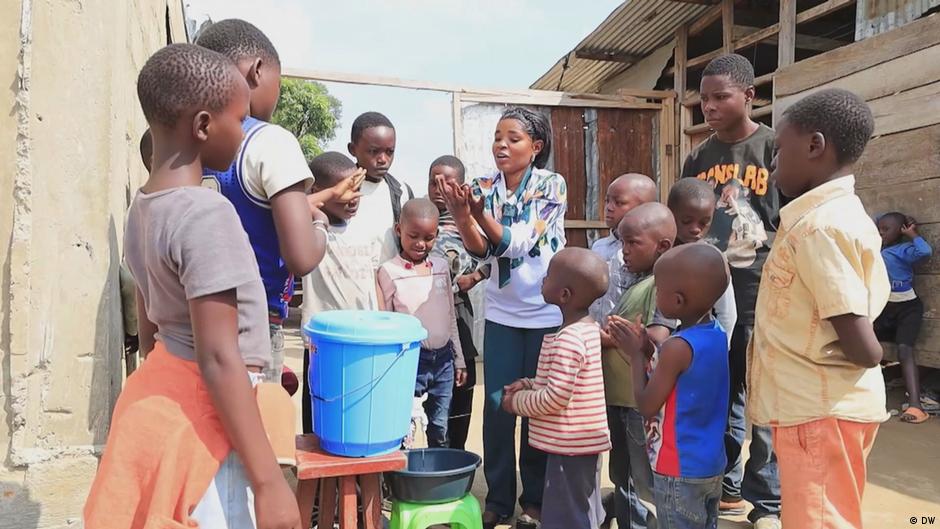
The two-year-long partnership has only endured exacerbating: After a night in a clinic where she watched a nurse repeatedly whisper her family name, she felt known and seen in her community; she allows that trust to carry into the homes of conspirators, under enticingly, halls of family compounds, and by passage through the untold grounds of local orphanages. One of the women she has joined with in these walks is Ose Kavunga, an ex-soldier of the disease who has recovered from the pain only to become a guardian of vigilance. Ose, like Gisele, is unnerved by systems of response that often alarm neighborhoods with armored vehicles and teams of foreigners in decontamination gear rather than culturally appropriate safety messages. Having never stood in a radio studio as a social media personality, he used history to shape contingency tactics. In orphanages, they conduct multisite briefing clinics and workshop measures of hand hygiene, the use of chlorinated water, thermal screening, and do not touch protocols. They do not shout; they play with children and act out possible behaviors—showing ways to keep distance without abandoning affection. At local radio stations, they prepare broadcasts in French and Swahili, in which they repeat instructions slowly: wash your hands, do not touch the bodies of the sick, do not travel while weak, and go to the Ebola Treatment Center if you see signs. Their message is slow, consistent, and disaggregated from the nuance of the disease’s long contagion drives.
Their work is a permanent reminder that Ebola spreads through human intimacy. In a community where normal social customs mirror physical closeness—a handshake of greeting, a hug for a mourner, a compassionate touch for the sick—adherence to “hands off” measures feels like a coldness that cannot last. So, they offer painful alternatives. In villages that nestle under the shadow of the epidemic, people used to gather in large numbers to wash and prepare bodies of loved ones who died at home. The invisible numbers stated many nights that followed. Across the area, official teams warned mourners of destructions; so local survivors now step in with their own tested wisdom. Adda and Ose describe the moment when a loved one becomes ill, crying, in touch; they emphasize the immediate response to noticing and to not wash at all, but to make a call for a burial team that would conduct a safe, dignified ceremony, while they still remembered the name and the rites through prayer but not through touching. In defying the sensationalism and the scientific explanations that traditionally broke the silence, they explain their vaccination process; they explain why the burial teams wear gowns and masks; they show them, word by word, the transformation from a family body that changed them into care that was suspicious of the outcome, all born of returning from the embrace of the virus.
As a result, they face a lack of resources and widespread skepticism. The survivors’ volunteer programs run on a bare-bones budget. It is not uncommon for the Ose and Muhotsouto to walk knee-deep into blustered roads, in a maternity hospital, or under a mango tree, carrying only a stack of flyers and a small bucket of chlorinated water with a tap. Some of them are unpaid, custom they work as a fee and a burning commitment to break the chains of contagion. They once lived under the shadow of discrimination; after Ebola, some villages institutions were destroyed, family members died, or they encountered neighbors who waited for them with buckets of chlorine to spray them as if they were a biological weapon. The volunteers had to cope with the trauma of survival, red-eyed trauma, and carry the message of safety to survivors in prison camps, orphanages. Dotted lines of insecurity complicate movement, as armed groups have historically controlled many parts of the province, triggering a mournful response. The response to the outbreak in this contaminated setting times. Still, their exact communities witness them daily. In household visit after household visit, a grandmother who knows them asks to feel their hands through the door or she tests whether they are hot. They answer her; she did not listen to the government or the international white containers, but she listened to the local welfare. And when they return after weeks, she, who was worried about this epidemic, discusses community support with updated tips, all because the news is from the lips of a person who has recovered.
Their lengthy struggle has evolved. But as the outbreak drifts into new whispers and edges—sometimes quieter, but not yet extinguished—these survivors remind us that the Ebola response is never one that minimizes the presence of “survivor engagement.” The global health challenges must be turned into a controlled, if not downpegiable, undeniable source of effective local action. And they lead from the front line, with sparse resources and an unending narrative: avoid false fear, trust early diagnosis, wash hands, meet the vaccine, and go to the clinic. They are not champions striving for their own survival; they are defenders of unarmed lives, transforming local suffering into a message of hope. As Gisele Mukotso, Ose Kavunga, and dozens like them continue their rounds in Beni, they are neither images with symbols nor illustrations on scientific posters—they are literal witnesses that Ebola can be survived, and by the same human behavior, it can be stopped. They know they are not the only ones who have resistance up; they grow in these strengths, sometimes with fewer clothes, less sumptuous, and little international recognition. Yet at the end of a long day, when they return to their beds, they take comfort in the handfuls of people they have saved and the continuation of the normal practices that have made their village resist. In their personal and soft voices there is a public health identity, an epitaph for the battle harbor, playing out in their own lives, in their vulnerability, in the precautionary rituals they re-teach the living.
But it’s vital to remember: They are the authors of a different kind of postscript—one that places ability where there was once victimhood, and where the last, most human response to an epidemic is simply to talk to neighbors and teach them to value their own lives through small, brave contracts of hope. In the eastern DRC, with invisible enemies and real, ever-present danger, the front lines do not consist only of hospitals and white protective gear. The continuing outbreak in Beni includes the threadbare shoes of the survivors who approach the next isolated family, break the silence, and whisper: “I know what you fear. And I’m here to help.”
After 2000, 1700, 2300-plus cases and generations of lost ourselves in the communal challenge, every welcomed feature of Ebola will be folded into the recollections of these survivors. Their role—to be doulas of grieving, to be carriers of prevention, and ultimately to be local guardians of every doorway—will undoubtedly transition from the emergency phase to a community-bodied of one. The work of Gisele Mukotso and Ose Kavunga, and that of the wider survivor network, is a public illustration of what it means to be humanitarian without a contract and to belong to a counter-epidemic with a voice that has already been touched by the virus. It is hard to imagine a time when they are not needed—but it is possible, because they are the ones who are working, in cautious, respectful ways, all days, all weeks, to make their own familiar matter, to make the radio stations crackle with the confidence that Ebola can be defeated, and to bring a life-saving, extraordinary truth back into the orbits of the most afflicted. They stand as a quiet, beating heart of the response in the Congo, and their work is not yet done, but every child who learns from their hands a proper handwash, every mother who does not hide a fever, and every family who accepts a safe burial has benefited from their survival—their life-saving incarnation in the face of numberless death.


