






The global effort to combat misinformation and disinformation presents a fundamental paradox, acting as a double-edged sword for democratic societies. While governments have a clear obligation to curb false narratives that threaten democratic stability, they also risk monopolizing the definition of truth. This tension creates a precarious environment where state intervention, however well-intentioned, can inadvertently suppress legitimate discourse. Within this complex dynamic, journalists and academics emerge as essential actors, tasked with the continuous scrutiny of information and the defense of critical inquiry. Their role is to challenge both the spread of falsehoods and the potential overreach of state power, ensuring that measures against misinformation do not lead to self-censorship or the erosion of democratic principles.
The severity of the misinformation threat is underscored by high-level global risk assessments. The World Economic Forum’s Global Risks Report 2026 identifies misinformation and disinformation as the second-largest global risk in the near term, trailing only geo-economic confrontation. This ranking highlights the persistent and evolving danger posed by manipulated information over the next decade. The core concerns are that this phenomenon will exacerbate social and political polarization and fundamentally weaken the public’s capacity to discern authentic information from fabricated content. This global challenge necessitates a coordinated and nuanced response that balances security concerns with the protection of fundamental freedoms.
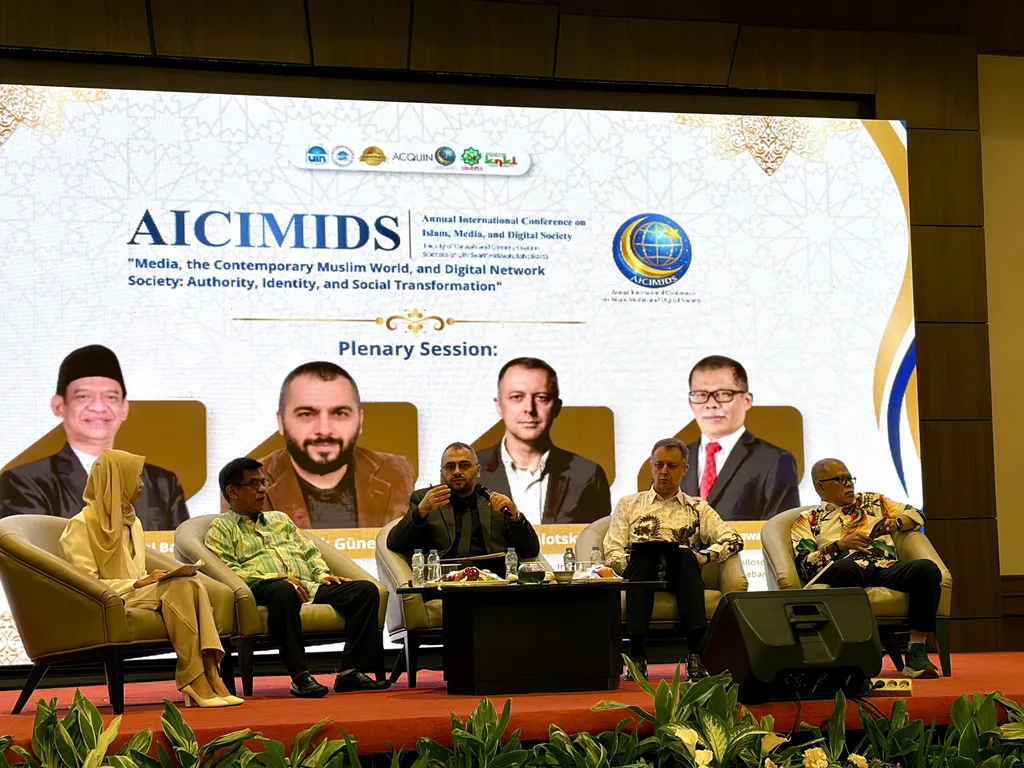
Turkey’s experience offers a concrete case study in combating this threat, where the spread of false information is considered a direct challenge to national stability. The Turkish Communication Counselor, Burak Gunes, recounted specific instances where disinformation had tangible, harmful consequences. Following a major earthquake in February 2023, a false tweet about a dam breach in Hatay Province caused widespread panic and forced search and rescue teams to halt their critical operations for over three hours. In response to such threats, the Turkish government established the Center for Countering Disinformation (DMM) in 2022 to verify the accuracy of information and prevent the spread of false news. Concurrently, the Turkish Parliament enacted Law 7418, which introduced criminal penalties for the dissemination of false information, institutionalizing the state’s efforts to manage the information ecosystem.
Despite these stringent measures, Turkey maintains that its approach does not equate to a government monopoly on truth or the elimination of critical voices. According to Gunes, the DMM operates by verifying information through multiple, layered sources, but its findings are not positioned as the sole truth. The system is designed to allow journalists and other critical groups to test and challenge the state’s conclusionscars. The role of journalists is to hold the government accountable by presenting counter-facts, and the state claims to accept this critical scrutiny as part of the process. This model attempts to create a system of checks and balances within the fight against misinformation, even as it establishes powerful state institutions dedicated to defining and disseminating official narratives.
The threat to freedom of expression, however, is not always overt government censorship, but can also manifest as self-censorship. Professor Andi Faisal Bakti of UIN Syarif Hidayatullah observed that within environments of intense scrutiny, critical voices may preemptively limit their own expression, even in contexts with nominal media freedom. He connected this tendency to a broader trend of democratic regression witnessed over the past decadeable. Citing The Economist Intelligence Unit’s Democracy Index, Bakti noted a decline in Indonesia’s score from 6.71 in 2021 and 2022 to 6.53 in 2023, following a peak of 7.03 in 2015. This regression, he argued, occurs despite Indonesia’s post-Reformation status as a global exemplar of democratic practice, urging academics and journalists to courageously advocate for the core principles of a truly democratic state.
Crucially, Turkey’s approach, while institutionalized, does not entirely foreclose public discourse. Gunes contended that the DMM’s role in verifying information does not equate to a government monopoly on truth. Instead, the system is designed to allow critical groups, particularly journalists, the space to challenge and test the official findings. Journalists are expected to critique government claims, and the state is purportedly open to such scrutiny. Within this framework, the state’s role is to provide a first line of defense against false information, but it remains accountable to the independent verification and critique offered by media professionals, thereby creating a check on state power in the information domain.
Beyond direct state intervention, the threats to free expression increasingly manifest as self-censorship among critical voices. Andi Faisal Bakti observed that the existence of regulations, sometimes ambiguously enforced, can create a chilling effect that is more dangerous than outright prohibition)Skip; researchers and academics may self-censor out of caution. This subtle but pervasive pressure contributes to the democratic regression, as the space for robust public debate narrows. Therefore, the responsibility falls on journalists and academics to resist this tendency and firmly assert their role in holding power to account, especially in a media landscape undergoing rapid digital transformation.
Despite the significant challenges posed by digital manipulation and polarization, experts maintain that technology also offers unprecedented opportunities to strengthen democracy and social cohesion. Rector Asep Saepudin Jahar highlighted the potential for digital platforms to enhance public participation, build solidarity, and spread inclusive, moderate ideas, provided that technological advancement is matched by ethical responsibility and critical literacy. In this complex landscape, learning from international approaches to media governance becomes crucial. The conference, therefore, served as a platform for Indonesia to draw lessons from various models, recognizing that navigating the digital age requires a delicate equilibrium between curbing falsehoodsione and safeguarding the democratic values that hinge on open dialogue and robust critical scrutiny.


