


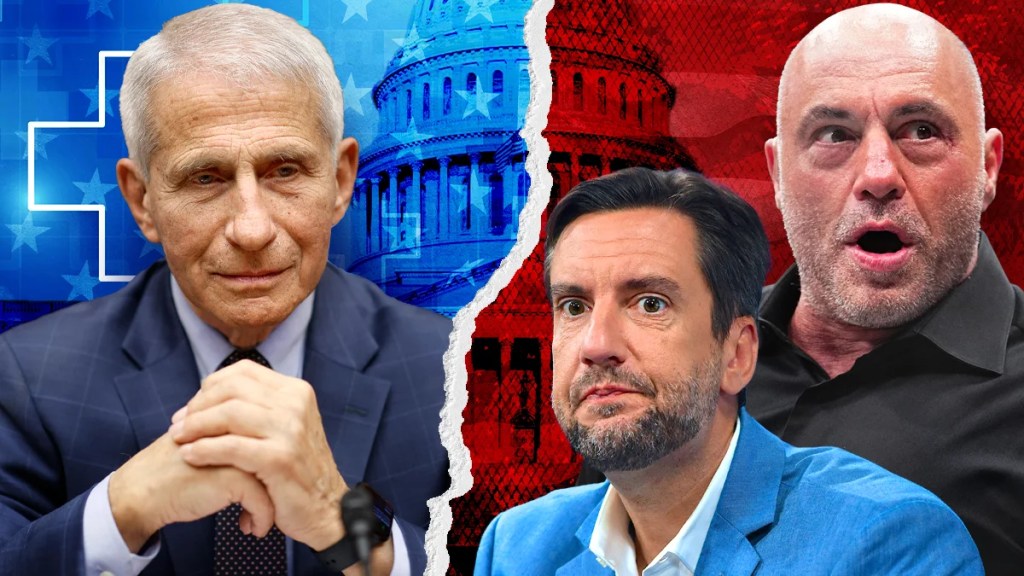
The Asymmetrical Information War: Experts Struggle to Counter Disinformation
The 2024 election cycle left Democrats grappling with a formidable challenge: how to penetrate an information ecosystem saturated with conservative influencers peddling misinformation and unsubstantiated claims. The question of whether Democrats need their own "Joe Rogan" has become a recurring theme in post-election analysis. However, the core issue lies deeper than mere tactics. Experts and authoritative voices appear ill-equipped to break through fortified media bubbles, facing what many perceive as an asymmetric information war. The right’s strategic investments in cultivating storytellers and online personalities have created an echo chamber that amplifies narratives and undermines trust in established institutions.
Angelo Carusone, president of the liberal watchdog group Media Matters for America, emphasizes that the problem isn’t just the inherent advantage enjoyed by purveyors of disinformation. The challenge lies in whether trusted institutions and their leaders possess the tools and strategies to effectively combat the spread of false narratives. Carusone argues that experts need to adopt new approaches, including identifying and supporting "truth vigilantes" – individuals willing to actively challenge misinformation and defend the credibility of their fields. This requires not only fresh tactics but also new messengers who can effectively reach and engage audiences within these echo chambers.
Recent research paints a bleak picture of the current information landscape. A Pew Research Center poll revealed that a majority of Americans prefer news sources that align with their political views, highlighting the audience’s role in defining "news." A Media Matters study further underscores this trend, demonstrating that the most popular online shows, even those categorized as non-political (comedy, entertainment, sports), lean overwhelmingly right-wing. This bias extends to platforms like OutKick, which blends sports, politics, and culture with a conservative slant, and other programs that consistently disseminate pro-Trump messaging and right-wing narratives. This phenomenon mirrors the rise of conservative talk radio, where personalities like Rush Limbaugh cultivated loyal audiences by positioning themselves against the "lamestream media."
Carusone argues that the current information war is so one-sided due to the left’s lack of comparable infrastructure for mobilizing and countering right-wing voices. The right has effectively invested in developing storytellers who can connect with audiences often labeled as "low-information voters," providing them with digestible (though often misleading) interpretations of complex issues. These talking points reverberate across various shows and personalities, reinforcing conservative narratives and eroding trust in established institutions. This has led to a situation where credentials and expertise are increasingly disregarded.
This dynamic is particularly evident in fields like medicine and science, where figures like Dr. Anthony Fauci have been vilified and discredited, creating a vacuum often filled by purveyors of pseudoscience and conspiracy theories. Some experts have taken it upon themselves to combat disinformation, venturing beyond traditional media appearances to engage directly on social media platforms. Dr. Neil Stone, an infectious diseases specialist, actively challenges anti-vaccine rhetoric and medical misinformation online, frequently calling out figures like Robert F. Kennedy Jr. for spreading false narratives. Others, like historian Douglas Murray, have confronted popular figures like Joe Rogan for providing platforms to unqualified individuals who present themselves as experts.
Despite these efforts, the challenge remains that public attention is a finite resource, and figures like Donald Trump and his supporters command a disproportionate share of media oxygen. Furthermore, some attempts by the left to counter right-wing narratives have been criticized for being inauthentic and out of touch, further hindering their effectiveness. Chris Hayes, MSNBC host and author of "The Siren’s Call: How Attention Became the World’s Most Endangered Resource," argues that attention has become a highly valued commodity, making it incredibly difficult to conduct meaningful conversations amidst the current media cacophony.
Former "Meet the Press" host Chuck Todd echoes this sentiment, pointing out that while Trump’s behavior hasn’t fundamentally changed, the media landscape has shifted in a way that benefits his style of grievance-driven, outrage-fueled communication. Navigating this toxic environment requires a particular kind of "warrior," as Carusone suggests, individuals willing to engage directly with the purveyors of misinformation and their followers. However, challenging figures like Trump, who has demonstrated a willingness to wield the power of government against political opponents, carries inherent risks.
Media Matters, for instance, has reportedly faced investigation by the Federal Trade Commission over alleged collusion with advertisers against X (formerly Twitter), an action Carusone characterizes as politically motivated intimidation. Despite these challenges, Carusone remains optimistic that the tide can be turned. He believes that despite the right’s messaging advantage, there’s still a chance to combat the spread of disinformation and restore trust in credible sources of information. The task is daunting, but not insurmountable. The fight against disinformation requires a concerted effort from experts, institutions, and individuals willing to stand up for truth and accountability.