









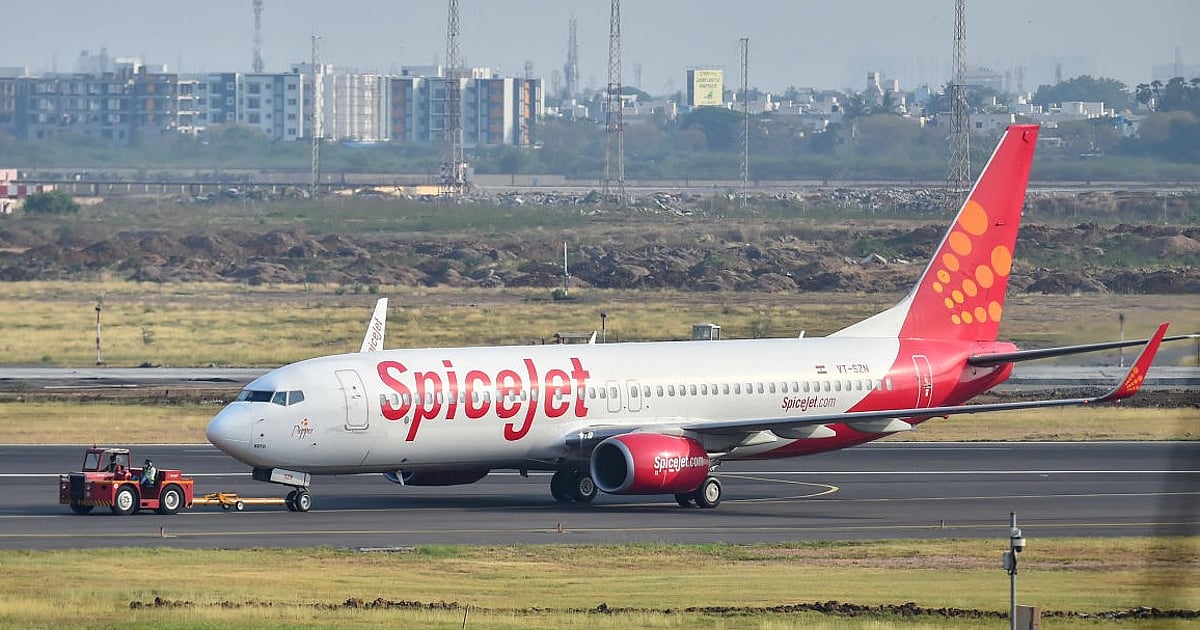
In a sharp escalation of tensions between India’s aviation stakeholders, the Cochin International Airport Limited (CIAL) has publicly accused budget carrier SpiceJet of disseminating misinformation regarding the reasons behind recent, widespread flight disruptions at the airport. The dispute, which has now spilled into the public domain, centers on the causes of a series of cancellations and delays that have stranded thousands of passengers over the past several days. While the airline has cited “operational issues,” “air traffic congestion,” and “airport infrastructure constraints” as the primary catalysts for its faltering schedule, the airport operator has categorically refuted these justifications, labeling them as factually incorrect and misleading. CIAL has warned that such “baseless claims” tarnish the airport’s spotless reputation and has insisted that SpiceJet look inward to address its internal challenges before pointing fingers at its partners, setting the stage for a high-stakes blame game that threatens to further destabilize confidence in the nation’s aviation ecosystem.
The acrimony became public following a strongly worded statement from CIAL officials, who expressed profound disappointment over what they describe as a deliberate attempt by SpiceJet to shift the spotlight away from its own operational paralysis. Sources within the airport suggest that the primary bone of contention revolves around the airline’s scheduling practices. CIAL maintains that SpiceJet has failed to provide adequate notice regarding the reduction of flight frequencies and has unilaterally canceled services without the mandatory 60-day notice required under the existing Mutual Agreement of the airport’s slot allocation policy. When SpiceJet claimed that the disruptions were partly due to the unavailability of parking bays and aerobridges at the interim terminal—coupled with delays in ground handling services—CIAL fired back, asserting these claims were fabricated. “The management of Cochin airport has always maintained the highest standards of transparency and efficiency,” a senior official stated. “To be dragged into a private airline’s financial quagmire through the propagation of blatant falsehoods is highly regrettable and warrants an unreserved apology to the traveling public.”
Delving deeper, this public squabble offers a stark glimpse into the severe financial duress currently gripping SpiceJet, which has become a major source of operational friction with airports nationwide. The airline, which has been struggling to survive in the fiercely competitive Indian market, has been forced to ground a significant percentage of its fleet. The grounding stems from a combination of factors, most notably the massive supply chain disruptions and engine problems plaguing Pratt & Whitney’s Geared Turbofan (GTF) engines, as well as a prolonged debt crisis that has limited its ability to lease new aircraft. Consequently, SpiceJet’s capacity has dwindled, forcing it to consolidate—and cancel—numerous flights. Rather than confront the harsh financial reality that has reduced its fleet to a fraction of its former size, airline management has allegedly chosen to calculate a narrative of “infrastructure failure” at various airports. Aviation analysts suggest that by blaming CIAL—an airport celebrated globally for its solar power contributions and operational excellence—SpiceJet is attempting to manage the ire of flyers and potentially negotiate for reduced airport charges or invoke a “Force Majeure” defense in future legal proceedings regarding missed service obligations.
The escalating war of words has inevitably drawn the attention of adjudicators, yet it is the passenger who continues to suffer the brunt of this operational chaos. For passengers, the dispute at CIAL is not merely a matter of airport versus airline logistics; it is a harrowing nightmare of delayed business deals, missed connecting flights, and mounting hotel bills. The recent months have seen a surge in airfares on routes served exclusively by SpiceJet out of the airport, leaving flyers with minimal alternative options after cancellations. Furthermore, the professional war of attrition has led to chaotic scenes within the Kempegowda and Cochin terminals, with long queues forming at help desks that are increasingly being left understaffed. By wrongly attributing these disruptions to the airport’s “late staffing schedules” or “traffic management plans,” as per the alleged claims, the airline is creating a climate of confusion. Passengers arriving at the airport are initially informed of “weather delays” or “ATC holds” and only later discover the flights have been axed due to a shortage of pilots—a result of ongoing salary deferments that have prompted many crew members to seek jobs elsewhere.
This public spat also underscores a critical chasm in the regulatory landscape of India’s civil aviation, where communication between the operator and the carrier has devolved into public relations barbs. The Directorate General of Civil Aviation (DGCA) has been watching these developments with growing concern, having already intervened on multiple occasions to enforce “Aarogya Setu” norms and passenger refunds. However, regulatory guidelines are often ambiguous when an operational dispute of this nature arises, particularly concerning the utilization of specific airport infrastructure. CIAL’s management has now formally approached the Ministry of Civil Aviation, demanding a third-party audit of the airport’s traffic and ground handling capabilities to prove their innocence. Furthermore, they are demanding that SpiceJet substantiate its claims with concrete evidence, such as safety reports or server logs, or face potential legal action for defamation and commercial disparagement. This legal pressure could force a settlement out of court, but it also risks exposing the fragile financial underpinnings of the airline to further public scrutiny.
Beyond the immediate confrontation, the long-term implications of this feud could irrevocably alter the customer service dynamic in Indian aviation and the relationship between airports and low-cost carriers. Airports are traditionally dependent on airlines for their airport charges and aeronautical revenue, giving larger airlines a degree of leverage. Yet, CIAL’s resolute stance signals a robust pushback, suggesting that airports are no longer willing to absorb blame for mismanaged airline books or accept revenue losses due to an airline’s negligent maintenance schedule. Should this dispute lead to a prolonged conflict, SpiceJet may find itself marginalized at the centrally located international airport, facing reduced parking slots and increased scrutiny of its safety and maintenance records during the next licensing cycle. Conversely, if the airline fails to resolve its financial straits, the union and the airport’s ground handling staff are bracing for the chilling effect of a potential strike, which could further paralyze airport operations.
In the final analysis, the conflict between CIAL and SpiceJet is a microcosm of the destructive “pass-the-buck” culture currently plaguing the Indian aviation industry as it struggles to emerge from the volatility of the past few years. While airports must ensure their infrastructure remains modern, efficient, and, above all, factually accurate in their operational capacity to handle aircraft flow, airlines have a fundamental fiduciary responsibility to maintain an efficient and safe network. Any attempt to confuse the flying public about the root causes of airline disruptions—be it engine groundings, pilot attrition, or restructuring failures—constitutes a grave disservice to the traveling public. As CIAL threatens to take the matter to the National Consumer Disputes Redressal Commission, the onus now falls upon SpiceJet’s leadership to provide laboratory-grade evidence to support its claims. Until then, the flying public is left with reduced service, higher uncertainty, and the sinking realization that in India’s crowded skies, the ground-level battles are becoming increasingly dirty, paving the way for a more turbulent journey ahead for travelers and investors alike. The only winner in this high-stakes tug-of-war, it seems, remains the bystander spectator of public opinion, watching warily as a national airline and a premier airport engage in a damaging and noisy divorce.


