








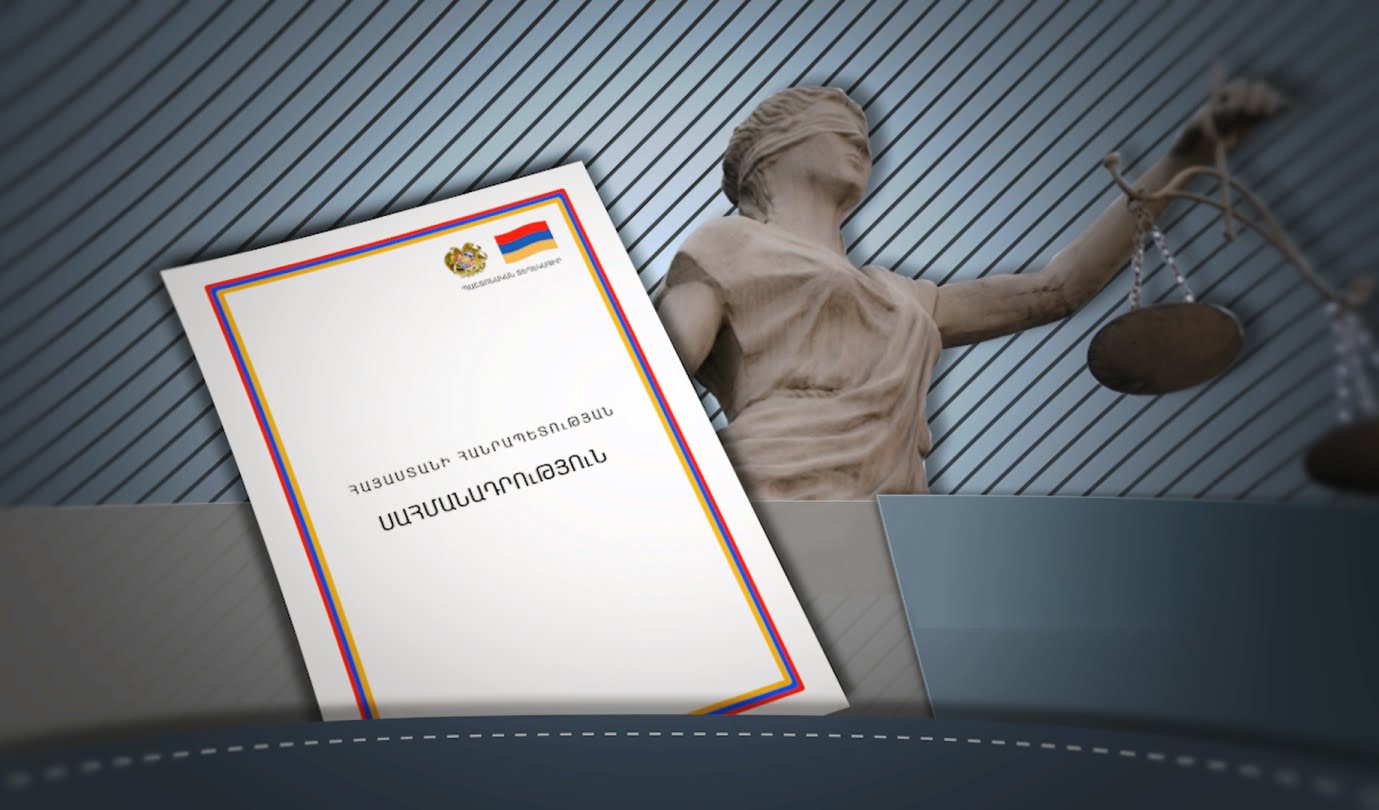
**Yerevan, Armenia – A wave of confusion and misinformation has swept across Armenian political circles and social media after claims emerged that the text of the new Constitution had been prematurely published. The claims, which quickly multiplied on social networks and were circulated by several local media outlets, were strongly refuted by the Ministry of Justice, which categorically confirmed that the document in question is not an official draft. The episode has highlighted not only the sensitive nature of the ongoing constitutional reform process, but also how easily seemingly official-sounding websites can become instruments for transforming speculative political material into fake news. What began as a post on the personal Facebook page of Artashes Ikonomov, co-founder of the constitutional movement “Njhar,” quickly transformed into a viral phenomenon that reached hundreds of thousands of users across the country, prompting a swift official response from the state’s legal authorities. By the end of the day, professional fact-checkers at the platform FIP.am had dug deeper into the origin of the alleged document and concluded beyond reasonable doubt that the published text was not only incomplete and internally contradictory, but was in fact a fabricated representation of a proposal long promoted by the very same oppositional figures who had leaked it and presented it to the public as the genuine draft. The case has become a textbook example of the evolving challenges surrounding public information in the digital age.
The centre of the controversy is a website named Sahmanadrutyun.com, the domain name of which translates roughly to “Constitution” without the official Armenian registry. According to official domain registry data, the site was only created a few days before the alleged leak, on 3 September, and was registered through the global domain registrar GoDaddy for a single year of validity, expiring on 3 September 2027. The publication was first brought to the attention by opposition politician Artashes Ikonomov, who in a Facebook post announced that the draft Constitution was available on Sahmanadrutyun.com, urging all his compatriots to read the entire document carefully to understand the upcoming changes to the state structure. He described finding the document as a “sensational discovery” and told his followers they should immediately “share the information,” urging them to read the specific provisions and prepare for a future he argued would be determined by the document’s clauses. Within minutes, he was reinforced by Nina Karapetyants, another co-founder of the Njhar constitutional movement, who added the same text to her personal Facebook page. Karapetyants is a notable figure, having carried the number one spot on the electoral list for the political block “Against All” in the June parliamentary elections—which meant that if the party had received the majority of the vote, she would have been in a position to lead the government. The dual posting created an immediate spark, and within the next few hours the news spread from social media to multiple channels, creating a massive wave of shares and comments before the official response from the Ministry of Justice even communicated a formal statement.
The situation escalated further when Ikonomov – despite having been publicly contradicted by the Ministry – published an additional social media post in which he denied the Ministry’s denial as “misinformation.” He declared, “The Ministry of Justice is spreading disinformation that the text on the website Saves it.P is a false text. This is a fact, and I officially declare that this is the genuine draft of the new Constitution of the Republic of Armenia.” Karapetyants also remained adamant and refused to remove her earlier post even after the Ministry’s official rebuttal came out. When a number of users in the comments section pointed out that the website was essentially a newly created platform of unknown origin, not an official or professional publication, the response response was to reject the criticisms and argue that the mere existence of the website with the text of the Constitution was an indisputable fact. “What exactly is the misinformation? That there is a website where the text of the Constitution has been published? That’s a fact that cannot be disproved,” she wrote. The reluctance to acknowledge the Ministry’s statement or accept the domain analysis exposure demonstrates how the actors used the claim to form a narrative of official suppression. In their initial desire to spread their common constitutional platform, they reframed what had been derided as a legitimate publication into a battle between “revealing the truth” and the Justice authorities who, in their words, were concealing the content of the future Constitution. The unfruitful attempt to force the issue in the face of the official rejection was due to it.
The Ministry of Justice, whose function in the reforms is critical, responded in an official statement of carefully chosen words: “We would like to inform you that the published text is not a draft of the new Constitution, and the information being circulated is false.” It urged Armenian citizens and media representatives to refrain from sharing unverified information and to exercise responsibility when it comes to information of such high constitutional importance. The Ministry said the specific official process is under way, but the final version has not yet been presented, nor has it been presented on any official platform. The fact that the official statement was needed so quickly underlines the potential risk of public confusion in a country that has been working on this new fundamental law for a long time. The official plan, as was widely announced, was to have the new written text after a broader public and institutional consultation, with the presentation being conducted only in solemn circumstances by official authorities. Therefore, the Ministry’s message was not the content of the proposed document but the process itself, they insisted the document cannot exist because no official finalisation or publicity stage has yet been undertaken. It did not issue any specific warning about versus content – the job was fulfilled by the Ministry instructing the citizens to be on the alert and to rely on official platforms rather than unverified website purporting to be the official. By doing so, it also sought to put a level distance between the funerals of the legend that had been created offline and the actual report of the constitutional reform.
Fact-checkers from the platform FIP.am conducted a detailed verification of the contested text and the website. According to Who.is data, the domain name Sahmanadrutyun.com was registered.
They discovered that the domain was for Godaddy for one year, expiring on 3 September 2027. FIP.am could not establish who and what, i.e. the inherent identity of the owner, who is a hidden, anonymous company missing the public record. The test also found the website had no operational history, with no previous pages or records, indicating that the site was literally built recently for this specific purpose. They also examined the document itself and concluded that it was not a genuine draft since it contained internal contradictions, unusual formulations that resembled working notes, and a number of typographical errors that could not be present in an official government prepared piece. Most critical was the fact that the fundamental elements in the proposed so-called draft are not original: the so-called “new Constitution” was written with a structure that strongly resembled the proposals of the opposition movement Njhar. For example, it called for the establishment of a State Council composed of nine members elected for nine-year terms, and also an Institute of National Values – both ideas that had been numerously presented in public by the co-founders of the Njhar movement as part of their children’s proposed prospective state system.
The fact-checkers further outlined that the source of the evidence points back to the interests of the figures involved. The article points out that, according to the official state registry, I conmi appears as one of the actual beneficiaries of Mediamax Media Company LLC, with a holding of approximately 40 percent. Mediamax is one of the media outlets that ended up circulating the false information. Other platforms that also even the misinformation included Armat Media as well as the editorial publication of Aysor.am and Politik.am, which shared the alleged text via their social media pages. This emphasizes the perceived interconnected network between the political force group and some media outlets, which allowed the false document to be distributed across the discussion spectrum without verifying the copyright or source. The fact-checkers noted that when in the absence of a clear identification of that owner, the relationships point to a strong scenario: the claims expressed on social media were originally promoted by a lawyer/provokeur and had moderate prior dissemination channels, and the text itself was constructed to test acceptance of their legal and social reforms via a fake official publication. This finding undermines the entire credibility of the news and illuminates the detailed mechanism of how political disinformation can be manufactured and spread through civil society networks and online platforms.
The entire incident serves as a crucial test for the fact-checking environment of Armenia. The parliament’s engagement on the new Constitution is an unprecedented chapter in the country’s history, and public sentiment about such a foundational document is different, and any leak can cause massive public reactions. The mishandling of it – from a direct false claim, to a denial, to blame of the institution, and finally the fabrication of content from a personal memo designed for a specific political platform – is a textbook case of how false information can enter public space and how fact-checkers must intervene to correct the story. For change in the fake dissemination case that could have been avoided, the consequences are likely substantial: the Ars regime will have to improve its communication about the formal stages of the reform, civil society must be more vigilant and careful in the intermediary stages, and citizens should learn to trust that official sources should be verified through formal channels. The challenge remains for the key investors in question to respond to the evidence and retract their claims, but at the moment no public apology has been made. The question remains open as to whether the spread of misinformation was a coordinated attempt to manipulate the reform agenda or a clumsy political manoeuvre that turned out to be only a confusing footnote in the matter. However, the message of the Ministry was clear – the real new Constitution of Armenia has not yet been written and published, and as long as the real official document is legally in the romanisation stage, any attempt to present this fabricated version of the third must be viewed.


