




China, Nepal Diverge on Information Flow After Deadly Himalayan Flood
By Sammy Heung with Sumit Dubey in New Delhi
On August 26, a catastrophic flash flood unleashed by a glacial mountain collapse on the China-Nepal border tore through Himalayan valleys, leaving more than 1,400 people dead and more than 5,650 missing, including hundreds of foreigners. The tsunami-like surge of water, mud, and debris obliterated homes, infrastructure, and entire communities on both sides of the border. But as the disaster unfolded, a second battle was being fought over information. China and Nepal adopted strikingly different approaches to managing what the public could see, hear, and say about the tragedy. Both governments moved against fabricated posts and false claims, and both tried to control the flow of social media content. Yet Beijing went far further, suppressing eyewitness video footage, punishing citizens who questioned official figures, and leaving state media as the dominant source of information in Tibet, where foreign journalists do not enjoy unfettered access. Nepal, by contrast, pressured platforms to remove fake visuals while continuing to publish regular death toll updates and allowing victims’ families to speak online and offline. The result, according to press freedom groups and digital rights experts, is two profoundly different information ecosystems in the aftermath of the same disaster.
China’s response followed what rights groups describe as a familiar pattern of crisis communication. Verified eyewitness footage of the deluge engulfing Gyirong Port, the border post with Nepal, largely disappeared from Chinese social media platforms such as Douyin and Weibo. In its place, state media broadcast extensive coverage of search-and-rescue operations, emphasizing the work of emergency workers and official recovery efforts in Tibet. The coverage gave little voice to the missing people’s relatives and rarely showed footage of families grieving or demanding answers. According to China’s Ministry of Public Security, ten people were penalized for allegedly spreading falsehoods online. Among them were individuals who reportedly suggested that the actual death toll was higher than official figures. Beijing’s foreign ministry has insisted that the release of information was “open, transparent and timely” and has criticized what it called “malicious smearing and sensationalism.” It also organized a visit for a small number of foreign media outlets to the epicenter of the disaster in Tibet. But Reporters Without Borders advocacy manager Aleksandra Bielakowska, based in Taipei, said Beijing’s restrictions had created an “atmosphere of mistrust.” Independent verification of the situation on the Chinese side of the border remains extremely difficult, and the lack of access has fueled suspicion both inside and outside China.
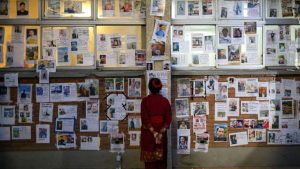
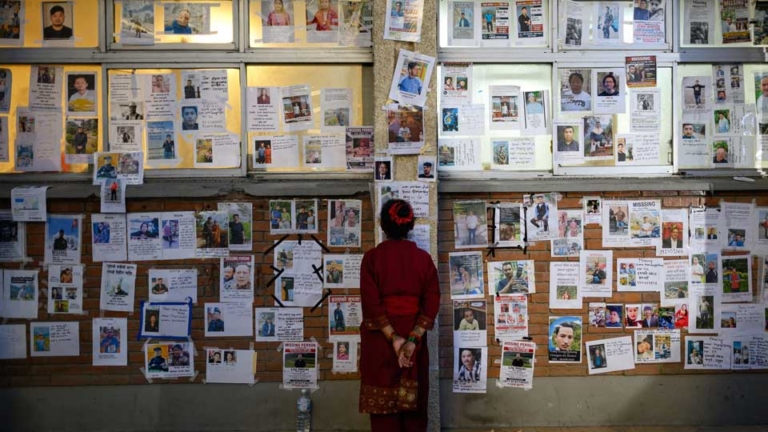
Nepal took a different path. The country’s independent regulatory body, the Press Council Nepal, asked more than one hundred social media accounts to remove content, according to its chair, Umesh Shrestha, who said most account holders complied. “Things can spread very quickly,” Shrestha said. Nepali police also arrested one man who allegedly shared a fabricated donation to a relief fund in order to promote his personal account. Kathmandu has pressured social media platforms and news outlets to remove fabricated visuals, including some that were debunked by AFP fact-checkers. Authorities held talks with Meta and TikTok to speed up the removal of AI-generated content, graphic images, and fraudulent aid schemes. Both platforms pay AFP to fact-check posts with potentially false information. At the same time, Nepal’s government provided regular updates on the death toll through social media, and direct commentary from victims’ families remained readily available online and offline. The disaster struck just ahead of the one-year anniversary of the anti-corruption protests that toppled the previous government, a movement triggered by a social media ban. That context made Nepal’s authorities especially sensitive to rumor and panic, but they did not attempt to impose a blanket blackout on information or silence grieving families.
AFP fact-checkers, working in multiple languages, debunked dozens of false claims about the floods. One video that falsely claimed to show the glacial and mountain collapse that caused the flooding was actually filmed at Alaska’s Columbia Glacier days earlier. Another clip created using Google’s AI tools showed water breaching a riverbank and flooding streets; it amassed tens of thousands of interactions before being questioned. “During disasters, public panic is high,” said Nepali investigative journalist Rabi Raj Baral, who is also a member of the Press Council Nepal. But both governments did not stop at removing fabrications. They also targeted posts that shared genuine footage or raised difficult questions. In China, video verified by AFP as showing the flood engulfing Gyirong Port was removed, along with other eyewitness content. In Nepal, authorities asked for the removal of graphic images and AI-generated visuals, but also sought to take down some real recordings that captured the terror of the moment. The line between curbing misinformation and suppressing inconvenient information became blurred in both countries, though far more sharply in China. On Chinese platforms, flood-related misinformation became largely absent, but so did independent reporting. Abroad, conspiracy theories flourished, including allegations that China lied about the death toll and that dam construction projects caused the disaster, even though scientists say a glacial collapse in Nepal was to blame.
The official figures themselves expose a stark disparity. According to Nepal’s disaster agency, rescuers had retrieved 1,369 bodies, while around 5,132 people remained missing. In China, state media reported 43 dead and 519 missing. The dramatic difference has prompted online critics, from Canada to South Korea, to accuse China of undercounting. Yet experts say the disparity likely reflects the disaster’s geography and scale rather than deliberate concealment. The glacial mountain collapse occurred in downstream Nepal, sending a wave of debris so powerful that it smashed China’s high-altitude border post in tightly restricted Tibet before carving a path of destruction across Nepal. Bodies on the Chinese side may have been washed downstream, and because of the terrain, they could be buried under a thick layer of mud and debris that makes recovery impossible. The missing tolls also include hundreds of foreigners, many of whom were tourists or workers in the region, which has complicated diplomatic and public pressure on both governments. Still, the absence of independent access to the Chinese side means that the true scale of the disaster may never be fully known, and every discrepancy in official numbers is likely to be magnified by suspicion.
For press freedom advocates, the contrast in crisis communication strategies offers a lesson in how governments shape public understanding of disaster. Celia Mercier, head of Reporters Without Borders’ South Asia Desk, said Nepal had “largely treated misinformation as a problem within an otherwise relatively open information environment.” In other words, Kathmandu saw fake videos and AI-generated images as a technical challenge to be managed through fact-checking and platform cooperation, while allowing journalists, families, and ordinary citizens to continue sharing their experiences. Beijing, by contrast, treated the flow of information as a political threat. By removing verified footage, punishing dissent, and monopolizing the narrative with state media coverage, China may have reduced the visibility of misinformation on its own platforms, but it also undermined public trust at home and abroad. The result, as Bielakowska noted, is an “atmosphere of mistrust” that can worsen in the aftermath of any future disaster. Both governments have said they acted in the public interest, and both have pointed to the dangers of false information. But the difference in their approaches reflects a deeper disagreement about who should be trusted to tell the story of a tragedy. As climate change increases the frequency of glacial floods and extreme weather events across the Himalayas, the need for transparent, reliable information will only grow. The flood’s full human toll may never be known, especially in areas where official reporting is limited and independent verification is impossible. For now, the competing accounts of what happened on August 26 remain as contested as the disaster itself.