








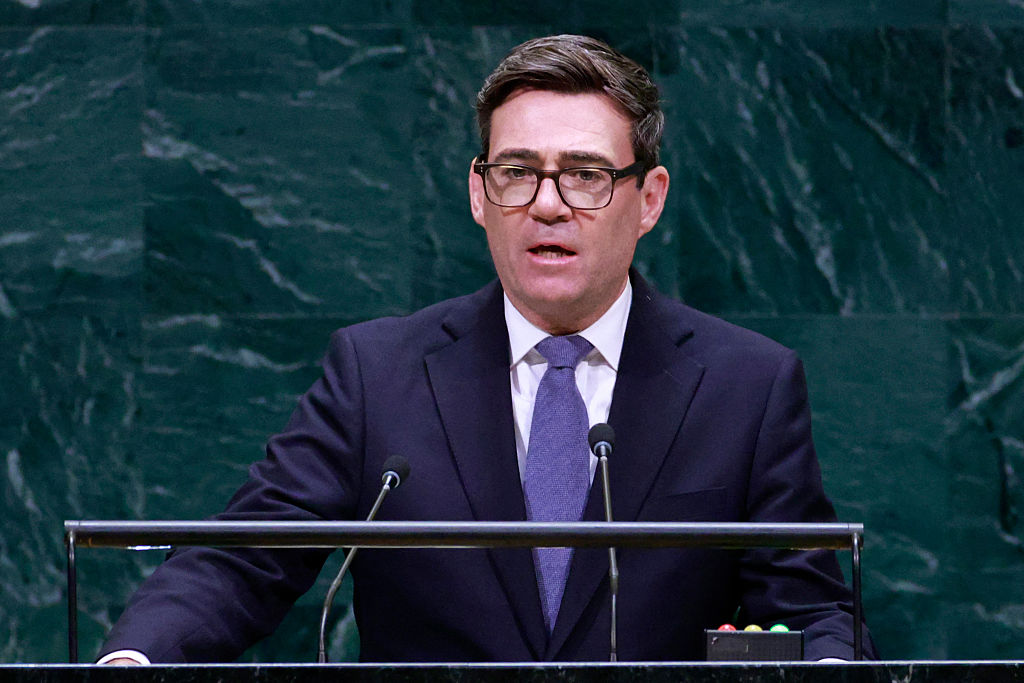
Britain is set to acquire another dedicated counter-disinformation body, the National Centre for Information Defence (NCID), and the announcement has already ignited the same warnings that have followed every previous attempt to police the information space. The proposal was presented by Andy Burnham during a speech to the United Nations, where he said the new centre would focus on “hostile state information attacks.” The Prime Minister quickly endorsed the plan, warning that Russian agencies had used “every means at their disposal” to spread disinformation. Defence Secretary Wes Streeting tried to get ahead of the inevitable concerns, claiming that the Government is “not interested in policing domestic political dissent.” There is no serious argument that the threat is imaginary. Russian troll farms, intelligence services and state media are known to interfere in democratic debates. But the response to that threat matters as much as the threat itself, and Britain’s record so far is deeply disturbing. The country has already built a sprawling counter-disinformation architecture, from the army’s 77th Brigade to civilian units such as the Counter Disinformation Unit. At every stage, the public was promised that these bodies would focus on foreign enemies. At every stage, the promise collapsed. Documents, whistleblower testimony and media investigations have repeatedly revealed that the attention of these units turned inward, toward British citizens, MPs and campaigners. There is a pattern, too, of officials first denying that domestic monitoring takes place, then defending it as a necessary part of the information war, and finally quietly renaming the unit when the facts become too awkward. The NCID is being designed as the newest addition to this questionable family. Labour, which is now in government, should be particularly wary. It should not allow its legitimate anti-disinformation efforts to seep into the domestic realm, because every mechanism that makes such seepage possible already exists.
The defining example is the 77th Brigade. This specialised army unit was established to wage information warfare, and its official remit was international. During the pandemic, the Ministry of Defence made a categorical statement: “77th Brigade does not, and has never, conducted any kind of action against British citizens.” The words were unequivocal. They were also false. Documents later obtained by researchers showed that the brigade had monitored tweets from identifiable British accounts. Some of those tweets were from individuals expressing fears about catching Covid—people worried about their health, their families and their jobs, not enemy agents. In March 2020, one file demonstrated something more disturbing: the 77th Brigade had tracked tweets by the former Green MP Caroline Lucas. Lucas had criticised the government’s handling of the pandemic and shared breaking news from the Independent newspaper. The file did not treat her as a foreign asset; it treated her as a domestic political actor worth watching. If the monitoring of an anonymous Twitter user could be shrugged off as carelessness, the explicit reference to a sitting MP was a smoking gun. It showed that the army was watching the British public, including their expressions of political dissent, and doing so while ministers were publicly insisting that the exact opposite was happening. The MoD’s denial was not a mistake; it was a cover story. The brigade’s leadership knew what its personnel were doing. The political leadership, for as long as possible, claimed not to know. This is the real record of Britain’s military counter-disinformation operations, and it is the backdrop against which the NCID must be assessed.
The mechanics of this surveillance were later explained by a whistleblower who served in the 77th Brigade. The domestic monitoring was never openly commissioned. There was no written order from the Ministry of Defence telling soldiers to spy on British citizens. Instead, there was a wink and a nudge. The government encouraged the unit to look at certain topics. It made clear, through signals and suggestions, that certain voices were of interest. The soldiers understood the assignment. They monitored British people and expressions of political dissent, all while maintaining the official fiction that they were only interested in foreign threats. The whistleblower’s account is important because it explains why the NCID could easily go wrong even if its founders are sincere. An institution does not need a formal mandate to become a domestic surveillance operation. It needs only a vague mandate, a sense of what its political masters want and a culture that rewards aggressive interpretation of the rules. The 77th Brigade had all three. The NCID will have the same. Ministers may say that the Government is not interested in policing domestic political dissent, but those words have been said before. The Ministry of Defence said almost exactly the same thing about the 77th Brigade. The Counter Disinformation Unit’s political masters said it did not monitor political debate. The evidence proved otherwise. The only way to break this pattern is to build the NCID with rules that are not vague, oversight that is not decorative and penalties that apply when the rules are broken.
The civilian units have an even more extensive record of monitoring legitimate political debate. The Counter Disinformation Unit, which later evolved into NSOIT, was created to identify and counter false information, ostensibly from foreign sources. In 2022, the campaigner Peter Tatchell appeared in two CDU reports for criticising the monarchy. Tatchell is a human rights campaigner, not a Russian troll. His criticism of the monarchy was a political statement, not a piece of hostile state information. A year earlier, or in a 2020 document, the Conservative MP David Davis was listed for criticising the government’s lockdown policy. Davis, a senior and respected backbencher, was not spreading disinformation. He was exercising his right to oppose government policy. Yet his name ended up in a counter-disinformation report. At the time, the Government claimed that the CDU did “not monitor political debate.” That claim is impossible to reconcile with the documents. If a report on a gay rights campaigner’s criticism of the monarchy is not monitoring political debate, then what would be? The answer is that the phrase “disinformation” had been stretched beyond any useful meaning. It was being used to describe all inconvenient opinions. This kind of institutional drift is not confined to a few bad apples. It is the product of a system in which the state has created a category of “bad information” and has given itself the power to decide what goes into it. Once that power exists, it will be used against the government’s critics. The NCID will inherit that power, along with the precedents set by its predecessors.
The wider free speech implications should be obvious. When the state establishes a unit to monitor disinformation, it is, by definition, claiming the authority to identify information that should not be believed. That authority is dangerous in any democracy. Governments come and go. The party in power at any given moment has a strong incentive to classify its own critics as sources of confusion and falsehood. During the pandemic, lockdown sceptics were branded as dangerous. During the post-pandemic period, republicans who questioned the monarchy were listed in official reports. Journalists who published stories the government disliked were accused of spreading falsehoods. The same government that has accused newspapers of spreading “disinformation” is now creating another unit with the power to decide what counts as information warfare. The phrase “disinformation” is now so elastic that it can cover anything from a genuine foreign influence operation to a citizen’s worried tweet to an MP’s critical speech. This elasticity is the problem. A counter-disinformation unit with a broad mandate and no meaningful oversight will inevitably be used to chill speech. The chilling effect is not vague. People who know that the army or a civil service unit is watching their Twitter activity will think twice before speaking out. They will wonder whether their words will be recorded in a file, whether their name will appear in a report, whether they will be called a purveyor of disinformation. That is not acceptable in a country that claims to defend democratic values. The NCID may be aimed at hostile states, but hostile states are not the only ones listening. The British state itself is listening, and its past behaviour gives ordinary citizens little reason to trust its assurances.
The way forward is straightforward, if the Government is serious. Andy Burnham should commit to placing the NCID under the oversight of Parliament’s Intelligence and Security Committee. That committee exists to scrutinise spies and security agencies. It has the authority and the clearance to examine the NCID’s methods and targets. If the centre is truly focused on hostile state information attacks, its advocates should welcome such scrutiny. The Government should also set a legal prohibition on monitoring British citizens, with a mechanism for individuals to discover whether they have been monitored and to seek redress if they have. It should define “disinformation” narrowly, so that criticism of government policy, political parties, the monarchy or the media is explicitly excluded. It should publish a regular report of the NCID’s activities, subject to redactions only for genuine national security concerns. None of these safeguards would prevent the unit from doing its job. They would only prevent it from doing a different job. Without them, the NCID will look like yet another political surveillance unit dressed up as something else. The track record of Britain’s counter-disinformation units is not a matter of speculation. It is a matter of documents, whistleblower testimony and official files. Each unit has promised to focus abroad. Each unit has been caught looking inward. The NCID, as currently designed, has not explained why it will be any different. The public should not be asked to take that on faith.


