





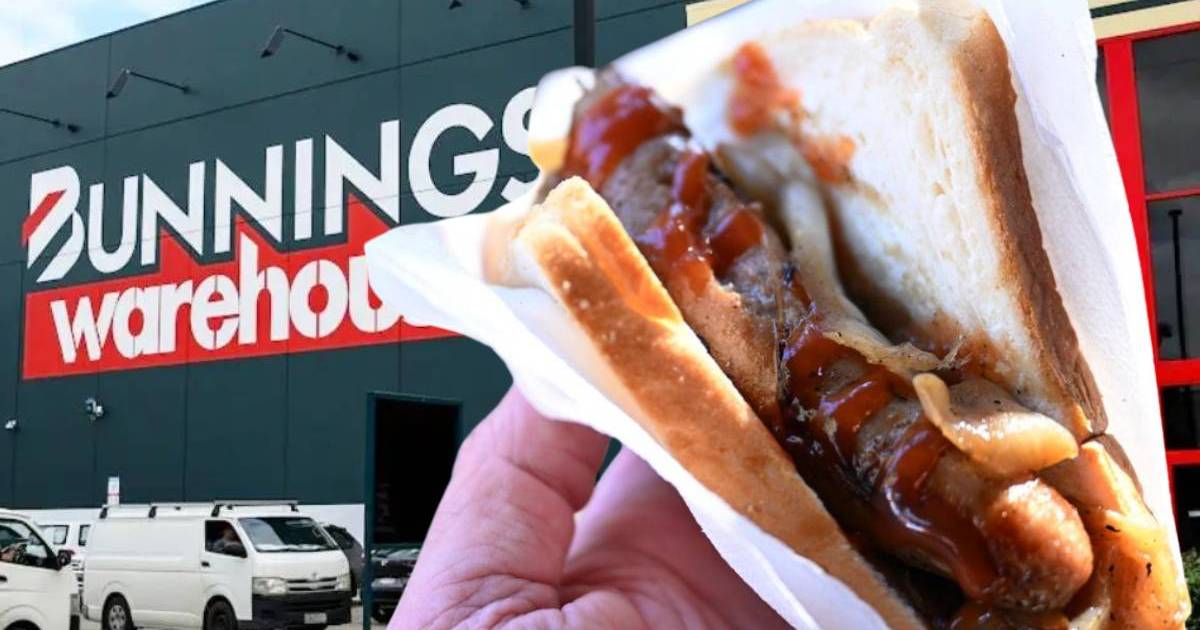
Fake Bunnings sausage sizzle fee claims spark petition and outrage, but hardware giant says no such charge exists
For generations, the weekend sausage sizzle outside Bunnings has been a cherished Australian ritual—the smell of onions and smoky sausages drifting across the car park, volunteers in aprons flipping snags on public holidays, children clutching tomato-sauce-stained bread, and community groups counting coins to fund a junior football club, a school camp, or a local charity. That image of grassroots fundraising has now become the latest target of online disinformation. Social-media fraudsters have again attempted to convince Australians that Bunnings, a multibillion-dollar hardware chain, is introducing a $150 site fee for charities and footy clubs that host these outdoor barbecues. The false claim was posted by a disinformation Facebook page called “Australia Today,” and it spread rapidly through Australian Facebook feeds over recent weeks. In a graphic shared thousands of times, the page declared: “BUNNINGS DESTROYS THE AUSSIE SAUSAGE SIZZLE.” The accompanying text accused the company of killing off a great weekend tradition by charging hardworking volunteers for the privilege of fundraising outside its stores. “A multibillion-dollar corporation is actively killing off our greatest WEEKEND TRADITION,” the graphic read. “Hardworking local volunteers are being completely sold out for pure CORPORATE GREED.” The posts generated significant public outrage, with more than 70,000 views within days. A petition was even launched on change.org, urging Australia’s biggest home-improvement chain to reverse a policy that never existed. Yet Bunnings has now confirmed the entire narrative is fiction. In a statement to AAP, a Bunnings spokesperson said the company does not charge community groups any fee for hosting sausage sizzles, and all money raised goes directly to the group. The claim, the spokesperson made clear, was totally incorrect.
The alleged $150 fee was said to take effect on October 1, a detail designed to give the hoax an air of bureaucratic urgency. Many Australians who saw the fabricated post did not stop to check with the source; instead, they shared it in local community groups, tagged their local members of parliament, and expressed disbelief that the hardware giant would treat volunteers so harshly. The change.org petition may have seemed like a logical response—if Bunnings truly planned to charge a site fee, public pressure might force it to reconsider. But Bunnings’ response was unambiguous. “We don’t charge community groups any fee for hosting a sausage sizzle at our store, and all funds raised go directly to the group,” the spokesperson said. The company also pointed to its eight-page information pack for organisations wishing to hold sausage sizzles at Bunnings stores; the pack contains no mention of any site fee or charge. The false claim appears to be a complete fabrication, invented to stoke outrage and drive traffic to the “Australia Today” Facebook page. The page has a history of publishing misleading content dressed up as news, often using dramatic all-caps headlines and emotive language to trigger emotional reactions. The Bunnings sausage sizzle is particularly vulnerable to this kind of manipulation because it enjoys near-universal affection in Australia. For decades, community groups—from junior rugby clubs to Scout troops—have relied on Bunnings car parks as an ideal location to raise funds. The model is simple: the community group supplies the sausages, onion, bread and sauce, while Bunnings provides the space and use of a barbecue. Shoppers make a small donation in exchange for a sausage sandwich, and the money supports local causes. There is no fee charged to the group, and no expectation that Bunnings takes a cut. That tradition is so embedded in the national culture that any claim of an attack on it naturally triggers a protective response. The perpetrators of the hoax exploited exactly that sentiment.
This is not the first time Bunnings and its beloved sausage sizzle have been targeted by false claims. Earlier hoaxes have claimed that Indian food would be served in place of sausages at some Bunnings fundraisers—an attempt to stir cultural resentment and division around a tradition that is largely seen as a symbol of Australian community life. Those claims were also vigorously denied. Bunnings sausages have been targeted before, as the caption on one of the images said. The pattern is familiar: a deliberately provocative graphic, a sensational claim, a vague timeline, and a call to action such as “share so everyone knows.” The “Australia Today” Facebook page appears to specialise in this kind of content, producing one viral disinformation campaign after another. The page’s posts are designed to look like genuine news bulletins, complete with bold text, capitalised headlines, and newspaper-style layouts. Many users mistake them for real journalism, particularly when they appear on their news feeds alongside posts from friends and legitimate pages. The result is a wave of misplaced anger from well-meaning Australians who genuinely care about their local causes. Community groups have also had to contend with people asking them whether they will be forced to pay the new fee, creating confusion and unnecessary worry. Charities and footy clubs already work hard to raise every dollar; they do not need the additional burden of debunking viral falsehoods. Bunnings’ repeated need to clarify its no-fee policy underscores how easily emotional outrage can be weaponised online. It also shows how much the company values the sausage sizzle as both a community service and a cultural phenomenon. Rather than charging fees, Bunnings has long seen the free space it provides as a way of supporting the same communities that shop at its stores. The sizzle is not just a barbecue; it is a weekly meeting place, a fundraising engine, and an icon of informal Australia.
The same disinformation page has also been spreading false claims about Commonwealth Bank and Australia Post. Another post on the “Australia Today” page alleged that Commonwealth Bank had pulled out of its post office banking service, cutting off millions of Australians—including 1,200 regional towns—from basic banking. The graphic claimed pensioners would face “brutal three-hour drives” to access their own money, and that “elderly Aussies are being completely abandoned as big banks prioritize massive CORPORATE PROFITS.” This too is false. In 2021, Commonwealth Bank announced that it had reached an agreement with Australia Post to extend post office banking services until 2032. A bank spokesperson said that agreement remains unchanged. The Australia Post banking service, known as Bank@Post, is vital to rural and remote communities, allowing customers to perform everyday banking at their local post office rather than travelling long distances to a bank branch. Any suggestion that CommBank was withdrawing from the service was either a misreading of a much older story or a deliberate falsehood. The misrepresentation of the Commonwealth Bank–Australia Post arrangement fits a broader pattern of disinformation that targets major Australian institutions. By pitting ordinary people against large corporations, such posts generate engagement through indignation. They invite users to feel aggrieved on behalf of the vulnerable—a powerful emotional hook. The use of specific details, such as the number of towns affected or the alleged three-hour drives, adds a veneer of credibility and makes the story easier to share without verification. Yet these details are entirely invented. The fact-checking organisation AAP has confirmed the claim is false, and the bank has issued an unequivocal denial. Still, by the time the truth is published, the false posts have already spread widely, sometimes creating lingering suspicion even after being debunked. The persistence of such claims raises serious questions about the role of social media platforms in amplifying misleading content and about the willingness of users to verify stories before sharing them.
The Bunnings saga is a vivid example of the mechanics of social-media disinformation in Australia. Fake content is not always politically motivated; much of it is driven by the attention economy, where clicks, shares and ad revenue reward outrageous content. “Australia Today” and similar pages often operate outside the bounds of traditional media accountability. They use page designs that mimic established mastheads, post at high frequency, and avoid original journalism. Fact-checking and verification are costly and slow; fabrication is cheap and fast. A single graphic can reach tens of thousands of people before anyone in the affected organisation even becomes aware of it. The Bunnings claim reached more than 70,000 views within days, and perhaps many more across reshared posts. The resulting petition, hosted on a legitimate platform, made the fabricated policy appear even more plausible. This is a known technique: manufacturing a “grassroots movement” around a fictional event to create pressure on a business or government to respond. Even after Bunnings denied the claim, some users continued to spread the original post, either because they had not seen the denial or because they felt the underlying message—about protecting weekend traditions—was true in spirit. This points to one of the most dangerous aspects of disinformation: it is easier to debunk a falsehood than to undo the emotional response it creates. The repetition of the claim, regardless of its veracity, can leave a trace in memory, causing people to vaguely recall that “Bunnings was going to charge charities,” even after the denial. Media literacy and critical evaluation of online claims have become essential survival skills. Consumers should be wary of pages with no clear editorial line, of posts that use excessive capitalisation, and of stories that fit perfectly into pre-existing anxieties about corporate greed. Official websites and spokespeople remain the best source of truth in an environment where a purpose-built hoax can travel around the country in a few hours.
For Bunnings, the latest false claim is an unwanted distraction from the huge amount of goodwill the sausage sizzle generates each year. The company has become an unlikely symbol of Australian community spirit; its barbecue areas are booked out months in advance on weekends, and queue lines are a common sight outside stores across the country. The prospect of a $150 fee was always illogical from a business perspective: Bunnings receives massive public goodwill by providing free space at its stores, and the sizzles draw shoppers into the hardware giant’s car park every weekend. Charging volunteers would undermine the culture of generosity that has made the company a beloved institution. But in the age of disinformation, logic and reality do not always prevail. The “Australia Today” page has proved that a fictitious policy can generate real outrage, real headlines, and a real petition. The best defence is a strong, fast, fact-based response—which is exactly what Bunnings provided. The hardware chain has urged customers and community groups to contact their local store if they have any questions about holding a sausage sizzle, and to refer to the official information pack, which clearly outlines the terms and conditions. Those terms include no site fee. The message is simple: if you see something online about Bunnings charging charities to host a barbecue, it is almost certainly fake. As for the humble sausage sizzle itself, it survives—intact and untaxed, still toasting bread on community barbecue grills every weekend. The only price is a small donation, usually gold coin, to a worthy local cause. The volunteers will keep flipping, the queues will keep forming, and the tradition will continue. That is perhaps the most defiant answer Australians can give to the online fraudsters who tried, once again, to ruin one of the country’s favourite weekend rituals.